

Every Guy Ritchie War Movie, Ranked
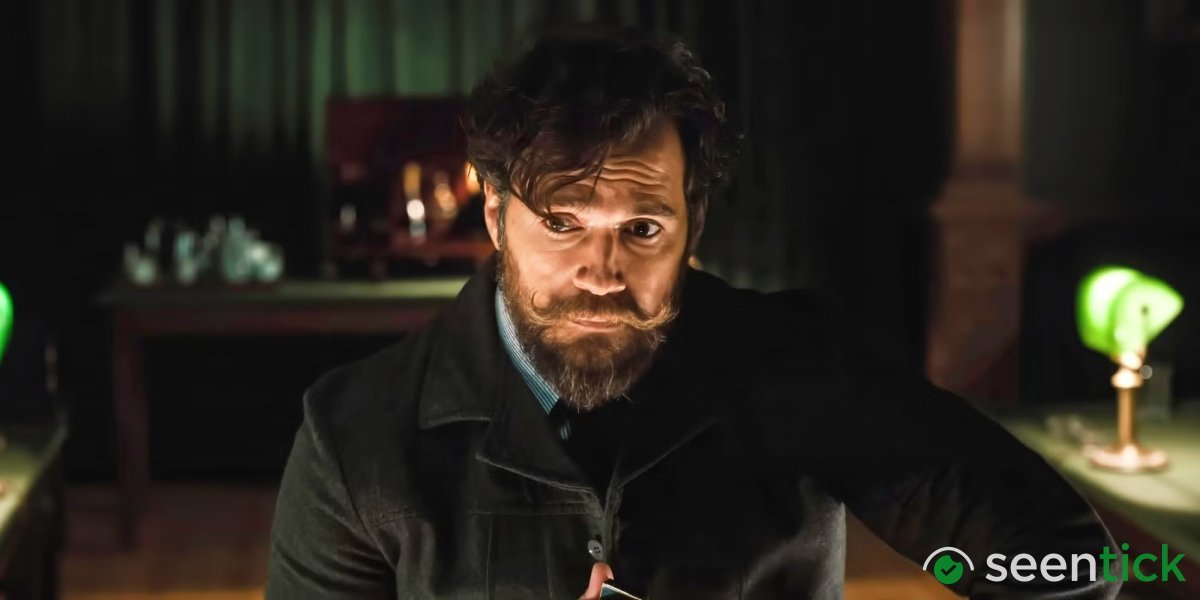
Every Guy Ritchie War Movie, Ranked
- Guy Ritchie has a singular style of filmmaking that combines action, comedy, mystery, and suspense, and he’s essentially become his own genre.
- His career only got more fascinating from then on out; although Ritchie spent several years making major blockbusters with more significant budgets, he eventually returned to his roots Ritchie certainly has an interest in action filmmaking, but he hasn’t typically been associated with war cinema in the same way that filmmakers like Steven Spielberg or Ridley Scott are.
- Although Ritchie tends to look at the world through his unique point-of-view, he has brushed up against some interesting historical events whilst remaining true to his interests.
Guy Ritchie has a singular style of filmmaking that combines action, comedy, mystery, and suspense, and he’s essentially become his own genre. Ritchie first exploded on to the British cinema scene with his groundbreaking first two features Snatch and Lock, Stock and Two Smoking Barrels, which reinvented the London crime subgenre in the post-Quentin Tarantino era where genre thrillers were expected to be propulsive and quippy.
His career only got more fascinating from then on out; although Ritchie spent several years making major blockbusters with more significant budgets, he eventually returned to his roots Ritchie certainly has an interest in action filmmaking, but he hasn’t typically been associated with war cinema in the same way that filmmakers like Steven Spielberg or Ridley Scott are.
Core Findings and Detailed Timeline
Although Ritchie tends to look at the world through his unique point-of-view, he has brushed up against some interesting historical events whilst remaining true to his interests. King Arthur: Legend of the Sword is easily the most underrated film of Ritchie’s career and gets unfortunately stung Since Arthurian mythology technically belongs to the public domain, and thus can be adapted It’s certainly not the most faithful adaption, but there have been enough King Arthur films for a new version to be worth giving a shot; those who wanted a more somber religious epic can seek out Excalibur, and those who appreciate more romance and whimsy can see the underrated First Knight.
King Arthur: Legend of the Sword has surprising depth about how leadership is built ” The war scenes are some of Ritchie’s most dynamic, as he clearly had more creative say over how the film looked than he did with his live-action remake of Aladdin for Disney. The major drawback with King Arthur: Legend of the Sword is that it was clearly the first chapter in what was intended to be a cinematic universe; it is a little underwhelming to get to the film’s sequel tag and realize that it isn’t building to anything.
The Covenant is the most grounded and serious film that Ritchie has ever made, and was a deliberate change of pace from the cheekier, more stylized gangster thrillers he had been making in the same decade. While not directly inspired Jake Gyllenhaal stars in the film as an Army Sergeant who befriends a translator, played Ritchie is able to appropriately scale back his indulgent tendencies Although the protagonist role could have easily been a paycheck role for an action star, Gyllenhaal’s commitment and dramatic intensity make it into a surprisingly compelling character who merits sympathy.
Broader Implications and Future Outlook
There are certainly some moments in which the political messaging can get a bit heavy-handed, but it’s otherwise a fairly interesting experiment that will hopefully lead Ritchie to taking similar chances within the future. The Ministry of Unglentlemanly Warfare is a throwback in the truest sense because it embodies the World War II adventure films from the Golden Age of Hollywood.
Although it’s easy to associate World War II cinema with gritty epics like Saving Private Ryan or Dunkirk, it was a conflict that inspired more crowdpleasing “men on a mission” films about espionage and intrigue during the war. Films like The Great Escape or The Guns of Navarone were serious in their intention to show the battle between good and evil, but they also served as populist entertainment, feeling like the superhero movies of their day.
It’s oddly the result of so many grittier war films that there has been less incentive to make a World War II story that is more “fun,” which is why Ritchie’s more whimsical approach is so entertaining. The Ministry of Ungentlemanly Warfare harkens back to Ritchie’s interest in morally ambiguous characters because it is inspired There’s a gleefully ridiculous sensibility to the violence at hand, and Ritchie benefits from the fact that everyone wants to see Nazis get killed in all sorts of brutal and creative ways.
Ritchie has understood how to use Henry Cavill better than any other director, and gets one of the best performances of his career; Cavill is perfectly suited for the role of a sharp, charming team leader, embodying the same quality that made Steve McQueen and Gregory Peck so cool. Although the plot gets messy in the third act, something that is not unusual for Ritchie, The Ministry of Ungentlemanly Warfare is great entertainment that shows why Ritchie excels at period pieces.
Your answers have pointed to one action hero above all others. This is the person built to have your back — for better or considerably, spectacularly worse. Your partner doesn't talk much, doesn't need to, and will have assessed every threat in your immediate environment before you've finished your first sentence.
John Rambo is not a man of plans or politics — he is a force of nature shaped He will not leave you behind. He has never left anyone behind who deserved to come home.
What you get with Rambo is the most capable, most quietly ferocious partner imaginable — one who has been through things that would have broken anyone else, and who chose to keep going anyway.
You'll never need to ask if he has your back. You'll just know. Your partner will arrive perfectly dressed, perfectly briefed, and with a cover story so convincing it'll take you a moment to remember what's actually true.
James Bond is the most professionally dangerous person in any room he enters — and the most disarmingly charming, which is the point. He operates in a world of layers, where nothing is what it appears and every advantage is used without apology. You'll never be bored.
You'll occasionally be furious. But when it matters — when the mission is genuinely on the line and the margin for error has fainted to nothing — Bond is exactly the partner you want. He has survived things that have no business being survivable.
He does it with style. That is not nothing. Your partner will know the history, the language, the cultural context, and exactly why the thing everyone else is ignoring is actually the most important thing in the room.
Indiana Jones is brilliant, reckless, and occasionally impossible — but he is also one of the most resourceful, most genuinely knowledgeable partners you could find yourself beside. He approaches every situation with a scholar's eye and a brawler's instinct, which is an unusual combination and a remarkably effective one.
He hates snakes and gets personally attached to objects of historical significance, both of which will slow you down at least once.
It doesn't matter. What Indy brings is irreplaceable — and the adventures you'll have together will be the kind people write books about. Assuming you survive them.
Your partner was not supposed to be here. He does not have the right equipment, the right information, or anything approaching the right odds. He has a sarcastic remark and an absolute refusal to accept that the situation is as bad as it looks.
John McClane is the greatest accidental hero in the history of action cinema — a man whose superpower is stubbornness, whose contingency plan is improvisation, and whose capacity to absorb punishment and keep moving would be alarming if it weren't so useful. He will complain the entire time. He will make it significantly more chaotic than it needed to be.
And he will absolutely, unconditionally, without question come through when it counts. Your partner has already run seventeen scenarios Ethan Hunt operates at the absolute edge of human capability — technically, physically, and intellectually — and he brings the same relentless precision to protecting his partners that he brings to dismantling organisations that shouldn't exist.
Read More: Every Ridley Scott Movie, Ranked
He is not easy to know and he will never fully tell you everything. But he will carry the weight of the mission so completely, so absolutely, that your job is simply to trust him — and the remarkable thing is that trusting him always turns out to be the right call. The mission will be impossible.
He will complete it anyway. Sherlock Holmes: A Game of Shadows is one of Ritchie’s more interesting films because he had the challenge of following up the first Sherlock Holmes, a surprise hit that had taken advantage of the fact that Robert Downey Jr. had just had a major comeback the previous year with both Iron Man and Tropic Thunder.
Despite the fact that it retained a period setting, Sherlock Holmes was able to capture the same comedic sensibility as Ritchie’s other films because of the playful back-and-forth between Holmes and his dutiful best friend, Dr. John Watson (Jude Law).
While not a traditional war film, Sherlock Holmes: A Game of Shadows picks up at the end of the 19th century, where the evil Professor James Moriarty (Jared Harris) plans to initiate a conspiracy that will initiate a global conflict.
Sherlock Holmes: A Game of Shadows is a much bigger, sillier, and more-action packed film than its predecessor, and Ritchie is the rare director where the indulgence is part of the charm. The gags involving Holmes’ comedy require a level of craftsmanship and staging that is reminiscent of the work of Charlie Chaplin, which may not be a coincidence when considering that Downey played the beloved silent movie star in an Oscar-nominated performance in the biopic Chaplin.
While Downey and Law continue to have great chemistry, the film’s scene-stealer is Harris, who makes for one of the best cinematic depictions of Moriarty. It made sense to include the most iconic villain in the second film, similar to the Joker (Heath Ledger) in The Dark Knight or Khan (Benedict Cumberbatch) in Star Trek Into Darkness, and Harris makes for a fitting genius who rivals Holmes.
The only disappointment is that, 15 years later, Sherlock Holmes 3 has yet to materialize. While Downey’s busy schedule might be to blame, it's unfortunate that the third installment in the series hasn’t been made, given that Sherlock Holmes: A Game of Shadows was one of the biggest hits of 2011. The Man From U.N.C.L.E.
is a complete blast that offers a perfect blend of nostalgia and style, and it came at the perfect time for the genre. Although there is brilliance in the way that the James Bond and Mission: Impossible films have adjusted to modern times N.C.L.E.
is a throwback to ‘60s spy stories that uses the height of the Cold War as a great setting for adventure.
The cutaways, splitscreens, montages, and music cues are lifted straight from the decade, and the old-fashioned cheekiness is self-aware without being obnoxious. Even when looking beyond Ritchie’s typical flourishes for action, The Man From U.N.C.L.E. features great sets, costumes, and makeup choices that encapsulate the older era.
The Man From U.N.C.L.E. is Ritchie’s most straightforward buddy comedy, and it features what is easily the greatest performance that Cavill has ever given. It’s ironic that Cavill was cast to play a brooding, somber version of Superman when The Man From U.N.C.L.E.
shows how effortlessly charming he can be; although he famously got close to playing James Bond, the character of Napoleon Solo is the next best thing. While it's unfortunate to reflect on how The Man From U.N.C.L.E. did not start a franchise, despite obviously gearing up for one, it remains a hidden gem that will hopefully grow a cult audience.
Ritchie certainly has an interest in action filmmaking , but he hasn’t typically been associated with war cinema in the same way that filmmakers like Steven Spielberg or Ridley Scott are. Although Ritchie tends to look at the world through his unique point-of-view, he has brushed up against some interesting historical events whilst remaining true to his interests.
King Arthur: Legend of the Sword is easily the most underrated film of Ritchie’s career and gets unfortunately stung Since Arthurian mythology technically belongs to the public domain, and thus can be adapted It’s certainly not the most faithful adaption, but there have been enough King Arthur films for a new version to be worth giving a shot; those who wanted a more somber religious epic can seek out Excalibur , and those who appreciate more romance and whimsy can see the underrated First Knight.
King Arthur: Legend of the Sword has surprising depth about how leadership is built ” The war scenes are some of Ritchie’s most dynamic, as he clearly had more creative say over how the film looked than he did with his live-action remake of Aladdin for Disney. The major drawback with King Arthur: Legend of the Sword is that it was clearly the first chapter in what was intended to be a cinematic universe; it is a little underwhelming to get to the film’s sequel tag and realize that it isn’t building to anything.
The Covenant is the most grounded and serious film that Ritchie has ever made , and was a deliberate change of pace from the cheekier, more stylized gangster thrillers he had been making in the same decade. While not directly inspired Jake Gyllenhaal stars in the film as an Army Sergeant who befriends a translator, played Ritchie is able to appropriately scale back his indulgent tendencies Although the protagonist role could have easily been a paycheck role for an action star, Gyllenhaal’s commitment and dramatic intensity make it into a surprisingly compelling character who merits sympathy.
There are certainly some moments in which the political messaging can get a bit heavy-handed, but it’s otherwise a fairly interesting experiment that will hopefully lead Ritchie to taking similar chances within the future. The Ministry of Unglentlemanly Warfare is a throwback in the truest sense because it embodies the World War II adventure films from the Golden Age of Hollywood.
Although it’s easy to associate World War II cinema with gritty epics like Saving Private Ryan or Dunkirk , it was a conflict that inspired more crowdpleasing “men on a mission” films about espionage and intrigue during the war. Films like The Great Escape or The Guns of Navarone were serious in their intention to show the battle between good and evil, but they also served as populist entertainment, feeling like the superhero movies of their day.
It’s oddly the result of so many grittier war films that there has been less incentive to make a World War II story that is more “fun,” which is why Ritchie’s more whimsical approach is so entertaining . The Ministry of Ungentlemanly Warfare harkens back to Ritchie’s interest in morally ambiguous characters because it is inspired There’s a gleefully ridiculous sensibility to the violence at hand, and Ritchie benefits from the fact that everyone wants to see Nazis get killed in all sorts of brutal and creative ways.
Ritchie has understood how to use Henry Cavill better than any other director, and gets one of the best performances of his career; Cavill is perfectly suited for the role of a sharp, charming team leader, embodying the same quality that made Steve McQueen and Gregory Peck so cool. Although the plot gets messy in the third act, something that is not unusual for Ritchie, The Ministry of Ungentlemanly Warfare is great entertainment that shows why Ritchie excels at period pieces.
Your answers have pointed to one action hero above all others. This is the person built to have your back — for better or considerably, spectacularly worse. Your partner doesn't talk much, doesn't need to, and will have assessed every threat in your immediate environment before you've finished your first sentence.
John Rambo is not a man of plans or politics — he is a force of nature shaped He will not leave you behind. He has never left anyone behind who deserved to come home.
What you get with Rambo is the most capable, most quietly ferocious partner imaginable — one who has been through things that would have broken anyone else, and who chose to keep going anyway.
You'll never need to ask if he has your back. You'll just know. Your partner will arrive perfectly dressed, perfectly briefed, and with a cover story so convincing it'll take you a moment to remember what's actually true.
James Bond is the most professionally dangerous person in any room he enters — and the most disarmingly charming, which is the point. He operates in a world of layers, where nothing is what it appears and every advantage is used without apology. You'll never be bored.
Also Read: From ‘Blazing Saddles’ to ‘Parasite’: Films That Demand Your Full Attention
You'll occasionally be furious. But when it matters — when the mission is genuinely on the line and the margin for error has fainted to nothing — Bond is exactly the partner you want. He has survived things that have no business being survivable.
He does it with style. That is not nothing. Your partner has already run seventeen scenarios Ethan Hunt operates at the absolute edge of human capability — technically, physically, and intellectually — and he brings the same relentless precision to protecting his partners that he brings to dismantling organisations that shouldn't exist.
He is not easy to know and he will never fully tell you everything. But he will carry the weight of the mission so completely, so absolutely, that your job is simply to trust him — and the remarkable thing is that trusting him always turns out to be the right call. The mission will be impossible.
He will complete it anyway. Sherlock Holmes: A Game of Shadows is one of Ritchie’s more interesting films because he had the challenge of following up the first Sherlock Holmes , a surprise hit that had taken advantage of the fact that Robert Downey Jr.
had just had a major comeback the previous year with both Iron Man and Tropic Thunder .
Despite the fact that it retained a period setting, Sherlock Holmes was able to capture the same comedic sensibility as Ritchie’s other films because of the playful back-and-forth between Holmes and his dutiful best friend, Dr. John Watson ( Jude Law ).
While not a traditional war film, Sherlock Holmes: A Game of Shadows picks up at the end of the 19th century, where the evil Professor James Moriarty ( Jared Harris ) plans to initiate a conspiracy that will initiate a global conflict.
Sherlock Holmes: A Game of Shadows is a much bigger, sillier, and more-action packed film than its predecessor , and Ritchie is the rare director where the indulgence is part of the charm. The gags involving Holmes’ comedy require a level of craftsmanship and staging that is reminiscent of the work of Charlie Chaplin , which may not be a coincidence when considering that Downey played the beloved silent movie star in an Oscar-nominated performance in the biopic Chaplin.
While Downey and Law continue to have great chemistry, the film’s scene-stealer is Harris, who makes for one of the best cinematic depictions of Moriarty. It made sense to include the most iconic villain in the second film, similar to the Joker ( Heath Ledger ) in The Dark Knight or Khan ( Benedict Cumberbatch ) in Star Trek Into Darkness , and Harris makes for a fitting genius who rivals Holmes.
The only disappointment is that, 15 years later, Sherlock Holmes 3 has yet to materialize. While Downey’s busy schedule might be to blame, it's unfortunate that the third installment in the series hasn’t been made, given that Sherlock Holmes: A Game of Shadows was one of the biggest hits of 2011. The Man From U.N.C.L.E.
is a complete blast that offers a perfect blend of nostalgia and style , and it came at the perfect time for the genre. Although there is brilliance in the way that the James Bond and Mission: Impossible films have adjusted to modern times N.C.L.E.
is a throwback to ‘60s spy stories that uses the height of the Cold War as a great setting for adventure.
The cutaways, splitscreens, montages, and music cues are lifted straight from the decade, and the old-fashioned cheekiness is self-aware without being obnoxious. Even when looking beyond Ritchie’s typical flourishes for action, The Man From U.N.C.L.E. features great sets, costumes, and makeup choices that encapsulate the older era.
The Man From U.N.C.L.E. is Ritchie’s most straightforward buddy comedy, and it features what is easily the greatest performance that Cavill has ever given. It’s ironic that Cavill was cast to play a brooding, somber version of Superman when The Man From U.N.C.L.E.
shows how effortlessly charming he can be; although he famously got close to playing James Bond , the character of Napoleon Solo is the next best thing. While it's unfortunate to reflect on how The Man From U.N.C.L.E.
did not start a franchise, despite obviously gearing up for one , it remains a hidden gem that will hopefully grow a cult audience.
What's Your Reaction?
 Like
Like
 Dislike
 Love
2
Love
2
 Funny
Funny
 Wow
1
Wow
1
 Sad
Sad
 Angry
Angry

Movies, series, and everything happening around Indian entertainment keep me busy. I cover OTT releases, box-office conversations, celebrity news, and the changing world of streaming, with a particular interest in the stories and trends that audiences are talking about right now.










Comments (0)