

The 10 Best-Looking Movies of the 20th Century, Ranked
The 10 Best-Looking Movies of the 20th Century, Ranked
- A movie doesn’t have to look amazing to be amazing, but it definitely helps. Film is a visual medium, after all, and so if those visual
- None of the movies below fit into that “good-looking but bad everything else” camp, though, since you'll find pretty much nothing but c
- Apocalypse Now looks like a nightmare for a good deal of its runtime, but definitely an eye-catching and visually impressive sort of ni
A movie doesn’t have to look amazing to be amazing, but it definitely helps. Film is a visual medium, after all, and so if those visuals really stand out and look consistently spectacular, then it helps, undeniably.
A good film can be elevated to a great one if it looks great, and there are indeed movies that are less-than-great in other areas that are still compelling because of their visuals .


None of the movies below fit into that “good-looking but bad everything else” camp, though, since you'll find pretty much nothing but classics below. And these classics of the 20th century also rank among the best looking , making use of the medium of film in countless ways and all being genuine feasts for the eyes from start to finish.
Apocalypse Now Overview & Context
Apocalypse Now looks like a nightmare for a good deal of its runtime, but definitely an eye-catching and visually impressive sort of nightmare. It’s a legendary war movie that’s sort of about the Vietnam War , even if that particular conflict fades into the background a bit as the fairly loose narrative goes on, and everything gets more focused on the psychological drama side of things.
It being a psychological drama is one way that the feeling of a nightmare ends up being appropriate , and then it’s all a nightmare on an epic scale, too, considering the length of Apocalypse Now (the shortest cut is still 2.5 hours, and alternate cuts exceed three hours ). It is probably the most visually arresting movie Francis Ford Coppola has directed, beating out even The Godfather (and its first sequel) and Bram Stoker's Dracula .
The first Stanley Kubrick movie worth mentioning is 2001: A Space Odyssey , which is, of course, acclaimed for reasons beyond its visuals and technical qualities. Those things go a long way, with the special effects here remaining remarkable, and the visuals making space feel the most immersive it ever had up until that point, on screen, but there’s also a lot to chew on here thematically .
Space Odyssey Overview & Context
2001: A Space Odyssey does all those things with ease, and has earned its acclaim wholeheartedly, in all the ways you’ve heard it praised over the years. That’s what you want out of great science fiction, though: technical proficiency and a good deal many things to say about technology, human nature, and (possibly) the future, all at once.
2001: A Space Odyssey does all those things with ease , and has earned its acclaim wholeheartedly, in all the ways you’ve heard it praised over the years (or decades, depending on how long you’ve been around and kicking). Lawrence of Arabia feels like an obligatory pick, if you're talking about amazing-looking movies that came out somewhere between 1901 and 2000 (or 1900 and 1999, depending on how you want to define the 20th century).
It’s hard to fault a single shot in this one, with David Lean and Freddie A. Young proving a pretty unbeatable director + cinematographer duo, with their later collaborations, Doctor Zhivago and Ryan’s Daughter , also looking immense. Still, Lawrence of Arabia stands out and looks particularly great.
Everything else is great too, if that doesn’t already go without saying, since Lawrence of Arabia is about as good as biographical movies (and epics) get . You could watch it on mute, though, and without subtitles, and still get a lot out of it just That’s far from an ideal way to watch Lawrence of Arabia , sure, but still, it would probably work as some kind of worthwhile experience regardless.
Thankfully, Hayao Miyazaki did keep directing movies after Princess Mononoke , but if he’d bowed out and genuinely retired after this 1997 film, that would've been understandable, and it also might've felt appropriate. This was his most ambitious film up until that point, and it pushed things further as far as visuals and the quality of the animation were concerned, and that’s saying a lot, considering how great his previous directorial efforts had looked.
The 1970s was a good decade for epics , it seems, especially epics that just so happened to look particularly great. See Barry Lyndon , and this is another excuse to mention Stanley Kubrick, because even if 2001: A Space Odyssey might be his masterpiece (and is certainly better known) over Barry Lyndon , it’s this 1975 movie that feels like the best-looking Kubrick film, conquering some pretty stiff competition in the process.
The approach here seemed to be doing that good old “making every frame look like a painting” sort of thing, and it’s a case of mission accomplished, to say the least. Barry Lyndon spans many years and tells a lot of story across its 185 minutes, all the while looking consistently amazing with its sets, cinematography, lighting, use of color , and all the other things that go into making a movie look especially great.
Read More: The 10 Best Movies That Are Over 100 Years Old, Ranked
Nothing Paul Schrader has directed has ever been nominated for Best Picture , so he does feel pretty snubbed, at least as a director (he’s fared better as a writer, since his First Reformed got an Oscar nomination, and other movies he’s written have been Best Picture nominees). If there’s one movie he should’ve been nominated for as a director, though, it’s Mishima: A Life in Four Chapters .
This is one of the more offbeat biographical films out there, and also not a straightforward biographical movie in the first place, since it’s more inspired The creativity extends beyond the story and structure into the visuals, too, with Mishima: A Life in Four Chapters being consistently worth marveling at , all the while looking like few other films out there.
There are things to critique, when it comes to the filmography of Ridley Scott , but the way his movies look and feel? Critiquing the technical stuff is trickier, because even messier efforts of his, like Legend and maybe even The Dog Stars , have things to offer on a visual front.
When he makes something great, though, then you’ve got a real winner on your hands, obviously.
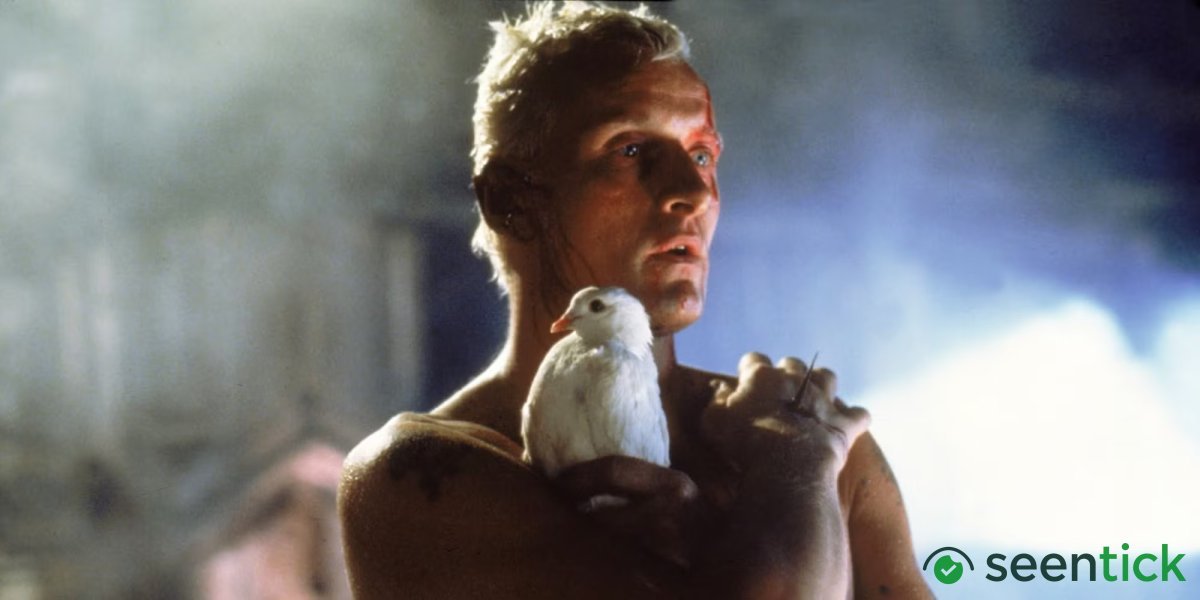
Enter Blade Runner . No, really, enter Blade Runner . You pretty much can.
Watching it on a big screen, and preferably with surround sound, it’s not hard to put yourself in the world the movie creates: a dystopian/alternate Los Angeles in 2019. It takes eye-catching film noir-adjacent images and merges them with equally eye-catching science fiction visuals and ideas , making for what easily feels like one of the most immersive sci-fi films of all time.
There are dance sequences throughout The Red Shoes , and it’s about ballet, but if you're expecting a traditional musical, that’s not quite what you get here. If you are counting it as a musical , or something near a musical, then it also goes against the grain Comparisons to Black Swan are fair, and then it’s also possible La La Land took some influence from this, though that one didn’t get nearly as bleak.
Importantly, for present purposes, though, The Red Shoes looks phenomenal, especially when it comes to its use of color and some other techniques employed to make the dreamier parts of the film really stick in one’s mind. Of all the classic films that used Technicolor, The Red Shoes could well be the best-looking .
Ran is loosely based on King Lear , as well as taking some inspiration from history, namely, the warlord Mōri Motonari and his three sons.
But because of the influence of the former, Ran does get unsurprisingly tragic , at a point, with it being all about a family disagreement that spirals out of control, eventually leading the members of shared family to engage in warfare with each other. It’s also very beautiful alongside being a real downer of a film, and the contrast made, as a result, does certainly feel interesting throughout.
Also, Ran can be likened to The Red Shoes in that it also uses color better than 99.99% of movies out there (and this does feel extra impressive when you consider that Akira Kurosawa filmed the majority of his movies – including classics like Rashomon and Seven Samurai – in black and white). A little while ago, Days of Heaven got dubbed the best-looking movie of all time , and so if you're just talking movies from the 20th century, then Days of Heaven has got to be #1 here as well, since 1978 was indeed a year in that century and all.
As for the non-visual parts of this film, what you’ve got here is a love triangle-type story, but done in an artsy and not-all-that-cliched sort of way , even with the central conflict being a familiar sort of one. The more important stuff with Days of Heaven is how it looks (and how it sounds, given Ennio Morricone composed a great score for this one).
Words can only go so far, unless those words are something along the lines of, “Yeah, it’s boring to call Days of Heaven the best-looking movie ever, after all the praise it’s got for its visuals, but it really might be the best-looking movie ever, for real .” So, there you go.
Frequently Asked Questions
What's Your Reaction?
 Like
0
Like
0
 Dislike
0
Dislike
0
 Love
1
Love
1
 Funny
0
Funny
0
 Wow
1
Wow
1
 Sad
0
Sad
0
 Angry
0
Angry
0

Movies, series, and everything happening around Indian entertainment keep me busy. I cover OTT releases, box-office conversations, celebrity news, and the changing world of streaming, with a particular interest in the stories and trends that audiences are talking about right now.









Comments (0)