

The 10 Best Hard Sci-Fi Movies You'll Ever Watch
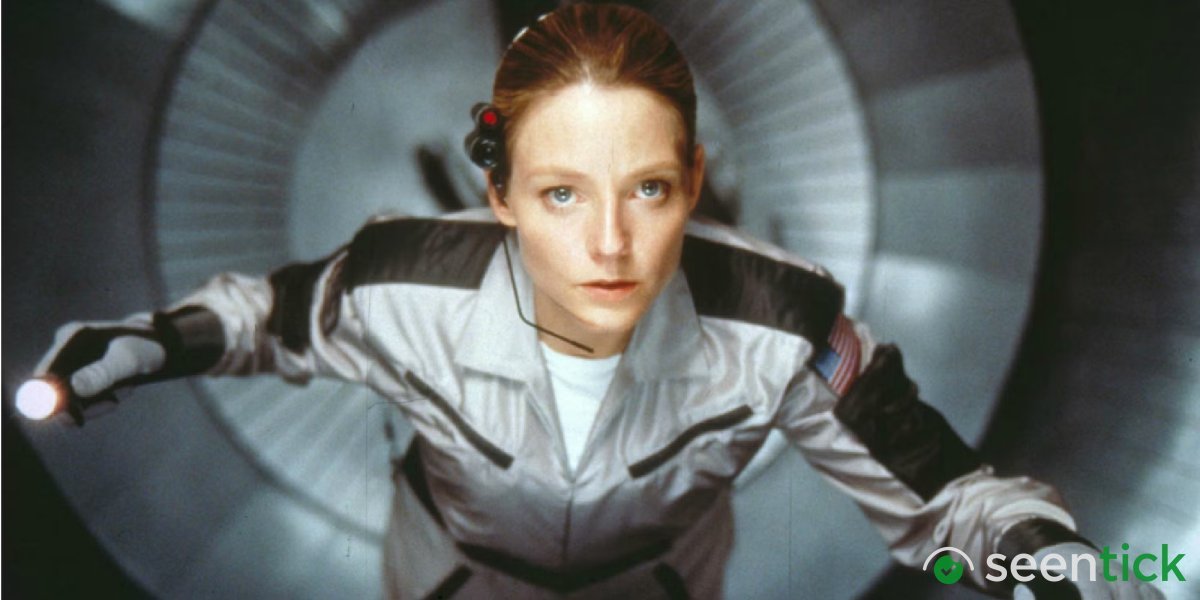
The 10 Best Hard Sci-Fi Movies You'll Ever Watch
- Feel free to connect with him or check out his work. He's everywhere — Upwork , YouTube , Spotify , SoundCloud , Collider , LinkedIn ,
- That's a much harder thing to pull off than it sounds, since real science doesn't care about your plot deadlines or your big emotional
- You can watch them and learn a thing or two. However, some of them were just made So here are some of the best sci-fi ever put on scree
Feel free to connect with him or check out his work. He's everywhere — Upwork , YouTube , Spotify , SoundCloud , Collider , LinkedIn , Instagram . Hard sci-fi actually tries to get the science right, or at least close enough that a real physicist wouldn't laugh you out of the room.
That's a much harder thing to pull off than it sounds, since real science doesn't care about your plot deadlines or your big emotional climax and most movies think audiences are dumb enough not to find loopholes in the concept. These ten movies all do the work anyway. Most of the films had actual scientists on set checking the math.


Core Findings and Detailed Timeline
You can watch them and learn a thing or two. However, some of them were just made So here are some of the best sci-fi ever put on screens . Let's get nerdy about them.
Sam Rockwell basically carries this entire movie Duncan Jones made this for about five million dollars, practically nothing Kevin Spacey voices GERTY, the base's robot assistant, in a way that's clearly meant to remind you of HAL from 2001 , right up until GERTY does the exact opposite of what you're braced for. The whole thing is about cloning and corporate labor exploitation , dressed up as a quiet, lonely space movie, and it earns every bit of its reputation on a shoestring budget.
Shane Carruth wrote, directed, starred in, edited, and scored this movie for about seven thousand dollars , which is less than most people spend on a used car. Two engineers accidentally build a time machine in their garage, and instead of dumbing the science down for the audience, Carruth just lets the characters talk like actual engineers would, dense, technical, and genuinely hard to follow.
Broader Implications and Future Outlook
People have built entire flowcharts online just trying to map out the timeline, and there's still no full agreement on what actually happens That confusion is the selling point of this film. Real time travel, if it worked at all, probably wouldn't make clean sense either, and this is the rare movie willing to commit to that fully.
Vincent ( Ethan Hawke ) is born without genetic engineering in a future where your DNA decides your entire future before you're even born. He takes on another man's identity, using his blood, hair, and urine samples, just to get a shot at a career the "valid" world would otherwise deny him completely.
Andrew Niccol barely uses any special effects here, building the whole future out of real 1950s modernist architecture instead, which somehow makes it feel more plausible, not less.
The genetic discrimination this movie imagines decades ago has only gotten more relevant as real gene-editing technology has actually caught up to it, which is a strange, uncomfortable thing for a movie this old to still be right about. NASA actually consulted on this movie, and the agency has publicly praised how accurate the science stays, from the orbital mechanics of the rescue mission down to the chemistry Mark Watney ( Matt Damon ) uses to keep himself alive on Mars.
Author Andy Weir , a former software engineer, did the actual math himself before he ever wrote the book this is based on. Watney survives Ridley Scott trusts the audience to follow real problem-solving instead of a fake shortcut, and that trust is exactly why the ending is earned. Your answers point to the world your instincts were built for.
This is the universe your temperament, your survival instincts, and your particular brand of stubbornness were made for. You took the red pill a long time ago — probably before anyone offered it to you. You're a systems thinker who can't help but notice the seams in things.
The wasteland doesn't reward the clever or the well-connected — it rewards those who are hard to kill and harder to break. That's you. You'd survive here because you know how to exist in moral grey areas without losing yourself completely.
Arrakis is the most hostile environment in the known universe — and you are precisely the kind of person it rewards. The galaxy far, far away is vast, loud, and in a constant state of violent political upheaval — and you wouldn't have it any other way.
Read More: The 10 Greatest Action Heroines of All Time
A comet passes overhead during a small dinner party, and the guests start slipping between overlapping versions of their own reality , based loosely on real, if speculative, ideas from quantum mechanics like the many-worlds interpretation.
James Ward The result feels like something that actually happened to a group of real, panicking friends. It's confined entirely to one house, made for almost nothing, and it still manages to turn a genuinely dense physics concept into something tense enough to watch through your fingers.
Stanislaw Lem wrote the novel this film is based on specifically because he was tired of science fiction where aliens are basically just humans wearing rubber masks.
His version, adapted here That's a much harder, more honest idea than most first-contact stories bother attempting. Kris Kelvin ( Donatas Banionis ) is the scientist sent to investigate, and he never gets real answers, because real answers might not even be possible between two minds this different.
It's slow and deliberately uncomfortable , and that discomfort is doing exactly what Lem wanted it to do.
Based on Michael Crichton 's novel, this movie is almost entirely about scientific procedures. It includes quarantine protocols, microscopy, decontamination chambers, and a team of scientists who are racing to understand a deadly organism that fell to Earth on a satellite. There's barely any action in the traditional sense, only the storyline makes it work.
Robert Wise has directed the film like a drama where computer analysis and lab work carry entire scenes instead of a monster chasing anyone down a hallway. It's a methodical, patient movie about how an outbreak would actually get studied and halted, and it ended up influencing an entire genre of realistic outbreak thrillers that came decades after it.
Arthur C. Clarke wrote the novel and the screenplay at the same time, working alongside real physicists and aerospace engineers to get the actual mechanics of space travel right, down to keeping total silence during scenes set in the vacuum of space, since sound genuinely can't travel out there.
Stanley Kubrick built a massive rotating set just so his actors could walk in a circle while gravity got faked around them, all without a single frame of CGI, because none existed yet.
This movie also predicted tablet computers and video calls decades before either one was real. HAL 9000 remains one of the calmest, most rational villains ever put on screen, and the science holding this whole film together is still accurate.
This is based on a novel called Roadside Picnic , So, what if an alien visit left behind something the way travelers leave trash after a picnic , not a message meant for us, just leftover debris we're too small and too different to understand?
Andrei Tarkovsky builds an entire, hypnotic movie around that idea, following three men walking toward a room that supposedly grants wishes , inside a zone that defies ordinary physics without ever explaining exactly how. It's slow enough to test anyone's patience , and it's also one of the most genuinely strange, thoughtful pieces of science fiction ever put on film.
Frequently Asked Questions
What's Your Reaction?
 Like
0
Like
0
 Dislike
0
Dislike
0
 Love
0
Love
0
 Funny
0
Funny
0
 Wow
1
Wow
1
 Sad
0
Sad
0
 Angry
0
Angry
0

Movies, series, and everything happening around Indian entertainment keep me busy. I cover OTT releases, box-office conversations, celebrity news, and the changing world of streaming, with a particular interest in the stories and trends that audiences are talking about right now.









Comments (0)