

The 10 Best Movies That Are Over 100 Years Old, Ranked
The 10 Best Movies That Are Over 100 Years Old, Ranked
- Sure, some movies from the silent era might feel kind of challenging to watch, and admittedly slow There’s a lot to be gained from the
- There are a fair few great silent movies that were released in the final years of the 1920s, especially in 1927, and then City Lights a
- Okay, they’ll always be more than 100 years old, but not at this time of writing, more movies will be more than a century old. For now,
Sure, some movies from the silent era might feel kind of challenging to watch, and admittedly slow There’s a lot to be gained from the silent movies that survive, especially if you're interested in film history (or just history generally), and then even more to be gained if you track down these movies specifically. These movies are all more than a century old, and they're all pretty great, even to this day.
There are a fair few great silent movies that were released in the final years of the 1920s, especially in 1927, and then City Lights and Modern Times were great (mostly) silent movies from the 1930s, but the ones below are all here because they're more than 100 years old, at the time of writing . For related coverage, explore our detailed analysis on Technology and Digital Systems.


Okay They’Ll Always More Updates
Okay, they’ll always be more than 100 years old, but not at this time of writing, more movies will be more than a century old. For now, these ones are the best that qualify.
A World War I epic made at a time when the war would've still been fresh in everyone’s minds, The Big Parade has gotten overshadowed, to some extent, Wings does feel like more of a precursor to a blockbuster, and has a great deal of impressive action, though The Big Parade has spectacle in other regards, and does function well as a romantic drama, in any event.
It’s about one soldier experiencing war, making a pair of friends, and then also falling in love after being sent to France, done over two and a half hours and with the sort of romance and melodrama you might expect. Still, The Big Parade does those things well for its time, and there is enough here to genuinely enjoy when watched today that it feels fitting to call it one of the more underappreciated silent films out there .
It’s fitting that one of the first feature films ever is also an adaptation of such an old work of literature, going back to the early 1300s. That’s when Dante Alighieri wrote The Divine Comedy , and sure, it’s not as old as The Odyssey or The Epic of Gilgamesh , but that’s still a while back, to say the least.
Dante’S Inferno 1911 Isn'T Updates
Also, Dante’s Inferno (1911) isn't an adaptation of the whole of The Divine Comedy , instead adapting the first of its three parts: Inferno . This one’s definitely cool historically, given it still survives and was such an early feature film .
There’s also something neat here with the atmosphere and feel of Dante’s Inferno , and maybe it does come down to films from the silent era feeling inherently creepy or off, but this does manage to feel appropriately hellish and unsettling at times.
There are more sophisticated pieces of fiction since 1911 that have taken inspiration from The Divine Comedy , sure, but Dante’s Inferno is still one of the best (and definitely one of the most important). Like with Dante’s Inferno , there are other takes on the source material here that might be better than 1925’s The Phantom of the Opera , though this early adaptation of the Gaston Leroux novel holds up much better than you might expect.
The narrative here… like, it’s The Phantom of the Opera , so it’s about a man haunting and tormenting those at the Palais Garnier (the Paris opera house). Griffith was more infamous for directing a certain 1915 epic, and that one’s not going to be addressed here, because it’s just hard to talk about with care and nuance and maybe it’s late right now, where this person’s typing, and they want to get to bed.
But also, if they were very awake, they would still be happy to argue that Intolerance is the far better Griffith epic from near the middle of the 1910s anyway. American history was covered in That Film That Shall Not Be Named, while Intolerance opts to span numerous centuries and different areas throughout history.
It’s such a huge epic, both for its time and generally speaking.
It would be about a decade before someone made a single film that was genuinely bigger and more impressive in scope (probably around 1927, and you can argue Metropolis and/or Napoleon topped it). After going through some movies that laid the groundwork for the horror, epic, and war genres (among others), here’s The Lost World , which defined, very early on, what a giant monster movie could be .
If dinosaurs aren’t technically monsters, then sure, discount it if you want, but The Lost World does still find spectacle with the dinosaurs (and their scale) in a way that later giant monster movies would. Whether King Kong (1933) would've existed without The Lost World first… sure, it can’t be confirmed for sure, but like, maybe not?
The same potentially goes for Godzilla (1954), too, and then the whole giant monster movie landscape would look entirely different – if it even existed at all – without those two movies having the legacy they did, thanks to each kicking off a series/franchise . Here’s The Lost World , making a compelling argument for cinematic dinosaurs being cool , before it was itself cool to do so.
Read More: John Cena Reveals the Secret He Never Told Will Forte
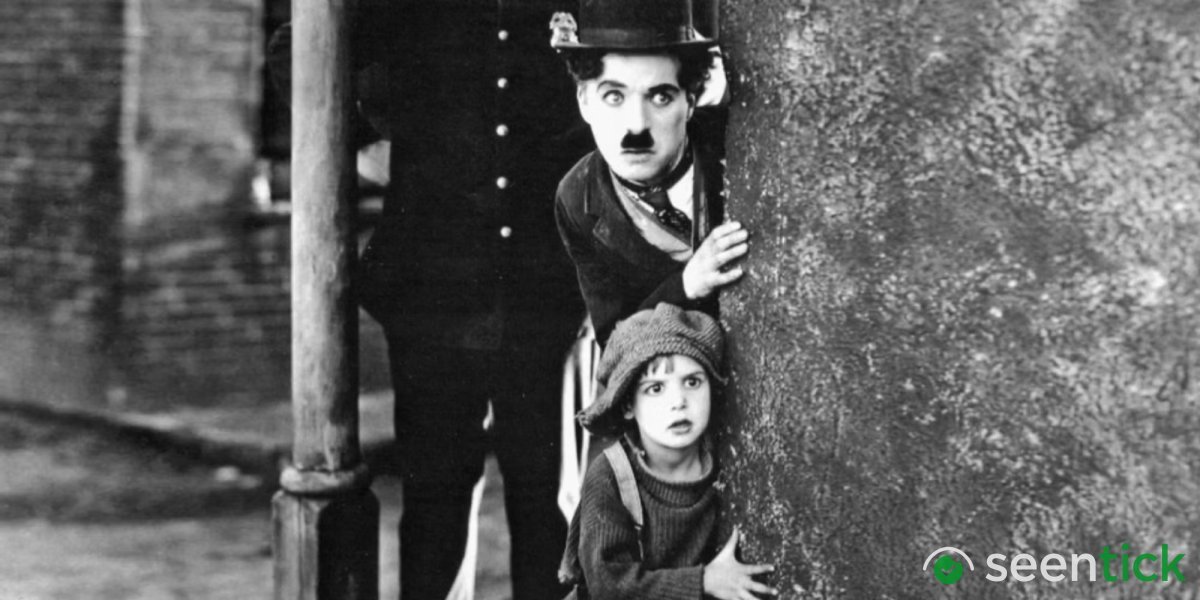
City Lights and Modern Times were mentioned earlier as great silent movies that came out after the silent era, and yes, they are probably Charlie Chaplin ’s two most masterful masterpieces . He did some good talkies (eventually) too, like The Great Dictator and the underrated Limelight , but if you're looking at his movies that have existed for more than a century, the greatest is probably The Kid .
An honorable mention should go out to The Gold Rush . That one’s got a bit more going on, and is more ambitious, yet the simplicity of The Kid is a big reason why it’s so great.
It’s also barely feature-length, with the re-release being 53 minutes long, and the original cut being a not-much-longer 68 minutes, yet that’s all the time needed for the story here – about the Tramp looking after a kid – to be funny and moving in equal measure , and rather effortlessly as well.
Released the same year as The Kid , though otherwise completely different (especially when it comes to genre and tone), The Phantom Carriage could well be the best-looking movie that’s more than 100 years old. Things feel really ahead of their time here, with how ghosts are shown and an odd sort of afterlife is depicted, with the central character having to control Death’s chariot for a whole year, since he was the final death of the previous year.
He also wasn’t a good person, so there’s a lesson he gets taught through his eventual odyssey, which makes The Phantom Carriage maybe scratch the same itch as A Christmas Carol , but darker and more horror-focused…and New Year’s-themed instead of Christmas-related, technically . It’s likely that plenty of fantasy horror works since have taken some kind of inspiration from The Phantom Carriage , with ground indeed being broken during the making of this particular film.
The Vampires or, The Arch Criminals of Paris is up there among the most ambitious action movies of all time , mostly due to its length. Technically, yes, it was a serialized film, so it’s not like they just dumped a seven-hour-long movie on people out of nowhere in 1915, but the 10 parts here do add up to tell one complete story, and if you're feeling brave, you can tackle it as one movie… …And maybe even find that it’s more digestible, as a gonzo crime/action/thriller/mystery epic, than you might've anticipated.
A journalist investigates the criminal organization alluded to in the title, and chaos occurs – alongside some early-era action scenes, plot twists, and camera tricks – for pretty much all 10 parts . It’s fun to see The Vampires or, The Arch Criminals of Paris continually try to up itself and keep people invested in the long-running story, so maybe its influence on the eventual medium of serialized TV (and the continual twists/cliffhangers such a medium really seems to favor) is more worthy of noting here.
Up there among the scarier “truly old” horror movies ever made , the horror here still being effective feels appropriate when it’s about an ancient and continually “living” vampire and all. Count Orlok has continued to endure within the world of this film, just as Nosferatu itself has, as one of the definitive vampire movies .
It is, to address the blood-sucking and/or undead elephant in the room, an unofficial adaptation of Dracula . That made it controversial, but thankfully, people now recognize the merit in both Dracula and Nosferatu living on as sources of vampire horror, a little like how it’s good that more than one movie’s been able to do zombies, and multiple films have tackled werewolves .
Nosferatu looks and feels incredible, and Orlok is probably responsible for making the previously mentioned Phantom from The Phantom of the Opera only the second-scariest cinematic figure from the silent era more than a century old. If all seven hours of The Vampires or, The Arch Criminals of Paris feel like a bit much for you, but you still want to see what the action genre looked like in the silent era, Sherlock Jr.
is your friend. It might well be Buster Keaton ’s masterpiece or, if not, then it’s The General , and that turned 100 this year. So, it’s technically not more than 100 years old… but if this was being written this time next year, yes, The General might be here over Sherlock Jr .
Then again, if you're team Sherlock Jr. , you can highlight how this one holds up a bit better ( The General has some stuff about the Civil War that can be viewed differently today, to put it mildly, but it also could’ve been worse), and also, Sherlock Jr. is snappier and better-paced.
It’s a relentless series of impressive stunts and always clever physical comedy , with barely a second wasted. Jokes are set up, then paid off. Situations are teased, and then they play out as some kind of set piece .
It’s so ahead of its time, and, like, without Buster Keaton and Sherlock Jr. , would the world still have Jackie Chan , or the same Jackie Chan? Once more, it’s hard to know.
Frequently Asked Questions
What's Your Reaction?
 Like
2
Like
2
 Dislike
0
Dislike
0
 Love
1
Love
1
 Funny
0
Funny
0
 Wow
0
Wow
0
 Sad
1
Sad
1
 Angry
0
Angry
0

Movies, series, and everything happening around Indian entertainment keep me busy. I cover OTT releases, box-office conversations, celebrity news, and the changing world of streaming, with a particular interest in the stories and trends that audiences are talking about right now.







Comments (0)