

The 10 Worst Animated Movies in Film History
The 10 Worst Animated Movies in Film History
- Feature-length animation is one of the most impressive and wildly expressive forms of storytelling that cinema has to offer, with such
- However, to be one of the absolute worst animated movies in film history, a bad animated film has to go steps beyond, not just being in
- This empty rage bait film certainly tried to tap into a trend of 2010s culture, but went about it in the worst way possible, completely
Feature-length animation is one of the most impressive and wildly expressive forms of storytelling that cinema has to offer, with such a massive variety and creative possibilities that have made it a deeply compelling industry for over a hundred years. However, just as there are many deeply impressive works of art made within the medium of animation, there are also many notoriously a From painfully inadequate sequels attempting to cash in on the success of actually great animated movies to outright bad cash-grab ideas, a bad animated movie is certainly easy to spot, as the animation quality alone is often enough to deter audiences.
However, to be one of the absolute worst animated movies in film history, a bad animated film has to go steps beyond, not just being inadequate in its filmmaking, but actively terrible from conception all the way to execution. The Emoji Movie is one of those laughably out-of-touch concepts that any regular person could tell was a terrible idea, yet thanks to "appealing to the younger generation", it somehow was enticing enough to Sony Animation Studios.


Core Findings and Detailed Timeline
This empty rage bait film certainly tried to tap into a trend of 2010s culture, but went about it in the worst way possible, completely overestimating how much regular people actually cared about Emoji as a concept. However, this type of corporately commercialized animated movie has found success before, as it clearly is following in the footsteps of a genuine animated masterpiece like The Lego Movie.
However, there is no soul or passion to be found in The Emoji Movie, instead being a barrage of bright colors, egregious product placement, and some of the most banal, unfunny jokes possible. In terms of higher-budget studio animated movies of the modern era, it's hard to imagine a film worse than The Emoji Movie.
Ralph Bakshi's Fritz the Cat was far from a perfect animated movie, but it's carved out a genuine niche for itself over the years thanks to its shocking X-rated content as one of the first prominent examples of a raunchy animated experience designed for adults. The greatest long-lasting strength of the film is the vision and distinct style of Bakshi's filmmaking, so the concept of a sequel without the involvement of either Bakshi or original comic author Robert Crumb is already jarring.
Broader Implications and Future Outlook
The Nine Lives of Fritz the Cat is one of the bastardized sequels in the animation world, completely removing any of the charm and distinct strengths of the original film and feeling like a watered-down, neutered version of the previous film. This cash grab sequel simply doesn't have the soul or heart to really be worthwhile, as while it may not be as controversial as the original film, this also makes it much more forgettable.
Once the advent of the home video market allowed for smaller-scale, cheaper animated films to find an audience without needing to release in theaters, Disney found a lot of lucrative success in creating cheap sequels to their classic films, entirely relying on their reputation. However, among the many terrible Disney movies that sprung up during this trend, Belle's Magical World is easily the laziest, most poorly executed sequel that the studio has ever released.
This anthology film, from its very conception, was created for no reason other than to siphon potential profits from Disney fans looking for more enjoyment out of the Beauty and the Beast brand, with this releasing only months after the previous sequel, Beauty and the Beast: The Enchanted Christmas. It's a lazy, poorly animated stitching together of 3 loosely connected stories that were originally created for a potential Beauty and the Beast TV show before being reworked into this incredibly forgettable film.
Due to the inherent difficulties and technical undertaking that animation as a medium requires, production issues and delays can be that much more detrimental to an animated film, with one of the most prominent examples being the grocery store brand adventure film Foodfight. Originally planned for a 2003 release date, a painful production kept the film from reaching audiences until 2011, It certainly didn't help that the core premise of the film was never anything worthwhile to begin with, as simply throwing a bunch of commercial mascots on screen and telling a generic mystery story was never going to be all that effective.
This, combined with some laughably bad animation and obnoxious voice acting, quickly made the film one of the most infamous animated movies ever made and an absolute failure, costing tens of millions of dollars and getting next to no returns. Yet another animated film that was made a victim of a disastrously long development cycle, Delgo took nearly a decade to release after starting development in 1999, yet still managed to be one of the most generic and uninteresting animated fantasy movies ever.
It's a near-unwatchable animated film for a multitude of reasons, although most prominently because of the unsavory visuals and incredibly boring storytelling. The film fundamentally lacks any of the core elements that actually make original animated fantasy worlds so compelling, simply hoping that if they throw enough lore and fantastical elements on-screen, then it will come together into something watchable However, as a final product, the film acts as nothing more than a waste of its $40 million budget and is often considered one of the largest box-office bombs of the 2000s.
The only remaining legacy that the film has is connected to its abject failure, as there truly is nothing worthy of note about the actual content of the film itself. Your answers have pointed to one Oscar Best Picture winner above all others. This is the film that was made for the way your mind works.
You are drawn to films that operate on multiple levels simultaneously — that begin in one genre and quietly, brilliantly migrate into another. Bong Joon-ho's Parasite is a film about class, desire, and the architecture of inequality that manages to be darkly funny, deeply suspenseful, and genuinely shocking across a single extraordinary running time.
Your instinct is for cinema that hides its true intentions until the moment it's ready to reveal them.
Parasite is exactly that — a film that rewards close attention and punishes assumptions, right up to its devastating final image. You want it all — and this film gives you all of it.
The Daniels' Everything Everywhere All at Once is one of the most maximalist films ever made: action comedy, multiverse sci-fi, family drama, existential crisis, and a genuinely earned emotional core that sneaks up on you amid the chaos.
You are someone who responds to ambition, who doesn't want cinema to choose between being entertaining and being meaningful. This film refuses that choice entirely.
It is overwhelming You are drawn to cinema on a grand scale — films that understand history not as a backdrop but as a force, and that place their characters inside that force and watch what happens.
Read More: One of Hollywood’s Most Talked-About Unreleased Movies Is Finally Escaping the Vault
Christopher Nolan's Oppenheimer is a film about the terrifying gap between what we can do and what we should do, told with the full weight of one of the most consequential moments in human history behind it. You want your films to feel important without feeling self-important — to earn their ambition through sheer craft and the gravity of their subject.
Oppenheimer does exactly that. It is enormous, complicated, and refuses easy comfort. You are drawn to films that foreground their own building work — that make the how of the filmmaking part of the what it's about.
Alejandro González Iñárritu's Birdman, shot to appear as a single continuous take, is cinema examining itself through the cracked mirror of a fading actor's ego. You respond to formal daring, to the feeling that a film is doing something that probably shouldn't be possible.
Michael Keaton's performance and Emmanuel Lubezki's restless camera create something genuinely unlike anything else — a film that is simultaneously about creativity, relevance, self-destruction, and the impossibility of ever truly knowing if your work means anything at all.
You are drawn to cinema that trusts silence, that refuses to explain itself, and that treats dread as a form of meaning. The Coen Brothers' No Country for Old Men is a film about the arrival of a new kind of evil — implacable, arbitrary, and utterly indifferent to the moral frameworks we use to make sense of the world.
It is one of the most formally controlled films ever made, and its controlled restraint is what makes it so terrifying. You want your films to haunt you, not comfort you. You are not interested in resolution if resolution would be dishonest.
No Country for Old Men is honest in a way that most cinema never dares to be. Finding success in adapting classic novels has been a timeless tactic for animated films for generations, with George Orwell's masterpiece Animal Farm even having a half-decent 2D animated adaptation less than a decade after the novella was released.
However, over 70 years after the previous animated adaptation, Andy Serkis's modern take on Animal Farm butchers the classic to a point of being nearly unrecognizable. It turns a timeless classic into a barrage of pop culture jokes and misaligned messaging that actively works against the messaging of the original story.
Its failures are so brazen and so overwhelming that it left a searing and aggressive impact on audiences since its announcement, yet the final film managed to be even worse than the lowest expectations placed upon it.
Its new additions feel cheap and actively distracting, while its attempts at directly adapting scenes from the original story are undercut After James Cameron's Titanic became the highest-grossing movie in the world, a wide array of different studios attempted to cash in on its success This managed to somehow translate to multiple animated Titanic movies, yet the worst of the bunch is easily The Legend of the Titanic, as it's the only one that tried to sanitize the disaster story so much that nobody actually dies on the Titanic.
This moral failure of the film manages to be the tip of the iceberg in terms of its wild plot inclusions, as it also features a side plot of talking rat immigrants, a criminal gang of sharks working with humans that caused the iceberg, and a giant talking octopus that saves everyone aboard the ship.
It's a maddening experience that manages to get more chaotic as it goes on, although this chaos only serves to make the film that much worse and near-incomprehensible. The concept of a "mockbuster" that directly copies and attempts to siphon the success of an already existing popular film is wildly rampant in the world of feature-length animation, as it's easy to trick young children who aren't aware that what they are watching is a cheap ripoff.
Brazilian animation studio Video Brinquedo was one of the most infamous in this regard, with the face of their outright deception being Ratatoing, a blatant riff on Pixar's Ratatouille. The only real similarity that these films actually share is that they both feature a rat who loves to cook, as Ratatoing instead tells a strange story of a famous rat chef and his friends going off on missions to steal ingredients, only for his scheme to be uncovered and put at risk Complete with animation that would feel outdated even if it were released in the 90s, Ratatoing at times feels like a strange hallucination instead of an actual cinematic experience released for purchase on DVD.
It took a great deal of time for other studios to meet the standard set However, even in the era in which The Christmas Brigade released, it wouldn't be a stretch to call the film a fundamental failure in the medium of feature-length animation. The 3D models are low-quality, and the animation is constantly glitching, with many characters simply flying through walls and clipping through the scenery to the point where it was actually made a plot point in the film.
Acting as a sequel to the 22-minute short film The Christmas Light, The Christmas Brigade does everything in its power to pad its 72-minute runtime. The actual main content of the film largely ends after 40 minutes, with the final 32 minutes being a combination of CGI characters singing Christmas Carols and playing the entire runtime of the original 22-minute short, now with a commentary from the characters in-universe.
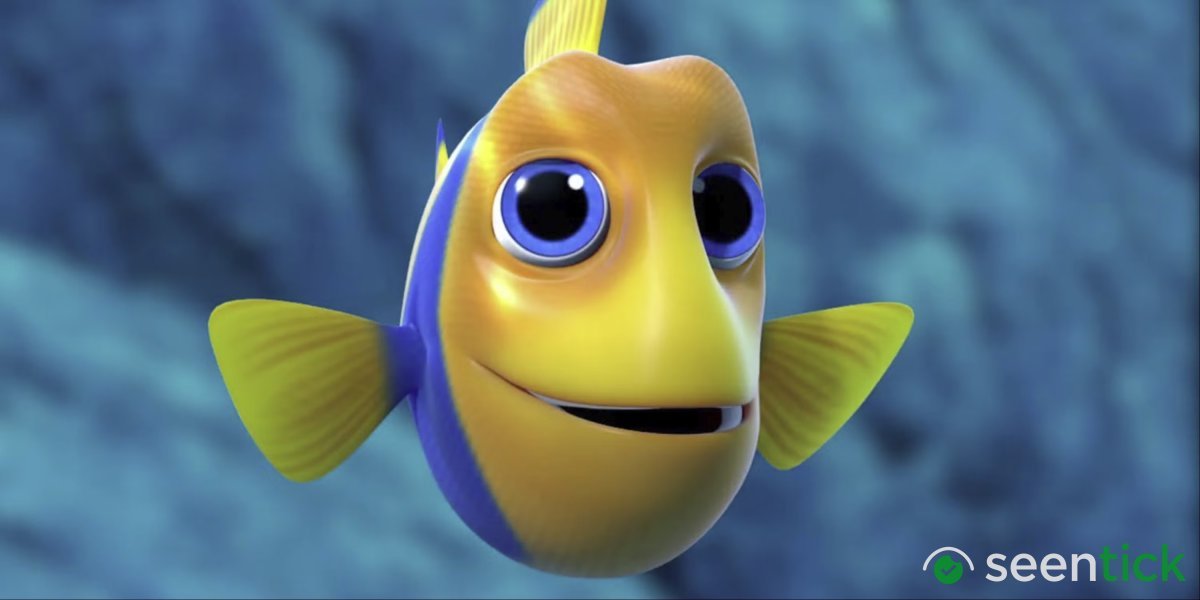
It's a film that, at its core, is emblematic of the technological advancement that 3D animation has undergone since the 90s. All of the other films on this could, even at their worst, make a feigned argument of genuine attempts being made to create something watchable that could be enjoyed However, it's difficult to imagine a single person who could find enjoyment in watching Finding Jesus from beginning to end, as it's one of the most boring, lazily constructed insults to the medium of animation that has ever been made.
This faith-based riff on Finding Nemo sees a duo of fish friends traveling across the sea to hear stories of faith and joy about the love of god and the kindness of Jesus Christ. It should be stated that this film's failures have nothing to do with it being a story centered around Christianity and everything to do with the fact that it uses only a handful of shots of original animation and repeats these same shots for 69 minutes straight.
You get the gist of the film
Frequently Asked Questions
What's Your Reaction?
 Like
1
Like
1
 Dislike
0
Dislike
0
 Love
1
Love
1
 Funny
1
Funny
1
 Wow
0
Wow
0
 Sad
0
Sad
0
 Angry
1
Angry
1

Movies, series, and everything happening around Indian entertainment keep me busy. I cover OTT releases, box-office conversations, celebrity news, and the changing world of streaming, with a particular interest in the stories and trends that audiences are talking about right now.









Comments (0)