

Sri Lanka beckons, but for refugees in Tamil Nadu, a long road to ‘homecoming’
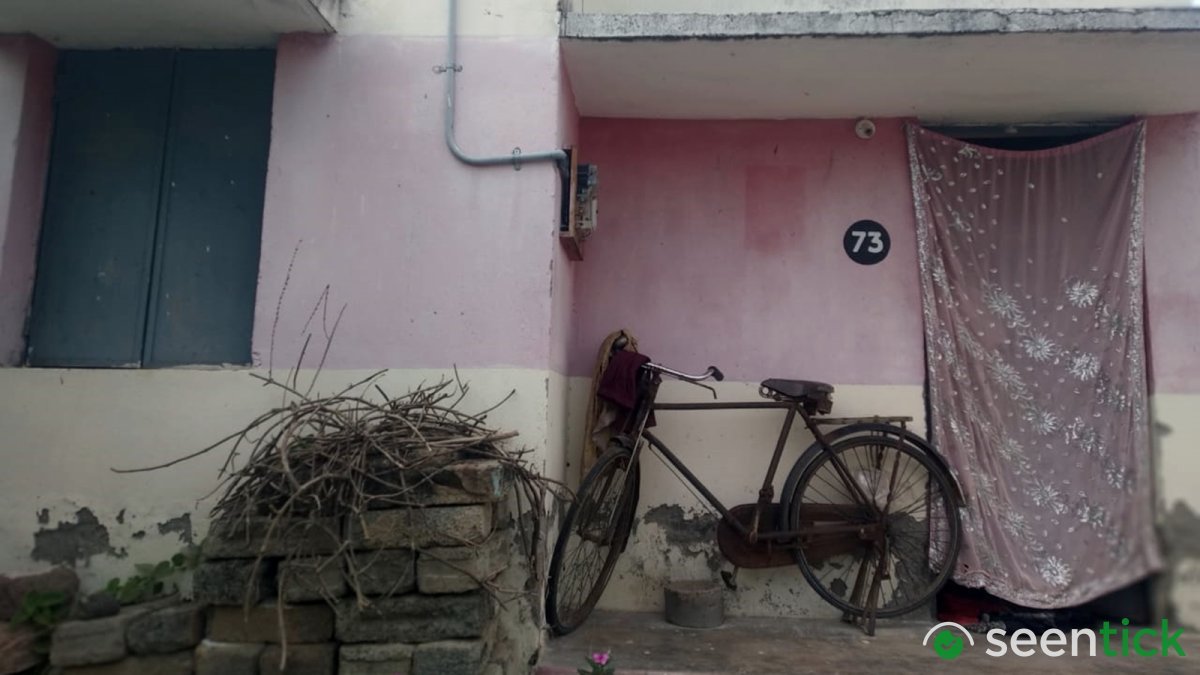
Sri Lanka beckons, but for refugees in Tamil Nadu, a long road to ‘homecoming’
- Five days before his family fled Sri Lanka, men from the Eelam People’s Revolutionary Liberation Front arrived looking for boys above the age of 12.
- The children stayed there from this morning until 9 at night.
- Read | Sri Lankan refugees in Tamil Nadu can return home: What are the conditions? On the night of July 22, 1990, they finally crossed the Palk Strait, getting off near Dhanushkodi on the Indian shore.
Five days before his family fled Sri Lanka, men from the Eelam People’s Revolutionary Liberation Front arrived looking for boys above the age of 12. Mahendran was 11. His parents hid him, his brother and cousins in the narrow space between the roof and a false ceiling of their home.
The children stayed there from this this morning until 9 at night. Soon afterwards, the family left home, escaping 15 km to Pesalai in the Mannar island.


Two of Mahendran’s cousins travelling in another vehicle were captured Mahendran’s family waited 15 days on the Mannar island for a boat, surviving on limited food, and dodging the LTTE and the Sri Lankan military.
Read | Sri Lankan refugees in Tamil Nadu can return home: What are the conditions? On the night of July 22, 1990, they finally crossed the Palk Strait, getting off near Dhanushkodi on the Indian shore. The water, Mahendran still remembers, reached above his father’s waist as he carried the children to land.
Thirty-six years later, Mahendran lives in Pudukkottai. His father, who was 42 when the family fled, passed away just seven years later. Mahendran went to school in Tamil Nadu, studied at Loyola College in Chennai, and now sells furniture on instalments.
Ask the 47-year-old where he comes from and his answer is still “Ceylon”. Elangeswaran, one of the refugees living in Tamil Nadu now for 36 years. (Express photo) His son and daughter, he says, would answer differently: Tamil Nadu.
That gap between two generations is what Sri Lanka is seeking to bridge, removing this month a longstanding legal obstacle to the voluntary return of refugees who fled the civil war without valid passports or through unauthorised departure points. As per a Cabinet decision Those cleared will not face prosecution under immigration law merely for having left the country without authorisation during the war.
It applies to all those who left before May 19, 2009, when the civil war ended. This is a major leap for many refugees. As late as August 2025, four returnees were detained on arrival in Sri Lanka because they had originally left the country illegally.
The Lankan government’s new decision has been welcomed But, for the nearly 90,000 Sri Lankan refugees in India, moving back is not an easy decision. More than 58,000 of them live in 103 camps spread across 29 districts of Tamil Nadu, and another 30,000 outside the camps, with one special camp within the Tiruchi Central Prison complex.
The long road home Sri Lanka is a difficult choice even though, more than three decades after many of them arrived in India, they continue to be filed with police officers officers and subject to periodic renewals, sometimes weekly. Those living in camps are allowed to leave the premises at 6 am but generally required to be back at 6 pm.
There are curbs on travel outside Tamil Nadu. Says Mahendran: “The important thing is not a warm welcome, but how the government expects us to live.
How do they expect us to survive, how do we buy food there?” A friend who returned eight years ago managed to find his feet in Lanka, he says, and the dream of “Ceylon” is always there.
But Mahendran can’t set aside questions about land, shelter, employment and his children’s education. “Should we go back and start a life from scratch, worse than a refugee life here?… Am I asking for too much? I don’t know,” he says.
While successive Lankan governments have offered returning refugees resettlement assistance, including with housing and livelihood, the latest Cabinet decision does not spell out any new package. A senior expert who has worked closely on the repatriation of Sri Lankan refugees for nearly three decades says the response has been tepid.
Only about 400 refugees have returned over the past two years, the expert says, with just 36 currently on the waiting list, having applied over the past nine months.
“After the Cabinet decision in Sri Lanka, there is no surge reported in applications,” he says. The reluctance of refugees to return has less to do with immigration issues than Lanka’s economic crisis and uncertainty over livelihoods, says the expert. Only around 15-20% of refugees own land back in Lanka.
Even the modest financial assistance available for return is shrinking. The repatriation grant of Rs 11,250 per person is now Rs 8,000 because of the UN’s funding crunch, he says. The longer trend is striking.
Annual returns to Sri Lanka fell from 1,673 in 2011 to 1,264 in 2012, 711 in 2013, 396 in 2014 and 452 in 2015. They rose to 852 in 2016 and 1,520 in 2017, before falling again to 1,283 in 2018, and 963 in 2019.
The numbers fainted thereafter: 196 in 2020, 96 in 2021, 208 in 2022, 326 in 2023, 203 in 2024 and just 92 in 2025.
But 246 people belonging to 46 families returned between July 2025 and February 2026 without facing any official pushback, demonstrating Lanka’s new resolve. Too much change, or too little? The political situation in Sri Lanka is much more favourable towards Tamils than when they fled.
But, apprehensions remain. A visible military presence remains in the north, where the Tamils are concentrated, and Tamil groups continue to complain of surveillance, unresolved land disputes and restrictions around political activity. Politically, Tamil parties have been asking for greater devolution, land release and a new Constitution addressing long-standing Tamil aspirations.
Time is another factor. Nearly 73% of the refugees living in camps in Tamil Nadu have been here more than 30 years, with 44-46% born in India. For most of them, India is the only country they have known.
Many consequently hope that India will offer them a durable solution here, rather than requiring return to Sri Lanka. Mahendran is immensely grateful to the Indian authorities, especially for the previous DMK government giving refugee families a 320-sq-ft house. But if that seemed enough once, it doesn’t any more after so long.
“My Indian friends can take a loan up to Rs 1 crore and do business. But I don’t even have a ration card or a voter ID.
Even if I have money to buy a new two-wheeler, I can’t as I am a refugee… I feel I deserve some rights too after so long,” Mahendran says, adding that he hesitates to tell strangers about the camp.
“Let us live like you.” Elangeswaran understands that impatience. He was 29 when he left Sri Lanka in September 1990, travelling from Vavuniya towards Mannar before taking a boat to Dhanushkodi. Police took the family to Mandapam, where he remembers hundreds of refugees, before they were moved Like Mahendran, Elangeswaran has spent 36 years in India.
His son is 20; his daughter, 27, has completed a degree. Yet, he says, “Whatever it may be, we are called refugees.” His family has been trying to return for two years, Elangeswaran says, and so he welcomes the Lankan government’s offer. Were his documents to be cleared tomorrow, he would leave “immediately”.
If citizenship were available in India, or dual citizenship possible, he would have considered remaining, Elangeswaran adds. But, a lifetime of remaining under official watch and suspicion of being a LTTE sympathiser has left him tired. Plus, unlike Mahendran, Elangeswaran has land in Sri Lanka, even if abandoned and encroached upon.
“We have to go and reoccupy it,” he says. Elangeswaran’s daughter Juvitha, 27, has never visited Sri Lanka. A graduate in English literature, her entire life and her friend circle are here.
Still, she wants to leave. “There are no jobs for me here. I cannot get a government job, and private jobs offer a pittance.
I hope to settle down in Sri Lanka, even if the first years are difficult,” Juvitha says. The 27-year-old doesn’t hesitate about what Lanka means to her: “My native place.” Mahendran hopes he can offer the choice to his children too.
Or, he says: “My dad was a refugee, I am one, my children and grandchildren are also going to be refugees.” Five days before his family fled Sri Lanka, men from the Eelam People’s Revolutionary Liberation Front arrived looking for boys above the age of 12.
Mahendran was 11. His parents hid him, his brother and cousins in the narrow space between the roof and a false ceiling of their home. The children stayed there from this this morning until 9 at night.
Read More: Nepal Floods: Indian Nationals Among Over 547 Dead, Thousands Missing
Soon afterwards, the family left home, escaping 15 km to Pesalai in the Mannar island. Two of Mahendran’s cousins travelling in another vehicle were captured Mahendran’s family waited 15 days on the Mannar island for a boat, surviving on limited food, and dodging the LTTE and the Sri Lankan military.
Read | Sri Lankan refugees in Tamil Nadu can return home: What are the conditions?
On the night of July 22, 1990, they finally crossed the Palk Strait, getting off near Dhanushkodi on the Indian shore. The water, Mahendran still remembers, reached above his father’s waist as he carried the children to land. Thirty-six years later, Mahendran lives in Pudukkottai.
His father, who was 42 when the family fled, passed away just seven years later. Mahendran went to school in Tamil Nadu, studied at Loyola College in Chennai, and now sells furniture on instalments. Ask the 47-year-old where he comes from and his answer is still “Ceylon”.
Elangeswaran, one of the refugees living in Tamil Nadu now for 36 years. (Express photo) His son and daughter, he says, would answer differently: Tamil Nadu.
That gap between two generations is what Sri Lanka is seeking to bridge, removing this month a longstanding legal obstacle to the voluntary return of refugees who fled the civil war without valid passports or through unauthorised departure points.
As per a Cabinet decision Those cleared will not face prosecution under immigration law merely for having left the country without authorisation during the war. It applies to all those who left before May 19, 2009, when the civil war ended. This is a major leap for many refugees.
As late as August 2025, four returnees were detained on arrival in Sri Lanka because they had originally left the country illegally. The Lankan government’s new decision has been welcomed But, for the nearly 90,000 Sri Lankan refugees in India, moving back is not an easy decision.
More than 58,000 of them live in 103 camps spread across 29 districts of Tamil Nadu, and another 30,000 outside the camps, with one special camp within the Tiruchi Central Prison complex.
The long road home Sri Lanka is a difficult choice even though, more than three decades after many of them arrived in India, they continue to be filed with police officers officers and subject to periodic renewals, sometimes weekly. Those living in camps are allowed to leave the premises at 6 am but generally required to be back at 6 pm.
There are curbs on travel outside Tamil Nadu. Says Mahendran: “The important thing is not a warm welcome, but how the government expects us to live.
How do they expect us to survive, how do we buy food there?” A friend who returned eight years ago managed to find his feet in Lanka, he says, and the dream of “Ceylon” is always there.
But Mahendran can’t set aside questions about land, shelter, employment and his children’s education. “Should we go back and start a life from scratch, worse than a refugee life here?… Am I asking for too much? I don’t know,” he says.
While successive Lankan governments have offered returning refugees resettlement assistance, including with housing and livelihood, the latest Cabinet decision does not spell out any new package. A senior expert who has worked closely on the repatriation of Sri Lankan refugees for nearly three decades says the response has been tepid.
Only about 400 refugees have returned over the past two years, the expert says, with just 36 currently on the waiting list, having applied over the past nine months.
“After the Cabinet decision in Sri Lanka, there is no surge reported in applications,” he says. The reluctance of refugees to return has less to do with immigration issues than Lanka’s economic crisis and uncertainty over livelihoods, says the expert. Only around 15-20% of refugees own land back in Lanka.
Even the modest financial assistance available for return is shrinking. The repatriation grant of Rs 11,250 per person is now Rs 8,000 because of the UN’s funding crunch, he says. The longer trend is striking.
Annual returns to Sri Lanka fell from 1,673 in 2011 to 1,264 in 2012, 711 in 2013, 396 in 2014 and 452 in 2015. They rose to 852 in 2016 and 1,520 in 2017, before falling again to 1,283 in 2018, and 963 in 2019.
The numbers fainted thereafter: 196 in 2020, 96 in 2021, 208 in 2022, 326 in 2023, 203 in 2024 and just 92 in 2025.
But 246 people belonging to 46 families returned between July 2025 and February 2026 without facing any official pushback, demonstrating Lanka’s new resolve. Too much change, or too little? The political situation in Sri Lanka is much more favourable towards Tamils than when they fled.
But, apprehensions remain. A visible military presence remains in the north, where the Tamils are concentrated, and Tamil groups continue to complain of surveillance, unresolved land disputes and restrictions around political activity. Politically, Tamil parties have been asking for greater devolution, land release and a new Constitution addressing long-standing Tamil aspirations.
Time is another factor. Nearly 73% of the refugees living in camps in Tamil Nadu have been here more than 30 years, with 44-46% born in India. For most of them, India is the only country they have known.
Many consequently hope that India will offer them a durable solution here, rather than requiring return to Sri Lanka. Mahendran is immensely grateful to the Indian authorities, especially for the previous DMK government giving refugee families a 320-sq-ft house. But if that seemed enough once, it doesn’t any more after so long.
“My Indian friends can take a loan up to Rs 1 crore and do business. But I don’t even have a ration card or a voter ID.
Even if I have money to buy a new two-wheeler, I can’t as I am a refugee… I feel I deserve some rights too after so long,” Mahendran says, adding that he hesitates to tell strangers about the camp.
“Let us live like you.” Elangeswaran understands that impatience. He was 29 when he left Sri Lanka in September 1990, travelling from Vavuniya towards Mannar before taking a boat to Dhanushkodi. Police took the family to Mandapam, where he remembers hundreds of refugees, before they were moved Like Mahendran, Elangeswaran has spent 36 years in India.
His son is 20; his daughter, 27, has completed a degree. Yet, he says, “Whatever it may be, we are called refugees.” His family has been trying to return for two years, Elangeswaran says, and so he welcomes the Lankan government’s offer. Were his documents to be cleared tomorrow, he would leave “immediately”.
If citizenship were available in India, or dual citizenship possible, he would have considered remaining, Elangeswaran adds. But, a lifetime of remaining under official watch and suspicion of being a LTTE sympathiser has left him tired. Plus, unlike Mahendran, Elangeswaran has land in Sri Lanka, even if abandoned and encroached upon.
“We have to go and reoccupy it,” he says. Elangeswaran’s daughter Juvitha, 27, has never visited Sri Lanka. A graduate in English literature, her entire life and her friend circle are here.
Still, she wants to leave. “There are no jobs for me here. I cannot get a government job, and private jobs offer a pittance.
I hope to settle down in Sri Lanka, even if the first years are difficult,” Juvitha says. The 27-year-old doesn’t hesitate about what Lanka means to her: “My native place.” Mahendran hopes he can offer the choice to his children too.
Or, he says: “My dad was a refugee, I am one, my children and grandchildren are also going to be refugees.”
What's Your Reaction?
 Like
Like
 Dislike
 Love
Love
 Funny
Funny
 Wow
2
Wow
2
 Sad
Sad
 Angry
Angry

Tech journalist and AI enthusiast who enjoys keeping up with the latest in hardware, processors, emerging AI tools, and software. I like digging into new technology, understanding how things actually work, and following the developments that could shape the way we use technology in the future.









Comments (0)