

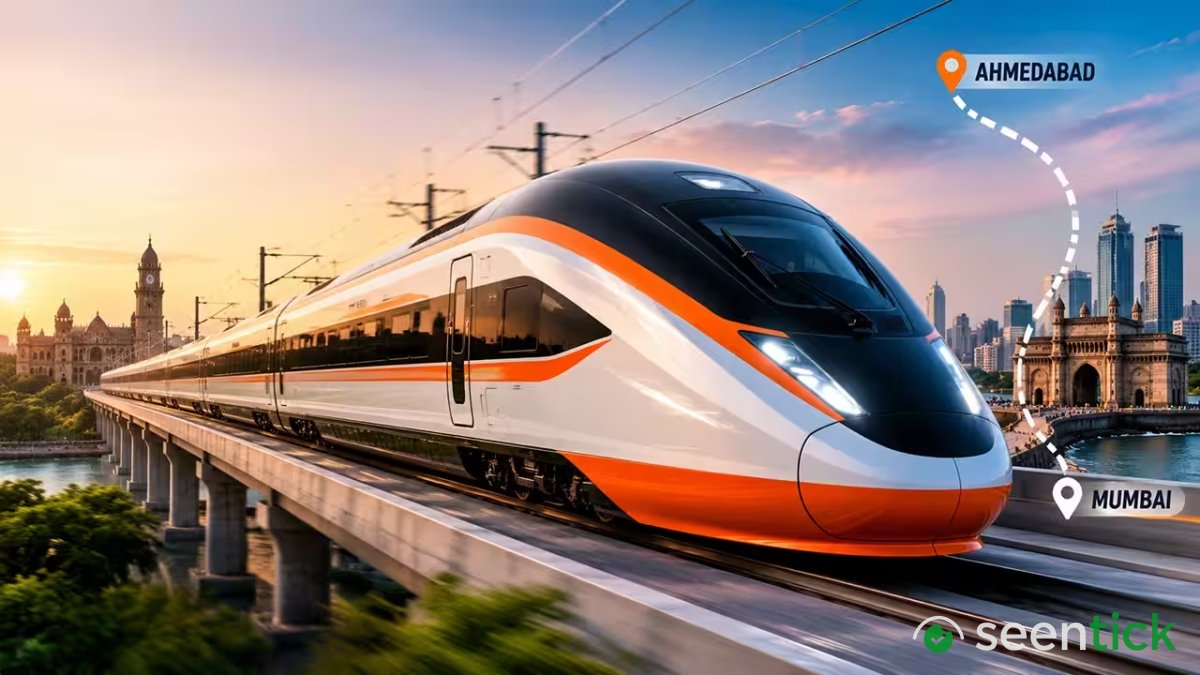
India to Manufacture 350 kmph Bullet Trains by 2030, BEML Secures Rs 5,400 Crore Contract
Key Highlights
- BEML secures Rs 5,400 crore contract for manufacturing B28 trains.
- India plans to develop and manufacture its own high-speed bullet trains by 2030.
- Bullet trains will feature fully air-conditioned coaches with world-class facilities.
Indian Railways has set a new goal to manufacture its own high-speed bullet trains with a design speed of 350 kmph by 2030. The country plans to develop and produce these trains in-house, putting it on par with Japan's next-generation E10 series. This is also scheduled to enter production in the same year.
According to the railway ministry's Cabinet proposal. The revised cost of the Mumbai-Ahmedabad High-Speed Rail (MAHSR) project has increased to over Rs 2 lakh crore. Almost twice the estimate prepared in 2015. The additional expenditure will be met through budgetary support.
Land acquisition costs have more than tripled to around Rs 19,700 crore, accounting for a significant portion of the increase.
Read More: Kotak Warns of $88-90bn Gold Imports, Calls for Committee to Solve Puzzle
BEML has secured a contract worth Rs 5,400 crore for manufacturing another 15 B28 trains. With two prototype trains expected to be ready for trial runs in the first quarter of 2027.
The company will begin testing the high-speed train sets that will have a design speed of 280 kmph.
The project aims to develop India's own Bharat Train Control System (BTCS). This will follow the approach adopted by China with its indigenous CTCS signalling and train control system. The proposal also includes the development of indigenous B28 high-speed trains, which have already begun work.
This move is part of a broader strategy to bolster domestic production. This enables the country to supply high-speed rail corridors worldwide with tailored rolling stock at competitive prices.
India's plans for bullet trains are part of its efforts to modernize its transportation infrastructure and reduce reliance on foreign technology. The entire 508-km Mumbai-Ahmedabad High-Speed Rail corridor is scheduled to be completed by December 2030. With the initial stretch likely to be opened in 2027.
Also Read: NPCI Framework to Introduce MDR for UPI Payments above Rs 2,000 Starting October 15
The development of indigenous high-speed trains will not only benefit India but also enhance its global competitiveness in the rail sector. With a design speed of 350 kmph, these trains will put India on par with Japan's next-generation E10 series. This is scheduled to enter production in the same year.
The increased expenditure on the MAHSR project has raised concerns about the financial burden on taxpayers. However, officials argue that the benefits of developing indigenous high-speed trains will outweigh the costs in the long run.
The development of Bharat Train Control System (BTCS) is expected to have a significant impact on India's rail network. This enables more efficient and safe operations. The project will also create new job opportunities and stimulate economic growth in the regions where the high-speed rail corridors are being developed.
What's Your Reaction?
 Like
Like
 Dislike
 Love
Love
 Funny
Funny
 Wow
2
Wow
2
 Sad
Sad
 Angry
2
Angry
2

I write about the forces shaping business and the global economy, from startup growth and changing markets to international trade and policy. My work focuses on breaking down complex developments into clear, practical insights and understanding what they could mean for businesses, investors, and the wider economy.











Comments (0)