
Hearing tech startup Legato emerges from stealth with $12M and a peek at its AI hearing glasses
- Back Hearing loss affects an estimated 50 million adults in the United States, but only around 20% of those with diagnosed hearing loss
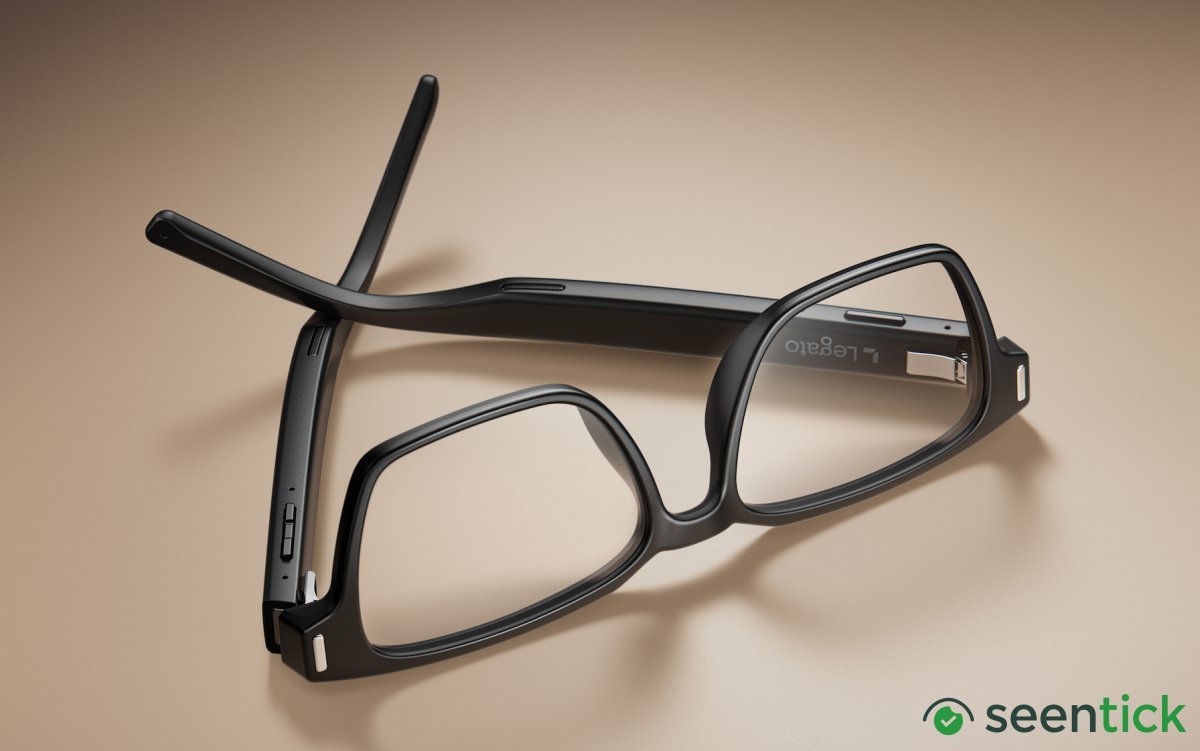
- The glasses, called Legato Frames, integrate the company’s patented hearing-assistance technology into the arms of eyewear frames. Lega
- After spending years at larger companies, Trivedi took some time off to explore the intersection of hearing technology and smart eyewea
Back Hearing loss affects an estimated 50 million adults in the United States, but only around 20% of those with diagnosed hearing loss seek treatment. Legato, a new hearing tech company, aims to close that gap.
The startup is emerging from stealth on Wednesday with $12 million in funding and a first look at its AI hearing glasses, the company informed TechCrunch exclusively.


The glasses, called Legato Frames, integrate the company’s patented hearing-assistance technology into the arms of eyewear frames. Legato Frames are expected to launch later this fall.
Legato was founded Trivedi left Bose to work at EssilorLuxottica, where he led smart eyewear efforts and worked on the Meta Ray-Bans, while Romine went on to serve as COO of hearing care company Audicus. For related coverage, explore our detailed analysis on Technology and Digital Systems.
Spending Years Larger Companies Updates
After spending years at larger companies, Trivedi took some time off to explore the intersection of hearing technology and smart eyewear. During that time, Trivedi came across technology he believed could bring the two together, so he contacted Romine and the pair founded Legato in late 2024.
“Our goal is to make hearing as ubiquitous as vision,” Trivedi said in an interview with TechCrunch.
“It’s kind of a no-brainer that you go to an eye exam, you get your glasses, you wear your glasses, and you’re happy, and you do that for the rest of your life — and the idea of it being blurry again where you would just stop wearing them is not a consideration. I think that’s what we want to do with hearing: just make it something that people address and almost forget about.” Legato is targeting people with mild to moderate hearing loss, which represents the largest segment of the hearing-loss population, the startup says.
The company started with the goal of making hearing care more accessible Legato set out to make the glasses as small and lightweight as possible, and developed a proprietary acoustic system, signal-processing stack, and mechanical architecture to achieve it. Traditional hearing aids often use directional microphones to focus on sounds coming from a particular direction, which works well in quiet settings but can be difficult in noisy environments, such as restaurants.
Legato Takes Different Approach Updates
Legato takes a different approach The goal is to make conversations clearer without creating the cognitively draining listening experience that can come with some traditional hearing aids. “We wanted to deliver an experience that was unique,” Trivedi said. “So a form factor that’s really discreet and looks normal.
Read More: Amjad Masad, CEO and co-founder of Replit, joins the Disrupt
They’re meant to feel and look like regular glasses. And so, we want it to be a product that’s effortless, easy to use, with kind of no controls that you need to fiddle with, works everywhere, works throughout your day, doesn’t need a ton of configuration, and just delivers you better hearing.” While the frames have an open-ear design, sound isn’t broadcast to people around you.
They feature a dual-speaker system that directs sound toward the wearer while canceling sound that escapes, reducing sound The company’s funding, which is from Neotribe Ventures, Listen, and Village Global, has largely gone toward product development, along with marketing efforts. “We have an opportunity to address a population with this product and build something that delivers without all the compromises of traditional hearing aids,” Trivedi said.
“Hearing, at first glance, it’s not so much just like ‘I want to hear the TV better.’ It’s really about connection. When you hear better, you connect to the world. It reduces dementia risk and depression risk,” he continued.
“There’s impactful hearing health factors associated with better hearing. We’ve got a product that lives on people for 16 hours that is trusted to help them with their hearing and their vision, and we’d love to continue helping them in every way we can.” When the frames launch later this year, Legato says they’ll be available through select eye-care providers nationwide and will “cost a fraction” of traditional hearing aids and may be eligible for vision insurance when purchased through an eye-care clinic.
When you purchase through links in our articles, we may earn a small commission. This doesn’t affect our editorial independence. Aisha is a consumer news reporter at TechCrunch.
Prior to joining the publication in 2021, she was a telecom reporter at MobileSyrup. Aisha holds an honours bachelor’s degree from University of Toronto and a master’s degree in journalism from Western University. You can contact or verify outreach from Aisha com or via encrypted message at aisha_malik.01 on Signal.
Don’t miss out. The startup community will gather to answer a pivotal question: How do you build sustainably in the AI era?
Two years after launch, Walmart’s Flipkart is closing in on India’s quick-commerce leaders Inherent, founded Michael Polansky is training an AI model on skin that’s still alive How AI accounting startup Rillet raised $100M and became a unicorn in 48 hours Nvidia just demonstrated that the harness, not the AI model, is now the real hero Tesla’s solar roof is dead — here’s what went wrong Oura faces legal case accusing it of misleading consumers about sleep-tracking accuracy
Frequently Asked Questions
What's Your Reaction?
 Like
0
Like
0
 Dislike
1
Dislike
1
 Love
0
Love
0
 Funny
0
Funny
0
 Wow
2
Wow
2
 Sad
0
Sad
0
 Angry
0
Angry
0

Tech journalist and AI enthusiast who enjoys keeping up with the latest in hardware, processors, emerging AI tools, and software. I like digging into new technology, understanding how things actually work, and following the developments that could shape the way we use technology in the future.













Comments (0)