
Indian Railways to Expand High-Density Rail Network to Ease Congestion
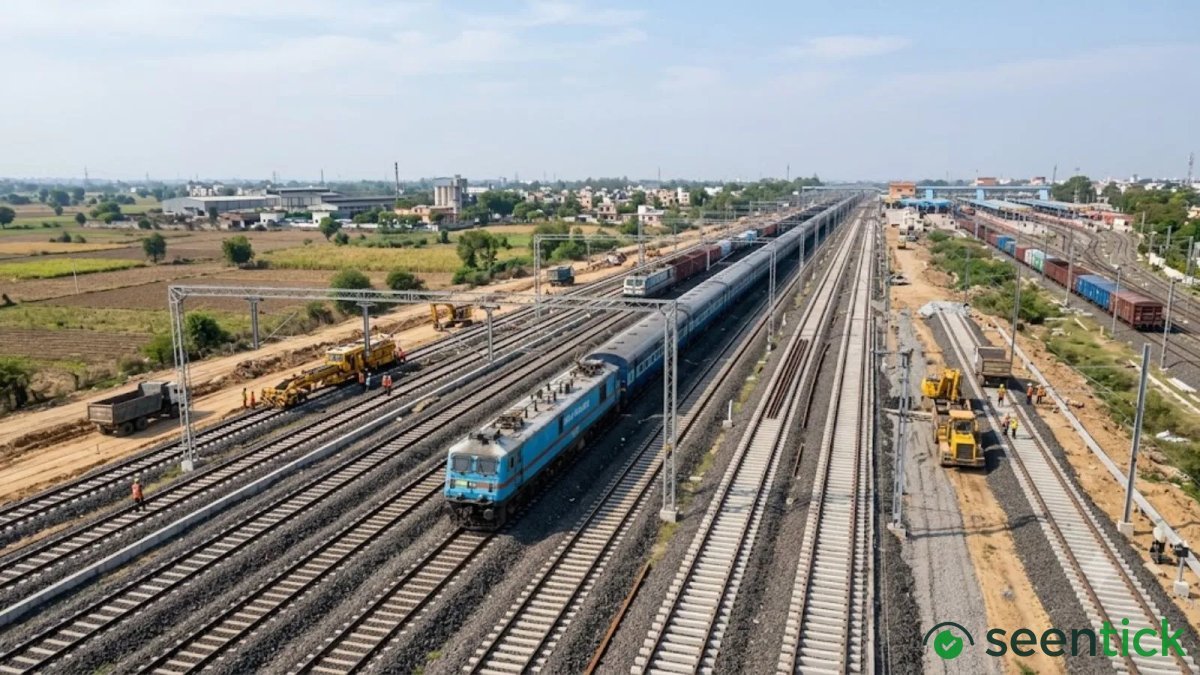
- Indian Railways has announced plans to expand its high-density rail network
- The expansion is part of Indian Railways' broader efforts to increase capacity and prepare the network for future demand. The seven hig
- According to Railway Minister Ashwini Vaishnaw, these routes carry around 41 per cent of total railway traffic but cover nearly 11,000
Indian Railways has announced plans to expand its high-density rail network
The expansion is part of Indian Railways' broader efforts to increase capacity and prepare the network for future demand. The seven high-density routes are crucial for carrying a significant share of the country's total rail traffic, despite making up only about 16 per cent of the railway network.


For related coverage, explore our detailed analysis on Technology and Digital Systems.
Background Context
According to Railway Minister Ashwini Vaishnaw, these routes carry around 41 per cent of total railway traffic but cover nearly 11,000 km. The four-laning of the high-density network will allow trains to operate with greater flexibility and help reduce pressure on existing tracks.
Kavach 4.0, India's indigenously developed automatic train protection system, has been expanded to cover 2,490 route km across the Delhi-Mumbai and Delhi-Howrah rail corridors. The system comes with several upgrades, including improved train location accuracy, better signal information in large railway yards, and a station-to-station interface through optical fibre cable (OFC).
Rail transport is seen as an environmentally friendly mode of transport, producing significantly less greenhouse gas emissions compared to road or air transport. The expansion of the high-density rail network is expected to have a positive impact on the environment.
Technical Details
Kavach 4.0 has been commissioned on the high-density Delhi-Mumbai and Delhi-Howrah routes, with several sections passing through Uttar Pradesh. The system can also be directly integrated with the existing Electronic Interlocking System.
The system can also be directly integrated with the existing Electronic Interlocking System.
Read More: India's Cautious Approach to US President Trump's Unpredictable
Kavach 4.0: Route-wise Commissioning Progress 2,490 Rkm Total route km commissioned, as on 13.07.2026 Delhi-Mumbai Route: 1,344 Rkm Section-wise progress (Route Km) 1,248 96 Tilak Bridge-Junction cabin-Palwal-Mathura-Nagda-Vadodara-Virar (except Mangalmhudi-Panchpipliya; also passes through UP): 1,248 Rkm Vadodara-Ahmedabad section: 96 Rkm Delhi-Howrah Route: 1,146 Rkm Section-wise progress (Route Km) 563 260 159 71 50 43 Chipyana-Tundla-Kanpur-Subedarganj (passes through UP): 563 Rkm Chota Ambana-Bardhaman-Howrah: 260 Rkm Gaya-Sarmatarn-Nimiaghat: 159 Rkm Kanpur-Lucknow (passes through UP): 71 Rkm DDU(FOC)-Bhabua Road (passes through UP): 50 Rkm Sasaram-Pheser: 43 Rkm Kavach 4.0 has been commissioned on the high-density Delhi-Mumbai and Delhi-Howrah routes, with several sections passing through Uttar Pradesh.
High-Density Rail Network: Indian Railways plans to four-lane around 11,000 km of its high-density rail network to expand train capacity and ease congestion on key routes. The proposed infrastructure push is aimed at improving the movement of passenger and freight trains while further strengthening capacity across some of the busiest corridors.
On Wednesday, Railway Minister Ashwini Vaishnaw highlighted the importance of the seven high-density routes, which carry a significant share of the country's total rail traffic. Together, these routes cover nearly 11,000 km but account for around 41 per cent of total railway traffic, despite making up only about 16 per cent of the railway network.
He also highlighted the environmental and economic benefits of rail transport. The seven high-density routes include: Delhi-Howrah Howrah-Chennai Chennai-Mumbai Mumbai-Delhi Delhi-Chennai Mumbai-Howrah Delhi-Guwahati In a statement, the national transporter stated that the expansion is important for routes that handle heavy traffic between major cities and regions.
It added that more railway lines can allow trains to operate with greater flexibility and help reduce pressure on existing tracks. The four-laning of the high-density network is part of Indian Railways’ broader efforts to increase capacity and prepare the network for future passenger and freight demand.
Seven high-density railway routes (Image: Ministry of Railways) Kavach implementation on Indian Railways' high-density network In a written reply in the Lok Sabha on July 22, 2026, the Railway Minister stated that Kavach 4.0, India's indigenously developed automatic train protection (ATP) system, has been expanded to cover 2,490 route km across the Delhi-Mumbai and Delhi-Howrah rail corridors. According to the minister, Kavach 4.0 comes with several upgrades, including improved train location accuracy, better signal information in large railway yards and a station-to-station interface through optical fibre cable (OFC).
The system can also be directly integrated with the existing Electronic Interlocking System. Kavach 4.0: Route-wise Commissioning Progress 2,490 Rkm Total route km commissioned, as on 13.07.2026 Delhi-Mumbai Route: 1,344 Rkm Section-wise progress (Route Km) 1,248 96 Tilak Bridge-Junction cabin-Palwal-Mathura-Nagda-Vadodara-Virar (except Mangalmhudi-Panchpipliya; also passes through UP): 1,248 Rkm Vadodara-Ahmedabad section: 96 Rkm Delhi-Howrah Route: 1,146 Rkm Section-wise progress (Route Km) 563 260 159 71 50 43 Chipyana-Tundla-Kanpur-Subedarganj (passes through UP): 563 Rkm Chota Ambana-Bardhaman-Howrah: 260 Rkm Gaya-Sarmatarn-Nimiaghat: 159 Rkm Kanpur-Lucknow (passes through UP): 71 Rkm DDU(FOC)-Bhabua Road (passes through UP): 50 Rkm Sasaram-Pheser: 43 Rkm Kavach 4.0 has been commissioned on the high-density Delhi-Mumbai and Delhi-Howrah routes, with several sections passing through Uttar Pradesh.
Frequently Asked Questions
What's Your Reaction?
 Like
1
Like
1
 Dislike
0
Dislike
0
 Love
0
Love
0
 Funny
0
Funny
0
 Wow
2
Wow
2
 Sad
0
Sad
0
 Angry
0
Angry
0

Tech journalist and AI enthusiast who enjoys keeping up with the latest in hardware, processors, emerging AI tools, and software. I like digging into new technology, understanding how things actually work, and following the developments that could shape the way we use technology in the future.











Comments (0)