

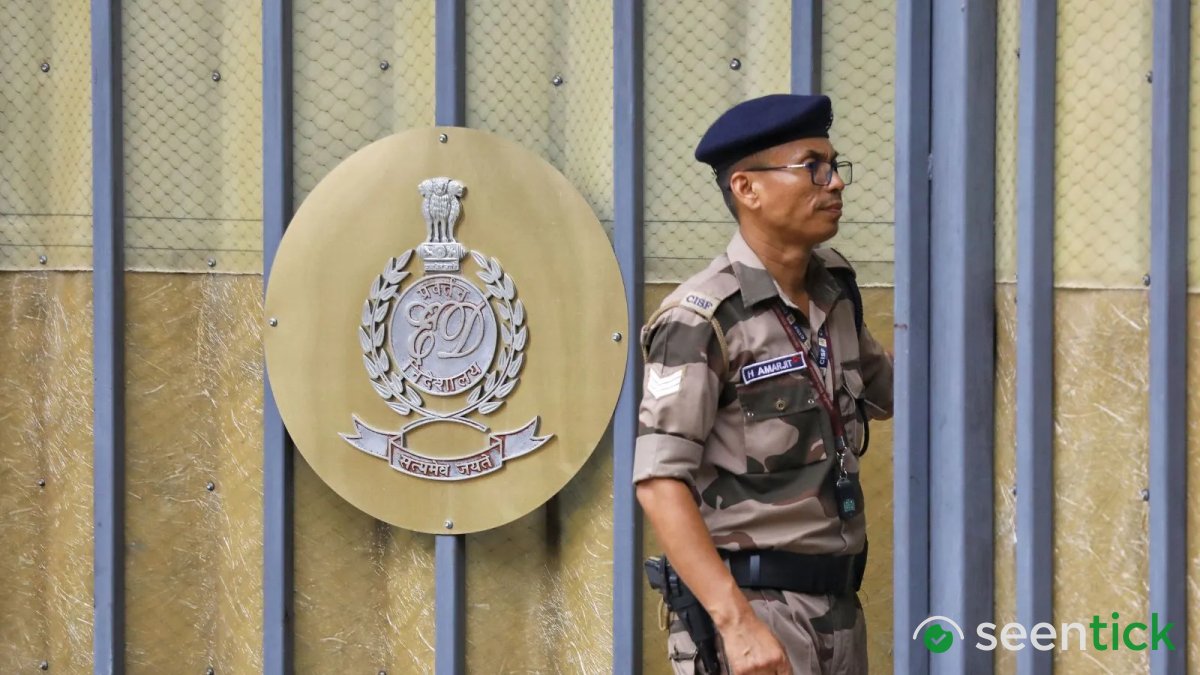
ED Flags Deep Haircuts, Re-examination of Collusive Resolution Cases Under IBC
Key Highlights
- ED identifies collusive resolution cases with deep haircuts under IBC.
- NCLT allows Essel Group founder Subhash Chandra to settle personal insolvency proceedings.
- ED flags malpractices including circumvention of Section 29A and artificially large haircuts.
In FY26, recovery fell to 20%, the lowest in five years, down from 37% in FY25, 28% in FY24, 39% in FY23 and 24% in FY22. The ED said it also “analysed the legal tension between the moratorium under Section 14 and the immunity under Section 32A of the Code on the one hand, and attachment powers under the PMLA on the other”.
Section Ibc Provides Moratorium Leading
Section 14 of the IBC provides for a “moratorium”, leading to pause in legal action by agencies, while Section 32A grants immunity to a company's assets after a new, unrelated buyer (successful resolution applicant) takes over. Various zones of the agency “were directed to identify red flags, obtain copies of applications relating to preferential, undervalued, fraudulent and extortionate transactions from resolution professionals, file intervention applications before the tribunal, and initiate independent investigations under the PMLA against the masterminds," the ED said.
The central debate around the IBC is whether it should prioritise reviving distressed companies or maximising recovery for creditors. The government maintains that the Code’s primary objective is “resolution, not recovery”. Banks, however, have raised concerns about asset valuation, saying divergent methodologies, inadequate accounting of assets and opacity in valuation can lead to excessive haircuts.
Read More: PM Modi Warns BRICS Against Weaponising Critical Minerals
Agency Also Flagged Coordination State
The agency also flagged coordination with the state police officers and other law enforcement agencies. fast-tracking of trials; aggressive pursuit of restitution of attached and confiscated assets to legitimate victims; and mandatory valuation of all confirmed attached properties by government-approved valuers.
On expediting trials, the conference emphasised identification of at least 10 high-profile cases in each region for conclusion of trial and conviction within six to eight months.
At the conference, the ED noted that one of the cases discussed saw the agency intervening before the NCLT. This comes after which the order initiating the corporate insolvency resolution process of a company was recalled. Sources shared the case relates to Alchemist Limited, founded by former Rajya Sabha MP KD Singh.
Also Read: Probe Ordered After Adult Film Star Stays at Rourkela Circuit House
While the ED was probing money laundering charges in an alleged Rs 1,842-crore public financial scandal related to the company, an insolvency application under Section 9 of the IBC was filed by an operational creditor named Sai Tech Medicare Pvt Ltd to push Alchemist Limited into a corporate insolvency resolution process (CIRP).
Following the ED’s intervention, the NCLT terminated the entire insolvency process on February 3 this year. In its order, the NCLT shared the ED submitted that the "Alchemist Group, under a well-hatched conspiracy, adopted the route of insolvency resolution through its group companies against its own companies and got its ex-employee appointed as RP (resolution professional) to receive the funds (proceeds of crime) through legal channel in their companies by misleading this Hon'ble Tribunal.
They are misusing the insolvency resolution process to siphon off funds and to evade criminal liability under PMLA, 2002." "The applicant submitted that the Alchemist Group is misusing the IBC process to obtain immunity under Section 32A, thereby frustrating PMLA proceedings,” the NCLT said.
Frequently Asked Questions
What's Your Reaction?
 Like
1
Like
1
 Dislike
 Love
Love
 Funny
Funny
 Wow
Wow
 Sad
1
Sad
1
 Angry
2
Angry
2

Tech journalist and AI enthusiast who enjoys keeping up with the latest in hardware, processors, emerging AI tools, and software. I like digging into new technology, understanding how things actually work, and following the developments that could shape the way we use technology in the future.











Comments (0)