

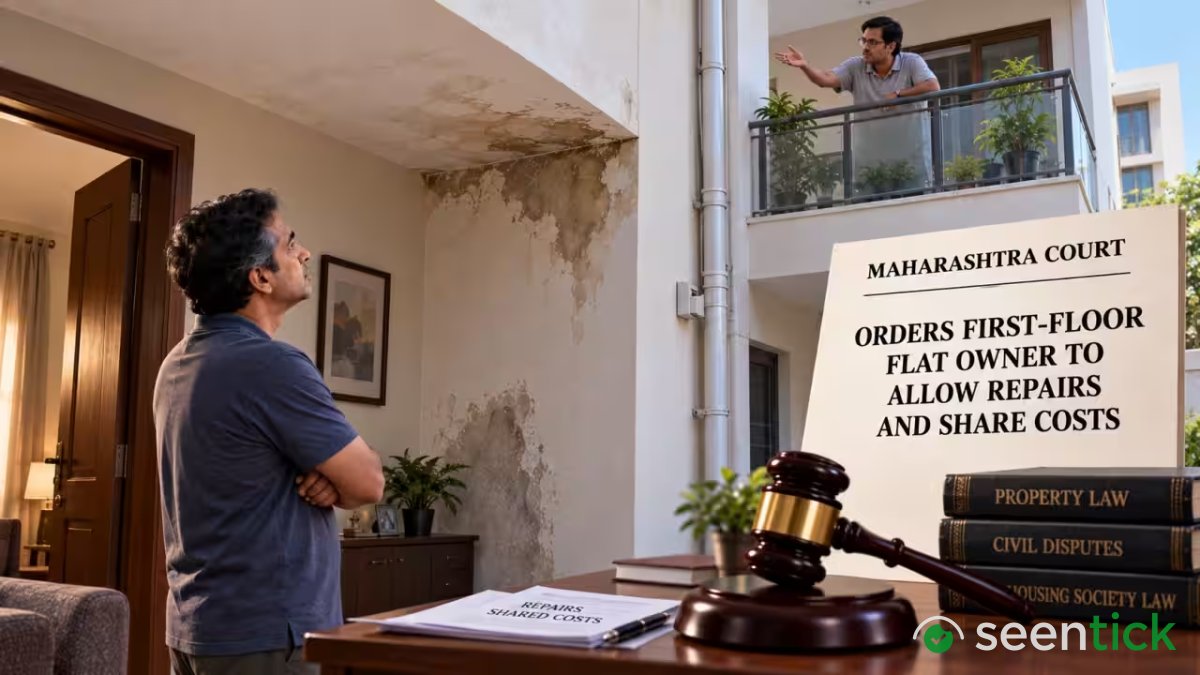
Eight-Year Water Leak Battle Ends as Maharashtra Co-op Appellate Court Orders Repairs
Key Highlights
- Maharashtra Co-operative Appellate Court orders repairs in first-floor flat after eight-year legal battle over water leak issue with ground-floor flat.
- Ground-floor resident had alleged that previous owner of upper-floor flat had carried out civil work involving bathroom floor tiles leading to leakage.
- Repairs were arranged at a cost of Rs 4,500 and completed on May 22, 2016, but the issue returned in 2018.
Co-habiting in a housing society can come with its set of challenges. One such case is of a ground floor flat occupant who was constantly troubled This water leakage problem between two neighbours in a housing society turned into an eight-year legal battle.
With the Maharashtra Co-operative Appellate Court eventually directing the owner of the first-floor flat to allow repairs in his home.What the case is aboutThe dispute dates back to July 2012. The owner of a ground-floor flat had been dealing with water leaking into his home from the flat immediately above.The upper-floor flat had earlier belonged to another owner.
The ground-floor resident alleged that before selling it. The previous owner had carried out civil work involving the bathroom floor tiles, which he believed had led to the leakage. The society was informed about the problem at the time.
However, no action followed.The flat was sold in September 2014, after which the leakage became worse, according to the ground-floor owner. He again approached the society. This time, repairs were arranged at a cost of Rs 4,500 and completed on May 22, 2016.
The ground-floor owner was willing to pay the entire amount.For a while, the repairs worked. But in 2018, the water leakage issue returned.Instead of immediately going back to the society, the ground-floor owner decided to approach the upstairs residents directly.
He arranged for his contractor to carry out repair work in their flat and paid Rs 36,750 for it.That too proved to be only a temporary solution.Why the first floor flat owner objected to repairs The upstairs owner was no longer willing to let repair workers enter his flat. Leaving the leakage unresolved from 2018 onwards.The upstairs owner had objected to the repairs on several grounds.
He shared he was not against fixing the leakage. However, shared that the work carried out in 2018 He also shared that elderly family members and a minor child lived in the flat and that allowing workers unrestricted access could affect their privacy and peaceful occupation of the home.
Read More: Banks in Maharashtra, Odisha, Karnataka to Remain Shut on September 14 for Ganesh Chaturthi
He wanted the leakage to first be examined The dispute eventually reached court. On September 4, 2026, after eight years of litigation, the ground-floor owner secured relief from the Maharashtra Co-operative Appellate Court.Why did the court allow the repairs?Advocate Sana Raees Khan, who practices in the Supreme Court of India and founder of SRK legal law firm, told ET the Maharashtra State Co-operative Appellate Court found that there was sufficient basis to allow the repairs, particularly since leaving the problem unresolved could result in further loss.The court did not simply brush aside the concerns raised Privacy, safety and the possibility of damage to the flat were considered.
To address those concerns, an independent engineer was brought in to examine the premises.The engineer was selected from a list suggested After inspecting the flats, the engineer submitted the report to the court in a sealed envelope.The report confirmed that there was leakage in the ground-floor flat. It did not, however, identify exactly where the water was coming from.The upstairs owner relied on this to renew his objection to allowing workers into his flat.
But the appellate court took the view that the ground-floor family could not be expected to continue living with a leakage problem indefinitely.The court directed the upstairs owner to allow the repair work to be carried out. It also noted that, on a prima facie basis, the leakage appeared to be coming from the flat above.The court further referred to the society's There was also a society resolution dealing specifically with the cost of repairing water leakage.Who will pay for the repairs'he appellate court noted that, under the society's 159(a).The record also contained a resolution passed at the society's AGM a few years ago.
It provided that the cost of repairing water leakage would be shared equally The court held that the resolution was binding on both sides.The ground-floor owner had already told the trial court that he was prepared to bear the cost of the repairs. The appellate court's order now means that the upstairs owner has to provide access to his flat so that the work can be carried out.
Cohabiting Housing Society Can Come
Co-habiting in a housing society can come with its set of challenges. One such case is of a ground floor flat occupant who was constantly troubled This water leakage problem between two neighbours in a housing society turned into an eight-year legal battle.
With the Maharashtra Co-operative Appellate Court eventually directing the owner of the first-floor flat to allow repairs in his home.What the case is aboutThe dispute dates back to July 2012. The owner of a ground-floor flat had been dealing with water leaking into his home from the flat immediately above.The upper-floor flat had earlier belonged to another owner.
The ground-floor resident alleged that before selling it. The previous owner had carried out civil work involving the bathroom floor tiles, which he believed had led to the leakage. The society was informed about the problem at the time.
However, no action followed.The flat was sold in September 2014, after which the leakage became worse, according to the ground-floor owner. He again approached the society. This time, repairs were arranged at a cost of Rs 4,500 and completed on May 22, 2016.
The ground-floor owner was willing to pay the entire amount.For a while, the repairs worked. But in 2018, the water leakage issue returned.Instead of immediately going back to the society, the ground-floor owner decided to approach the upstairs residents directly.
Also Read: Fed's Rate Decision to Watch as Dalal Street Braces for Market Volatility
He arranged for his contractor to carry out repair work in their flat and paid Rs 36,750 for it.That too proved to be only a temporary solution.Why the first floor flat owner objected to repairs The upstairs owner was no longer willing to let repair workers enter his flat. Leaving the leakage unresolved from 2018 onwards.The upstairs owner had objected to the repairs on several grounds.
He shared he was not against fixing the leakage. However, shared that the work carried out in 2018 He also shared that elderly family members and a minor child lived in the flat and that allowing workers unrestricted access could affect their privacy and peaceful occupation of the home.
He wanted the leakage to first be examined The dispute eventually reached court. On September 4, 2026, after eight years of litigation, the ground-floor owner secured relief from the Maharashtra Co-operative Appellate Court.Why did the court allow the repairs?Advocate Sana Raees Khan, who practices in the Supreme Court of India and founder of SRK legal law firm, told ET the Maharashtra State Co-operative Appellate Court found that there was sufficient basis to allow the repairs, particularly since leaving the problem unresolved could result in further loss.The court did not simply brush aside the concerns raised Privacy, safety and the possibility of damage to the flat were considered.
To address those concerns, an independent engineer was brought in to examine the premises.The engineer was selected from a list suggested After inspecting the flats, the engineer submitted the report to the court in a sealed envelope.The report confirmed that there was leakage in the ground-floor flat. It did not, however, identify exactly where the water was coming from.The upstairs owner relied on this to renew his objection to allowing workers into his flat.
But the appellate court took the view that the ground-floor family could not be expected to continue living with a leakage problem indefinitely.The court directed the upstairs owner to allow the repair work to be carried out. It also noted that, on a prima facie basis, the leakage appeared to be coming from the flat above.The court further referred to the society's There was also a society resolution dealing specifically with the cost of repairing water leakage.Who will pay for the repairs'he appellate court noted that, under the society's 159(a).The record also contained a resolution passed at the society's AGM a few years ago.
It provided that the cost of repairing water leakage would be shared equally The court held that the resolution was binding on both sides.The ground-floor owner had already told the trial court that he was prepared to bear the cost of the repairs. The appellate court's order now means that the upstairs owner has to provide access to his flat so that the work can be carried out.
Frequently Asked Questions
What's Your Reaction?
 Like
2
Like
2
 Dislike
 Love
Love
 Funny
Funny
 Wow
2
Wow
2
 Sad
Sad
 Angry
Angry

I write about the forces shaping business and the global economy, from startup growth and changing markets to international trade and policy. My work focuses on breaking down complex developments into clear, practical insights and understanding what they could mean for businesses, investors, and the wider economy.













Comments (0)