
The question: dominating Indian politics: Is it worse when women swear
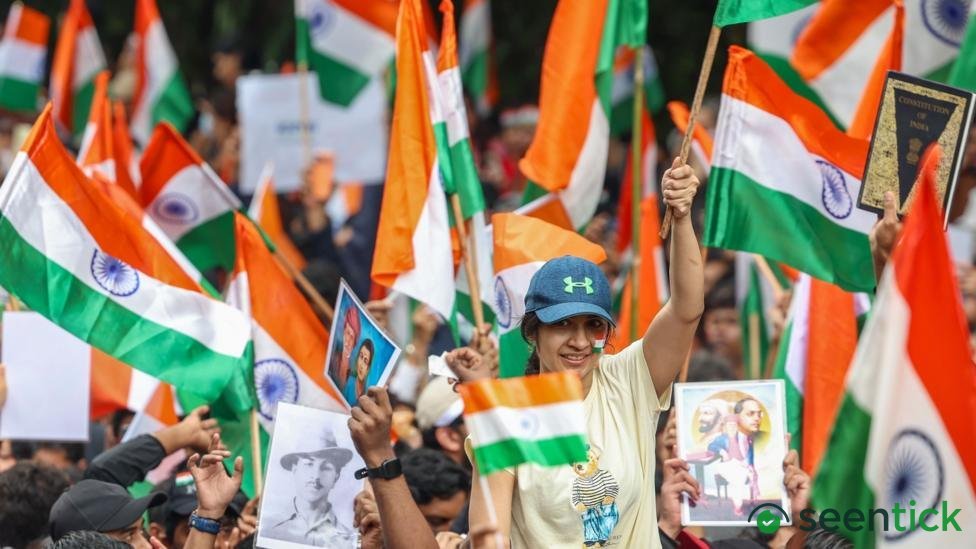
- The 35-day protest led Recent footage of young women swearing during a protest in India has sparked an unusual debate: are expletives w
- "If boys swear, there is no problem and it is allowed. But if a girl swears, it is a cultural shock," Gandhi shared. The protesters had
- The protests ended a month ago, but Rahul Gandhi's remarks have renewed the debate over how female activism, women voicing their views,
The 35-day protest led Recent footage of young women swearing during a protest in India has sparked an unusual debate: are expletives worse when they come from women? The latest to weigh in has been opposition MP Rahul Gandhi who criticised Prime Minister Narendra Modi's description of seeing young women swearing as a "culture shock".
"If boys swear, there is no problem and it is allowed. But if a girl swears, it is a cultural shock," Gandhi shared.


The protesters had been directing their anger at the government and some of the foul language targeted the prime minister, leading to outrage among his supporters, with even many critics of Modi's politics saying the women had crossed a line. For related coverage, explore our detailed analysis on Technology and Digital Systems.
Core Findings and Detailed Timeline
The protests ended a month ago, but Rahul Gandhi's remarks have renewed the debate over how female activism, women voicing their views, stridently - even with expletives - are viewed in the country. It started last month when some young women used foul language against the prime minister during the weeks-long Cockroach Janta Party (CJP) protests in Delhi and other cities, seeking education reforms.
Modi himself addressed the issue in a selfie video where he shared it was "a culture shock" to see young women using expletives, but added that he forgave them. The prime minister, however, did not comment on the violent police officers crackdown against the protesters or support women who shared they had been trolled and had received rape threats for attending the CJP protests.
At the weekend, Rahul Gandhi, who serves as the leader of the opposition in the lower house of the Indian parliament, criticised Modi's "culture shock" comment at a gathering of students in the western city of Pune. Pointing out that both male and female protesters had used foul language during the protest over exam paper leaks, he requested why was Modi only talking about women?
Broader Implications and Future Outlook
Congress party's Rahul Gandhi addressed students in the western city of Pune at the weekend where he criticised Modi's "culture shock" comment His comments came weeks after posters and videos of female protesters insulting Modi went viral on social media. As law enforcement personnel officers opened an inquiry into abusive posts, a 15-year-old girl became caught up in the centre of the controversy, with trolls sending her abuses and threats on social media.
The teenager put out a video apologising for her language and seeking forgiveness. She also shared that she had taken down her video, but the outrage continued. Her mother, a single parent, informed the local press that the controversy had forced them to move home a number of times.
Modi had been more conciliatory in his vertical video shared on Instagram after the protest had ended. "Some naughty children used extremely abusive expletives which have no place in a civilised society," he shared. "They abused me, they also abused my late mother.
It was deeply disturbing." Addressing the outrage from his supporters, he shared he understood their anger. "It's a culture shock. How can our daughters use such language?
But I want to say that mistakes are made in childhood and it's an opportunity to fix them." At the Pune event, Gandhi shared Modi's singling out the gender of protesters was rooted in patriarchy. "What is the mindset that a girl has a place while boys get full freedom?
They can do whatever they want, if they want to swear, they can swear...
We have to smash this patriarchy," he shared. Journalist Namita Bhandare who writes a popular column on gender issues in the Hindustan Times newspaper told the BBC that contrary to what people say, many "women in India of course swear, it's not new".
In many villages of northern Indian, an important wedding ritual involves women from bride's family singing a medley of expletives while welcoming the groom's party - a tradition that nobody finds offensive.
Read More: Tornado Tears Through Southern France, Injures 39 and Damages
So, Bhandare says, describing what was shared at Jantar Mantar as culture shock and calling women out for using swear words shows "double standards" because politicians of all hues, including the prime minister, have used slurs against women when it suited them. In his Independence Day speech in 2022, Modi called on Indians to fight misogyny .
His government runs a number of scheme aimed at uplifting women and Modi enjoys tremendous popularity among female voters. But on many instances, Modi and his party colleagues have been criticised for being disrespectful to women. A number of senior party leaders have been called out for misogynistic comments about women's clothing.
Modi himself has invited criticism for using terms such as "Jersey cow" in a 2004 rally and "50 crore ki girlfriend" ["girlfriend worth 500m rupee"] in another event in 2012. Such criticism is not confined to the BJP. Many opposition politicians, including those from Gandhi's Congress party, have also faced similar allegations.
A Congress leader in Kerala state recently sparked outrage , external with remarks about using women to make false complaints against political opponents. "Women are treated so shabbily and it's so easy to target them. And then when they use profanity, then everyone asks, how can our girls cuss and swear," says Bhandare.
In a survey The question requested was straightforward: how often do you hear or use expletives that target mothers, sisters or daughters? Their 2025 Gali [expletive] Map of India demonstrated very high prevalence rates in the north - 80% in Delhi, 78% in Punjab and 74% in Uttar Pradesh and Bihar states.
Most southern states were below 44% and it was between 15% and 18% in the north-east.
Jalan says this is the first time in the country that a dialogue over foul language is taking place, "and hopefully something good will come out of it". "It's a very serious issue. It's a virus that's spread through society.
Comedy, jokes and films have normalised swearing and it needs to be reined in," he says. Gandhi informed students that Modi's singling out the gender of protesters was rooted in patriarchy But many of India's Gen Z do not see profanity in the same way. "Profanity and protest have gone hand in hand for ages.
There's a shock-and-awe factor to it, which is fundamental to protest," CJP spokesperson Sourav Das told the BBC earlier. "It may be distasteful to some people and not to others. But it absolutely can't be criminal." And such language is hardly confined to street protests.
Profanity and personal attacks have increasingly become part of India's public discourse, from television debates to courtrooms and even parliament. A video that went viral earlier this week demonstrated a female presenter on Indian government-owned Doordarshan channel trying to control a temple priest who let out a volley of cuss words at a Congress party spokesman who then retaliated in the same language.
In 2023, BJP MP Ramesh Bidhuri was extensively criticised , external for using Islamophobic slurs against a Muslim MP and threatening him in Parliament. As outrage grew, he later shared he regretted his statement.
Sociologist Shiv Vishwanathan says "the use of expletives is the symptom of a deeper breakdown of democracy, it shows there's end of discussion and a lack of respect".
When expletives are used inside Parliament and courts, he says, "it shows there's a breakdown of language, there's a decline of argument and decline of democracy". The use of profanity
Frequently Asked Questions
What's Your Reaction?
 Like
0
Like
0
 Dislike
0
Dislike
0
 Love
0
Love
0
 Funny
0
Funny
0
 Wow
1
Wow
1
 Sad
0
Sad
0
 Angry
2
Angry
2

I write about the forces shaping business and the global economy, from startup growth and changing markets to international trade and policy. My work focuses on breaking down complex developments into clear, practical insights and understanding what they could mean for businesses, investors, and the wider economy.











Comments (0)