
Canada's retaliation tests the limit of American power under Trump
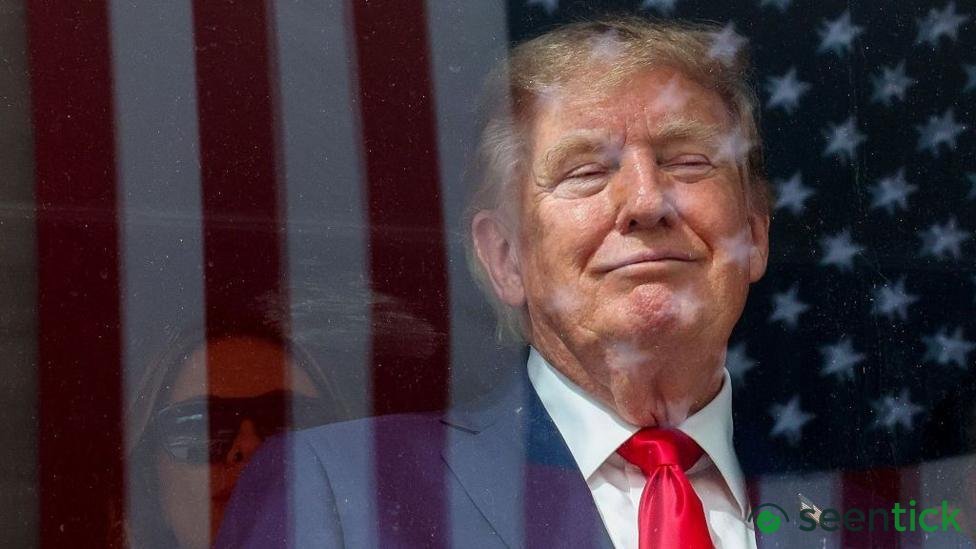
- Reported remarks from US Vice-President JD Vance may not have helped recent trade talks with Canada Two days before US-Canada trade tal
- Maybe those comments, which received considerable coverage in Canada, were not the proximate cause for Carney's diplomats to pack up an
- The serious and deepening rift - and Vance's comments - offer the latest example of a Trump administration willing to exert force on th
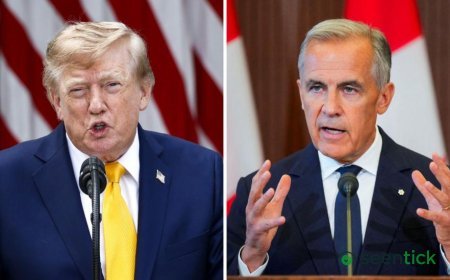
Reported remarks from US Vice-President JD Vance may not have helped recent trade talks with Canada Two days before US-Canada trade talks dramatically derailed, Vice-President JD Vance was telling an audience at a private fundraiser that Prime Minister Mark Carney was a "very sweet guy". In a private audio recording leaked to the Canadian Press, Vance reportedly went on to say that Carney "comes in and puffs his chest out and says: 'I'm going to, like, out-tough Donald Trump.'" He described that approach as "hilarious" because the Canadians ultimately "climb down on a lot of issues".
Maybe those comments, which received considerable coverage in Canada, were not the proximate cause for Carney's diplomats to pack up and go home over the weekend. But they certainly didn't help. Carney's move abruptly terminated negotiations over a new trade agreement and sparked a fresh round of tariffs between neighbours who conduct more than $872bn (£640bn) in bilateral annual trade.


For related coverage, explore our detailed analysis on Technology and Digital Systems.
Serious Deepening Rift Vance'S Updates
The serious and deepening rift - and Vance's comments - offer the latest example of a Trump administration willing to exert force on the global stage against friend and foe alike, again highlighting the potentially disruptive consequences of such actions. What's more, if Trump thought the Canadians would cave in the face of American pressure - as many US allies have done over the past 19 months - he may have miscalculated.
And the consequences of that mistake could linger for the rest of his presidency. While the latest rupture is striking, friction between the US and Canada dates back to the first Trump administration and the negotiations that created the USMCA: the deal replacing the 1990s-era North American Free Trade Agreement (Nafta).
Complicating matters were personal clashes between Trump and Justin Trudeau, who was then Canada's prime minister.
As Trump prepared to return to the White House in late 2024, he derisively referred to Trudeau as "governor" and to Canada as America's "51st State." Underlying those insults was a geopolitical outlook that positioned the US primarily as a hemispheric power entitled to exert political, military, and economic influence over its immediate region – and that most definitely included Canada.
Administration Authorities Viewed Canada Updates
Administration authorities viewed Canada as contributing too little to regional defence while disproportionately benefiting from trade with its southern neighbour. In Trump's worldview, where economic security and national security are inextricably linked, Canada and Mexico - two of America's largest trading partners - became early, obvious targets.
Canada announces 'dollar-for-dollar' retaliatory tariffs 'Half my business will be gone' - firms in Canada and US fear trade war How Canada could hit back to hurt the US economy - and Trump It's why the US president shared he wanted to take over Greenland too.
"If you listen to really anybody in state, treasury, or commerce [departments], you will hear the phrase 'economic security is national security'," shared Drew Delong, head of corporate statecraft at the Kearney Foresight think tank. Across every region, though, the core line of Trump's international strategy remains consistent: the US is a dominant power capable of imposing its will for national benefit.
But power has limits. Trump's second term has been a continuous test of those limits - and, at times, a lesson in finding exactly where they are. While obvious differences exist between a shooting war in Iran and a trade dispute with Canada, the lessons are not dissimilar.
Read More: Indian jewellery ad pulled after backlash over actor's outfit
In both, the US faces a counterpart that, despite having far less overall power, retains the means to retaliate. For Iran, that leverage lies in targeting US allies and disrupting global commerce Canada, for its part, is beginning to test its own ability to inflict economic pain. Tuesday's targeted tariffs mark a first step.
Future measures could include restricting US access to Canadian energy and critical minerals, alongside consumer boycotts of American goods. "As the broader world shifts into a more economic security theatre, you see this game of chokepoints and leverage angles continue to pan out across supply chains," shared DeLong. Countries just have to look for them, he added.
For the moment, clear exit ramps are scarce. Trump has escalated his rhetoric, repeatedly accusing Canada of "ripping off" the US, while Ontario Premier Doug Ford fired back "Every time we push allies and partners away, I think we incentivise them to look for new relationships and new partnerships rather than trying to acquiesce to US demands," shared Imran Bayoumi, deputy director of the GeoStrategy Initiative at the Atlantic Council.
This video can not be played Watch: Doug Ford has a blunt warning for Donald Trump As with any conflict - economic or military - a cycle of escalation can prove difficult to break. However, the multi-month buffer before the next wave of US tariffs gives negotiators space to restart talks. Until Friday night, these had been showing some progress.
At present, Ottawa seems content to bet on the former outcome, calculating that fear of a midterm blowout in key industrial battlegrounds like Michigan and Ohio will force Trump to back down before ballots are cast. "I don't think there's the kind of internal political divisions in Canada that maybe the Trump administration would have expected," Bayoumi shared.
"I think Carney has a lot of political runway to really get a good deal for Canada and not settle for anything less." This video can not be played Watch: "Absolutely ridiculous": Canadians react to new tariff tensions with the US There is another possibility that Carney has aired publicly since Trump returned to office, however.
Canada may continue shifting away from the US altogether, charting a course that deliberately widens the distance between the two nations. As Carney noted: "We cannot depend on traditional alliances when the rules of the game have fundamentally changed." While geographic proximity ensures the two countries will remain intertwined, the deeply integrated economic relationship of recent decades may be coming to an end.
In that respect, Canada presents a contrast with Mexico, which appears to be opting for even closer economic integration with the US. Meanwhile, other global trading partners - including US allies in Europe and Asia - are watching Canada's "elbows up" resistance as a plausible blueprint for future dealings with Trump.
"Ten years from now, this is going to be taught in classrooms," shared DeLong.
"You have these bifurcating paths within North America, and the question is: Are they going to come back together, or is this going to continue to split? And if it does, who benefits most in the long run?" If the supposedly easygoing Canadians can stand up to their pugnacious – and powerful - neighbour, others may decide they can, too.
Frequently Asked Questions
What's Your Reaction?
 Like
1
Like
1
 Dislike
0
Dislike
0
 Love
0
Love
0
 Funny
0
Funny
0
 Wow
0
Wow
0
 Sad
0
Sad
0
 Angry
0
Angry
0

I write about the forces shaping business and the global economy, from startup growth and changing markets to international trade and policy. My work focuses on breaking down complex developments into clear, practical insights and understanding what they could mean for businesses, investors, and the wider economy.














Comments (0)