

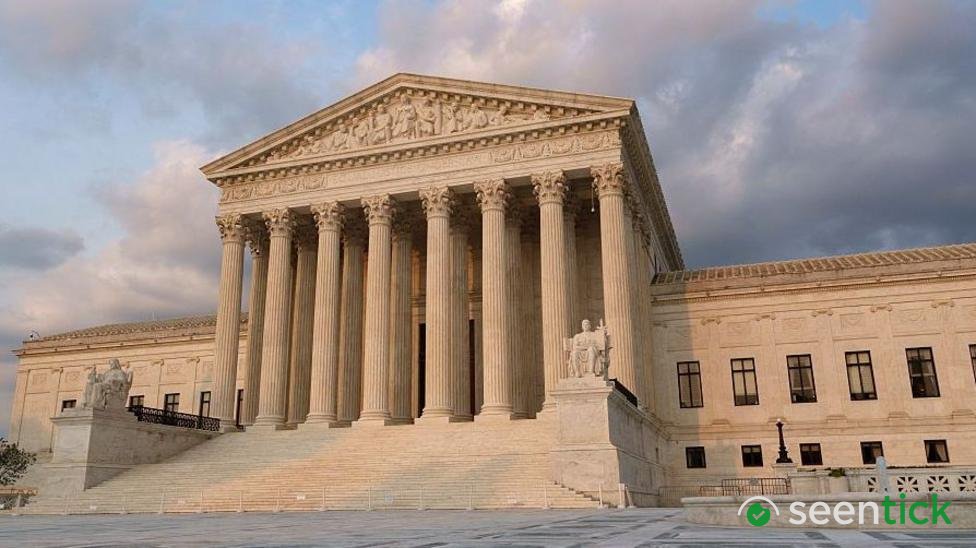
Supreme Court Upholds Federal Judge's Order Blocking Trump's Mail-In Voting Plan
Key Highlights
- Federal Judge Indira Talwani imposes injunction on September 4 blocking Trump's order.
- US Postal Service is blocked from moving forward with new requirements for postal ballots.
- Justice Brett Kavanaugh agrees with the ruling but indicates possible later decision.
The US Supreme Court has rejected President Donald Trump's plan to restrict voting. Upholding a federal judge's order that temporarily blocked the US Postal Service (USPS) from moving forwards with new requirements for postal ballots.
Justice Brett Kavanaugh Conservative Agreed
Justice Brett Kavanaugh, a conservative, agreed with the court decision. However, indicated he might later rule in Trump's favour as litigation in the case continues. Trump, who pointed out the rules would combat electoral fraud, signed an executive order in March directing the USPS to deliver ballots only to voters on lists of citizens.
Legal challenges argued that the move violated states' constitutional rights to run elections. Justice Kavanaugh wrote in the opinion that there was "at least a fair prospect that the final rule falls within the Postal Service's statutory authority". However, he argued that "applying the rule in the 2026 elections would be arbitrary and capricious".
Read More: Russians seek answers over hundreds missing after Ukraine's 2024 incursion
Justices Samuel Alito Clarence Thomas
Justices Samuel Alito and Clarence Thomas, also conservatives, dissented. They wrote that the challenge to Trump's order was a "Hail Mary pass" that was unlikely to be successful ultimately. "The Postal Service has broad authority to regulate the mail," they added.
In March, Trump signed an executive order attempting to change mail-in voting. The plan aimed to introduce unique barcodes on postal ballot envelopes and require state and local election authorities to supply information to an online portal about voters who receive mail ballots.
Twenty-three states and Washington DC sued to pause Trump's order. The postal workers' union also shared clerks could not be trained in time for the election. In court filings, the Trump administration maintained the new USPS rules were constitutional.
The Supreme Court has previously ruled on postal ballots. In June, the justices ruled that states may count ballots postmarked This decision came after a federal judge blocked Trump's order to limit mail-in voting in the 2020 general election.
Also Read: Conservative Activist Charlie Kirk's Death Sparks Wave of Firing and Discipline Across
Trump has previously made false claims that he lost the 2020 election owing to widespread electoral fraud. The Supreme Court's latest court decision on mail-in voting is seen as a setback for Trump's efforts to restrict voting rights.
The decision does not necessarily mean that Trump's plan will be scrapped entirely. Justice Kavanaugh indicated that he might later rule in Trump's favour as litigation in the case continues.
In the meantime, some states have already begun distributing mail-in ballots ahead of the midterm elections. This will decide which party controls Congress.
Frequently Asked Questions
What's Your Reaction?
 Like
1
Like
1
 Dislike
 Love
1
Love
1
 Funny
Funny
 Wow
2
Wow
2
 Sad
1
Sad
1
 Angry
1
Angry
1

I write about the forces shaping business and the global economy, from startup growth and changing markets to international trade and policy. My work focuses on breaking down complex developments into clear, practical insights and understanding what they could mean for businesses, investors, and the wider economy.











Comments (0)