

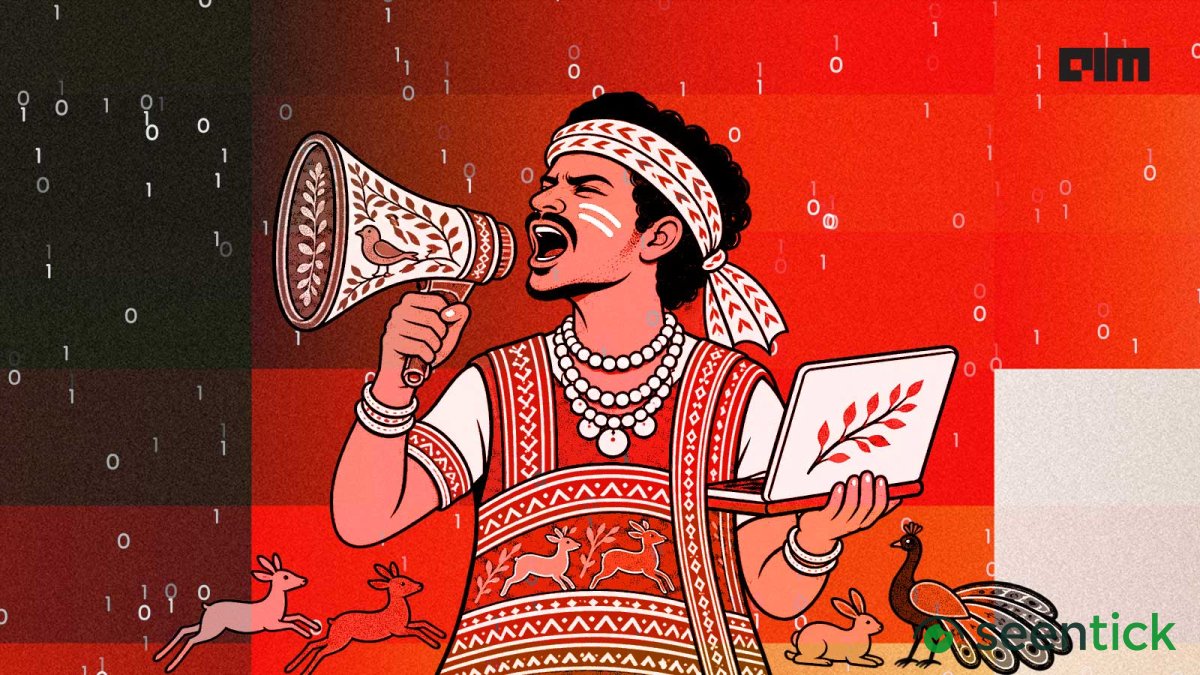
IIT Delhi Launches Adi Vaani AI to Preserve Tribal Languages
Researchers at IIT Delhi have developed a new AI-powered platform called Adi Vaani to bridge the communication gap for India’s indigenous communities. The tool provides speech-to-speech translation for tribal languages that often lack digital data. This initiative helps members of the Gond tribe and other communities access essential services like healthcare and education.
The project operates under the Bhagwan Birsa Munda Cell at the institute with support from the Ministry of Tribal Affairs.
The platform currently supports 10 languages, including Gondi, Bhili, Santali, and Mundari. It began as a project to help tribal artisans market their goods through voice-based forms. However, the scope quickly expanded to address critical needs in medical settings.
Many tribal members travel to the All India Institute of Medical Sciences (AIIMS) in Delhi for treatment but struggle to describe their symptoms. "Many are not able to communicate what they are facing or suffering from," said Pooja Singh, a lead researcher at Adi Vaani.
Read More: Embo Raises $110 Million to Build World-Model AI for Robots
Building AI for these languages is difficult because there is very little digital text available. Sandeep Kumar, the Principal Investigator and a faculty member at IIT Delhi, described the project as a national mission. To collect data, researchers spent 25 days in Chhattisgarh and Madhya Pradesh recording native speakers.
They used an offline phone tool to capture sentences, stories, and lullabies directly from the community.
The technical framework uses several advanced models to handle different tasks. Text translation relies on AI4Bharat’s IndicTrans2 and Meta’s No Language Left Behind. For audio, the team uses OpenAI’s Whisper and Meta’s wav2vec.
Because some languages have no written script, the team worked with students to create custom keyboards. "They only know how to talk, but they have never seen how Gondi is written," Singh noted during the official announcement of the project's progress.
The Adi Vaani platform is already being used to translate school books for children in classes one to five. This effort aligns with the National Education Policy 2020, which encourages teaching in native mother tongues. The team has compiled 27 dictionaries across more than 13 languages to support these educational goals.
Also Read: OpenAI Countersues Apple Over Trade Secret Theft and Supplier Threats
Beyond the classroom, the platform provides information on sickle cell disease and anaemia, which are prevalent in certain tribal regions.
While the app has seen 48,000 downloads, challenges remain regarding dialect accuracy and internet dependency. Users on the Google Play Store have noted that some translations pull incorrect words due to regional variations. The team is currently building a dashboard where native speakers can rate and correct AI outputs.
"They are humans, and it's not possible to be consistent all the time," Singh said regarding the translation variations. Two major pilots in the health and education sectors are scheduled to begin by January.
What's Your Reaction?
 Like
2
 Dislike
 Love
 Funny
 Wow
2
 Sad
 Angry

Tech journalist and AI enthusiast who enjoys keeping up with the latest in hardware, processors, emerging AI tools, and software. I like digging into new technology, understanding how things actually work, and following the developments that could shape the way we use technology in the future.

















Comments (0)