
Every Stanley: Kubrick Movie of the '60s, Ranked
- Stanley Kubrick is one of the greatest directors of all time . That’s not hyperbolic or controversial to state; it’s a generally accept
- Kubrick’s status as a filmmaker has grown considerably over time, to a level of acclaim and accompanying controversy that matches the t
- His relatively small output is an obvious consequence of his meticulous approach to filmmaking, as well as the long periods of gestatio
Stanley Kubrick is one of the greatest directors of all time . That’s not hyperbolic or controversial to state; it’s a generally accepted fact within the film community. His filmography speaks for itself, and his reputation as an exacting and controlling filmmaker has been exhaustively documented.
Kubrick’s status as a filmmaker has grown considerably over time, to a level of acclaim and accompanying controversy that matches the thirteen movies he directed. There are many things that can, and have, been written about Kubrick as a filmmaker, but one thing he certainly wasn’t was prolific.


With a career spanning five decades, Kubrick never made more than four films in any one of them, and that level of productivity slowed even further in the last three. For related coverage, explore our detailed analysis on Technology and Digital Systems.
Relatively Small Output Obvious Updates
His relatively small output is an obvious consequence of his meticulous approach to filmmaking, as well as the long periods of gestation that his projects would go through, many of which were never even produced. It’s a matter of quality over quantity with Kubrick , and most of his films are considered masterpieces.
There’s an argument to be made for any decade of Kubrick’s career being the defining, but if any seems the strongest, it’s the '60s.
Kubrick directed four films in the decade , and each is more distinct than the last: a sword-and-sandals epic, a controversial literary adaptation, a political satire, and a hard sci-fi film. Kubrick was never a complacent filmmaker, and his four incredible films from the '60s are all evidence of that. Vladimir Nabokov ’s controversial novel Lolita was considered unfilmable.
Informed entirely from the perspective of a literature professor who becomes sexually infatuated with a 12-year-old girl, it’s a discomforting psychological portrait of a pedophile . It inspired equal amounts of praise and vitriol, but everyone concurred it was undeniably uncinematic, relying entirely on Nabokov’s poetic prose and dark wit filtered through the manipulative mind of a sexual predator.
Lolita Would Difficult Novel Updates
Lolita would be a difficult novel to adapt in any era, but especially in the early '60s, when the conservative Hays Code was still in effect. In many respects, the film is an imperfect adaptation that falls short of the novel, using suggestive language and visuals in place of more explicit content, and occasionally shifting focus to its supporting characters.
Humbert Humbert ( James Mason ) is an academic summering in a small New Hampshire town before becoming a professor at an Ohio college. He rooms with the widowed Charlotte Haze ( Shelley Winters ) and her daughter Dolores ( Sue Lyon ), referred to as Lolita.
Humbert quickly becomes obsessed with Lolita, causing friction between him and Charlotte, who has fallen in love with him.
After Charlotte’s accidental death, Humbert pursues her daughter, but finds himself in strange competition with the equally predatory playwright Clare Quilty ( Peter Sellers ). Sellers dominates the second half of the film, even unbalancing its precarious management of tone, but he’s undeniably unnerving and effective.
Mason is equally effective in handling Humbert’s haughty attitude and paranoid pitifulness, Winters is desperate and tragic, and Lyons is an incredible mix of maturity and naivety.
The true tragedy of Lolita is the cultural legacy that misinterprets its titular character as a sexual object, made worse Harris was later accused of sexually abusing Lyons, which casts an even darker shadow over the film. Lolita is a compromised film Spartacus (Douglas) is a slave under the Roman Republic during the first century BC.
Read More: The 10 Best Things To Do at FAN EXPO Canada 2026
He's purchased and trained to become a gladiator under Batiatus ( Peter Ustinov ), eventually escaping and becoming the leader of a slave revolt, which causes a schism between the elitist Roman senator Crassus ( Laurence Olivier ) and his rival Gracchus ( Charles Laughton ). The film's ensemble cast is elite from top to bottom, including Tony Curtis as slave Antoninus, Woody Strode as gladiator Draba, and Jean Simmons as Spartacus' love interest.
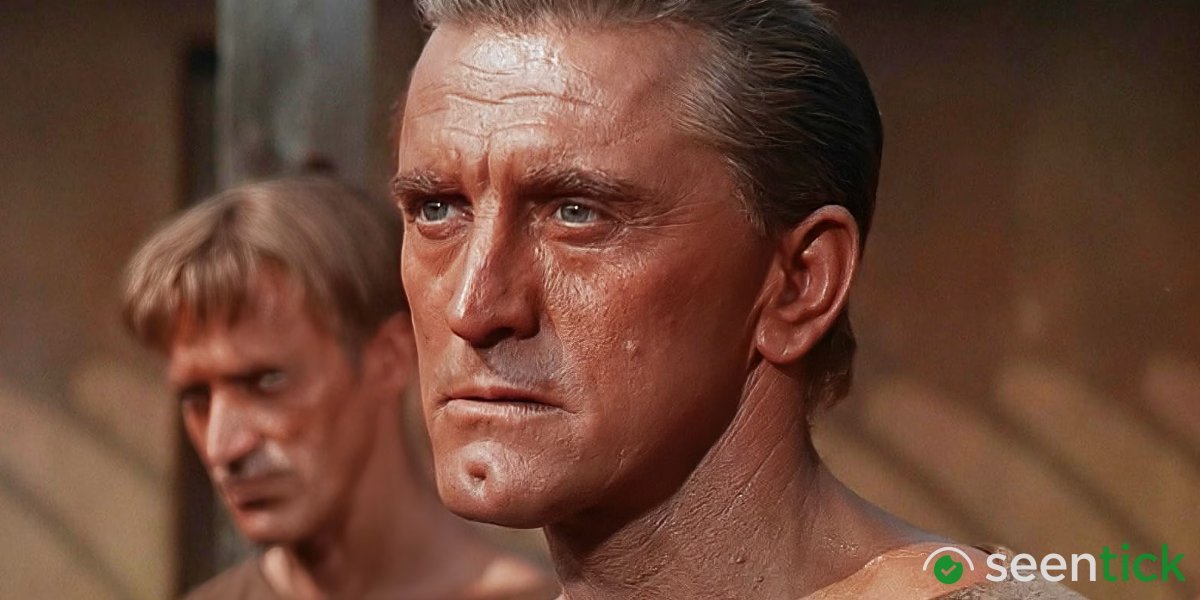
Spartacus was a massive success, becoming the highest-grossing film of 1960 and earning multiple Academy Award nominations, though Kubrick himself was snubbed. Even though Spartacus was Kubrick's only true for-hire directorial job, and lacked the personal passion he would put into all his future projects, it was a massively important film in his career. Kubrick's Cold War satire, Dr.
Strangelove: or How I Learned to Pause Worrying and Love the Bomb , is the only overt comedy in his entire filmography. While Kubrick is often categorized as a cold and emotionally detached filmmaker, humor is present in all of his work, albeit often of a very dry variety.
There are wry asides and ironic moments in even his most dour efforts, but Dr.
Strangelove is the only Kubrick film that will likely elicit true belly laughs . Reteaming with Peter Sellers, whose comedic sensibilities were used for more ironic effect in Lolita , Kubrick fully unleashes his comic persona, giving him multiple roles to play with increasing levels of absurdity. Of course, the film didn't start as a comedy.
When Air Force General Jack D. Ripper ( Sterling Hayden ) goes madly rogue and orders a B-52 crew to drop a nuclear bomb on the Soviet Union, despite the objections of RAF Officer Mandrake (Sellers), the President of the United States (Sellers) and his inept War Room debate their best course of action.
When they discover the Soviets have created a doomsday device that will destroy the entire planet, they consult with a scientific advisor and former Nazi, Dr.
Strangelove (Sellers). The film builds to an absurd crescendo perfectly illustrated Dr. Strangelove set the gold standard for political satires , and its wit is just as razor-sharp decades later despite its specificity to the Cold War era.
It seems the stupidity of politicians is timeless entertainment, and the film's original ending, which featured the War Room engaging in a giant pie fight , would be too subtle for the current political climate. Kubrick's greatest film of the 1960s is also his greatest film period, and one that is often in the conversation for the greatest film ever made .
That's astronomically high praise, but 2001: A Space Odyssey is an astronomical film. A technical marvel, a cosmic mystery, and a cinematic experience like few others, it's Kubrick's most ambitious and immaculately executed film . Interested in making a science fiction film involving extraterrestrial life, Kubrick sought out writer Arthur C.
Clarke , whose short stories The Sentinel and Encounter in the Dawn inspired the screenplay the two co-wrote. Kubrick also wanted the film's depiction of space to be more grounded in reality than the fantastic sci-fi efforts that were common at the time.
He consulted with scientists and engineers to develop the film's futuristic technology, and enlisted the best special effects artists, led
Frequently Asked Questions
What's Your Reaction?
 Like
0
Like
0
 Dislike
0
Dislike
0
 Love
0
Love
0
 Funny
0
Funny
0
 Wow
2
Wow
2
 Sad
0
Sad
0
 Angry
0
Angry
0

Movies, series, and everything happening around Indian entertainment keep me busy. I cover OTT releases, box-office conversations, celebrity news, and the changing world of streaming, with a particular interest in the stories and trends that audiences are talking about right now.











Comments (0)