
The 8 Best Film Noir Movies of the '40s, Ranked
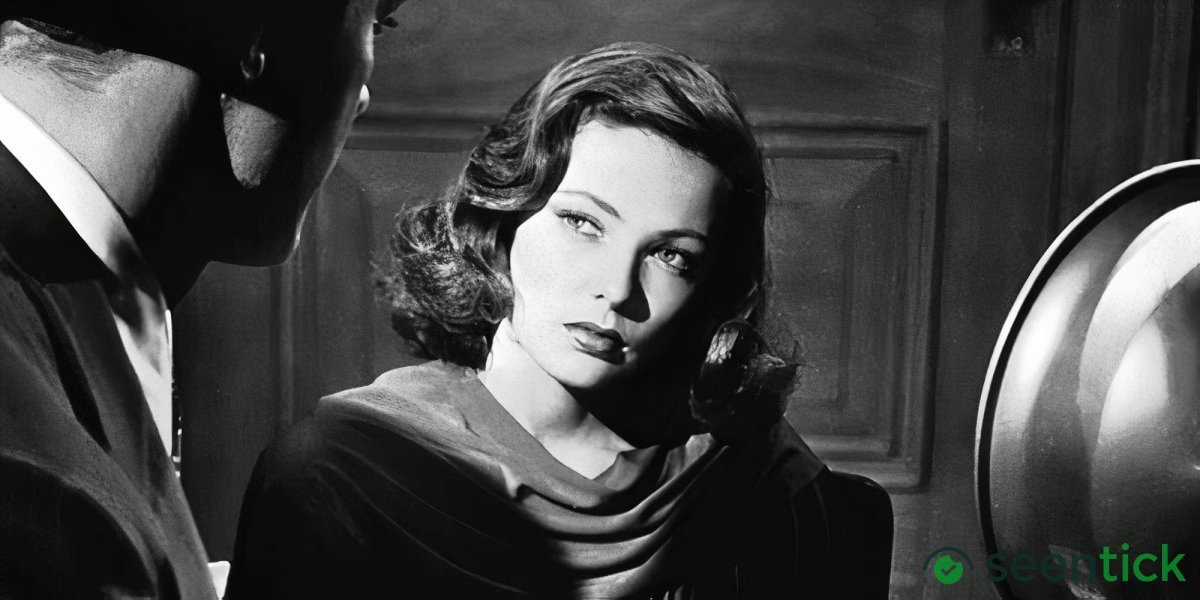
- Rooted in German Expressionism and born out of popular hardboiled crime fiction, the film noir genre combines crime, mystery, suspense,
- The best film noirs of the 1940s, including Howard Hawks' The Big Sleep, Edward Dmytryk's Murder, My Sweet, and Otto Preminger's Laura,
- Edward Dmytryk's Murder, My Sweet is an influential noir classic based on Raymond Chandler's 1940 novel, Farewell, My Lovely, and marke
Rooted in German Expressionism and born out of popular hardboiled crime fiction, the film noir genre combines crime, mystery, suspense, and psychological drama with a uniquely dark visual atmosphere and questionable characters, creating a world where trust is rare, and danger can appear around every corner. The 1940s marked the genre's golden age, introducing audiences to a darker, more cynical style of cinema with classics such as The Maltese Falcon, Double Indemnity, and Out of the Past,defining one of the most distinctive styles in movie history.
The best film noirs of the 1940s, including Howard Hawks' The Big Sleep, Edward Dmytryk's Murder, My Sweet, and Otto Preminger's Laura, continue to influence filmmakers today and remain recognizable in modern crime cinema, demonstrating why film noir remains one of Hollywood’s most fascinating and enduring cinematic traditions. From landmark mysteries to hard-boiled crime stories and psychological thrillers, these are the eight best classic film noir movies from the 1940s, ranked!


For related coverage, explore our detailed analysis on Technology and Digital Systems.
Key Analysis and Detailed Timeline
Edward Dmytryk's Murder, My Sweet is an influential noir classic based on Raymond Chandler's 1940 novel, Farewell, My Lovely, and marked the silver screen debut of the author's iconic private eye, Philip Marlowe, who has since become a household name for noir fans. The movie stars Dick Powell as Marlowe, who, after one of his clients is murdered, discovers that his case is somehow connected to the disappearance of a mobster's girlfriend and eventually becomes entangled in a web of crime and corruption Murder, My Sweet had a significant impact on establishing the traditional tropes of the classic detective noir, notably Powell's cynical but charismatic performance, while the story’s twists and morally ambiguous characters capture the uncertainty at the heart of noir.
The film’s dramatic use of shadows, low-key lighting, and dreamlike sequences further creates the tense and unsettling mood that is traditionally associated with the genre. The film's combination of Chandler’s legendary storytelling with striking cinematography and its memorable private detective not only helped establish the style that would define film noir for generations but also solidifies Murder, My Sweet as one of the best classic film noirs of the 1940s.
James Cagney stars in Raoul Walsh's White Heat as a psychotic career criminal, Cody Jarrett, who, after learning his mother has been murdered, plans an elaborate prison break to take his revenge out on those responsible for her death, unaware that his newest friend and former cellmate, Hank (Edmund O'Brien), is an undercover cop. Cagney’s explosive performance as the unhinged Jarrett gives the movie much of its power, portraying his character as both terrifyingly charismatic and psychologically vulnerable, making him one of the best and most intriguing villains in classic cinema.
Broader Impact and Sector Outlook
White Heat captures many of the defining qualities of film noir, notably morally compromised characters, a bleak atmosphere, criminal underworlds, and a sense that violence and betrayal are always close at hand. Its tense storytelling and striking action sequences create a constant tone of suspense and uncertainty, setting it apart from more conventional crime films of the period.
Most importantly, White Heat builds toward one of the most memorable endings in American cinema ("Made it, ma! Top of the world!"), making it a hallmark of the gangster genre and an essential 1940s film noir classic.
The Big Sleep is a signature noir classic based on Raymond Chandler's 1939 novel of the same name and is recognized as a defining film of the genre.
Humphrey Bogart stars as Chandler's private eye, Philip Marlowe, who is hired While the overall film and cast are sensational, Bogie knocks it out of the park with his performance as Marlowe, which is a major reason for the film’s enduring reputation. His confident, witty, and independent detective became one of the most recognizable characters in film noir, while Bacall also brings charisma and mystery to the table, creating a memorable chemistry.
The film’s sophisticated dialogue, clever exchanges, and morally ambiguous characters give it a sharp, cynical tone that has become a hallmark of classic noir. Although the plot is famously complex, The Big Sleep stands out for its combination of hard-boiled detective fiction, romance, and psychological tension, making it not only an essential film noir of the 1940s but also a lasting example of Hollywood’s golden age of crime cinema.
Otto Preminger's Oscar-winning noir classic, Laura, defies the traditional rules of the genre with a midway plot twist and an engaging story of manipulation, control, and murder. Based on Vera Caspary's 1943 novel, the movie follows Dana Andrews as a homicide detective, Mark McPherson, who is investigating the brutal murder of an advertising executive, Laura Hunt (Gene Tierney), whose life and relationships become increasingly mysterious as the inquiry unfolds.
Laura received five Oscar nominations, including Best Director and Best Supporting Actor for Clifton Webb's wicked performance, and went on to win Best Cinematography for Joseph LaShelle. Through elegant cinematography, shadowy interiors, and a haunting musical score What makes Laura especially memorable is the way it blends traditional detective mystery with psychological tension and romantic obsession.
Its sophisticated storytelling, striking visual style, memorable score, and unexpected twists make Laura a standout specimen of 1940s film noir and one of the genre’s most enduring classics. Your answers have pointed to one Oscar Best Picture winner above all others. This is the film that was made for the way your mind works.
You are drawn to films that operate on multiple levels simultaneously — that begin in one genre and quietly, brilliantly migrate into another. Bong Joon-ho's Parasite is a film about class, desire, and the architecture of inequality that manages to be darkly funny, deeply suspenseful, and genuinely shocking across a single extraordinary running time.
Your instinct is for cinema that hides its true intentions until the moment it's ready to reveal them.
Parasite is exactly that — a film that rewards close attention and punishes assumptions, right up to its devastating final image. You want it all — and this film gives you all of it.
The Daniels' Everything Everywhere All at Once is one of the most maximalist films ever made: action comedy, multiverse sci-fi, family drama, existential crisis, and a genuinely earned emotional core that sneaks up on you amid the chaos.
You are someone who responds to ambition, who doesn't want cinema to choose between being entertaining and being meaningful. This film refuses that choice entirely.
Read More: 8 Most Thrilling Action Movies Ever, Ranked: Full Details and Latest
It is overwhelming You are drawn to cinema on a grand scale — films that understand history not as a backdrop but as a force, and that place their characters inside that force and watch what happens.
Christopher Nolan's Oppenheimer is a film about the terrifying gap between what we can do and what we should do, informed with the full weight of one of the most consequential moments in human history behind it. You want your films to feel important without feeling self-important — to earn their ambition through sheer craft and the gravity of their subject.
Oppenheimer does exactly that. It is enormous, complicated, and refuses easy comfort. You are drawn to films that foreground their own building work — that make the how of the filmmaking part of the what it's about.
Alejandro González Iñárritu's Birdman, shot to appear as a single continuous take, is cinema examining itself through the cracked mirror of a fading actor's ego. You respond to formal daring, to the feeling that a film is doing something that probably shouldn't be possible.
Michael Keaton's performance and Emmanuel Lubezki's restless camera create something genuinely unlike anything else — a film that is simultaneously about creativity, relevance, self-destruction, and the impossibility of ever truly knowing if your work means anything at all.
You are drawn to cinema that trusts silence, that refuses to explain itself, and that treats dread as a form of meaning. The Coen Brothers' No Country for Old Men is a film about the arrival of a new kind of evil — implacable, arbitrary, and utterly indifferent to the moral frameworks we use to make sense of the world.
It is one of the most formally controlled films ever made, and its controlled restraint is what makes it so terrifying. You want your films to haunt you, not comfort you. You are not interested in resolution if resolution would be dishonest.
No Country for Old Men is honest in a way that most cinema never dares to be. Jacques Tourneur's Out of the Past is a gritty noir classic adapted The movie follows a former private eye, Jeff Bailey, who exchanged his days of sleuthing for a simpler life in a small mountain town where he attempts to escape his checkered past, but when his last employer manages to track him down, circumstances force him to confront the dangerous people and choices he thought he had left behind.
Mitchum delivers an exceptional performance as a man who understands that his past may ultimately be impossible to escape; building a sense of inevitability is central to the film’s power. Cinematographer Nicholas Musuraca showcases his expertise The story also features one of noir’s most memorable femmes fatales, Kathie Moffat, played With its atmospheric cinematography, morally complex characters, sharp dialogue, and doomed romance, Out of the Past perfectly embodies the dark and fatalistic spirit of film noir, and today, it remains one of the essential classics of 1940s American cinema.
John Huston made his directorial debut with the Oscar-nominated classic The Maltese Falcon, which is based on Dashiell Hammett's 1931 novel of the same name and is considered to be one of the most important and influential film noirs ever made. Humphrey Bogart stars as a private eye, Sam Spade, who is hired The Maltese Falcon is notable for establishing many of the characteristics that would become central to classic film noir, while Bogart’s performance as Spade also helped define the hard-boiled detective archetype: intelligent, sarcastic, independent, and willing to take risks while following his own code.
Its tight storytelling and unforgettable characters, played The film’s themes of greed, loyalty, deception, and moral compromise give the story a depth that goes beyond a simple detective mystery, creating a tense and sophisticated atmosphere that is crucial to any great noir. Carol Reed's The Third Man is widely regarded as one of the greatest film noir classics, celebrated for its immersive visual style, ingenious performances, and a torrid story of loyalty and morality.
Set in postwar Vienna, the movie follows American writer Holly Martins (Joseph Cotten) as he arrives in the city and discovers that his friend Harry Lime (Orson Welles) has supposedly been killed in a freak car accident. As Martins conducts his own inquiry into the sudden demise of his longtime friend, he uncovers a disturbing world of deception, corruption, and betrayal that unfortunately all lead back to Lime.
One of the film's greatest strengths is Robert Krasker's Oscar-winning cinematography, which is deeply rooted in German Expressionism and creates an atmosphere of uncertainty and danger. Welles gives one of cinema’s most memorable performances as Lime, while Cotten brings emotional depth to Martins as a man struggling to understand the truth about his friend.
The film is also famous for its distinctive zither score Beyond its mystery and suspense, The Third Man continues to endure with its memorable characters, innovative cinematography, haunting music, and morally complex story, making it a landmark of classic film noir.
Billy Wilder's Double Indemnity is one of the most important film noir movies ever made and is credited with setting the standard for film noir. Based on James M.
Cain's novel, Fred MacMurray stars as an insurance salesman, Walter Neff, who starts a passionate affair with a married woman, Phyllis Dietrichson (Barbara Stanwyck), and eventually agrees to help her murder her husband to collect the money on his life insurance policy.
Just when they think they've gotten away with murder, Neff's associate and veteran insurance investigator, Barton Keyes (Edward G. Robinson), decides to take a closer look at the case. Double Indemnity embodies the essential qualities of classic noir through its dark visual style, cynical tone, morally compromised characters, and sense of inevitable doom.
Cinematographer John F. Seitz uses shadowy interiors, nighttime streets, and dramatic lighting to create a suspenseful and unnerving atmosphere that would go on to define the visual style of the genre. What makes Double Indemnity so enduring is its combination of suspense, psychological complexity, memorable performances, and masterful storytelling.
Its themes of temptation, greed, and moral downfall perfectly capture the dark spirit of film noir, making Double Indemnity one of the definitive noir films of the 1940s.
Frequently Asked Questions
What's Your Reaction?
 Like
0
Like
0
 Dislike
0
Dislike
0
 Love
0
Love
0
 Funny
0
Funny
0
 Wow
0
Wow
0
 Sad
0
Sad
0
 Angry
0
Angry
0

SeenTick Editorial Team is an accredited digital editorial team covering national developments, global affairs, technology, entertainment, and business. Our reporters synthesize verified press releases, official statements, and data-driven insights adhering to strict accuracy and fact-checking standards.











Comments (0)