
5 Best Star Trek Tropes That Shaped The Sci-Fi Genre
- We may receive a commission on purchases made from links. "Star Trek" did not invent science-fiction as a genre. The show followed in t
- Welles, and Mary Shelly were pioneers of the genre a century (or more) before "The Original Series" premiered on NBC in 1966. And yet,
- For instance, "Trek" wasn't the first piece of fiction to showcase something like a transporter device that could instantly teleport ch
We may receive a commission on purchases made from links. "Star Trek" did not invent science-fiction as a genre. The show followed in the footsteps of sci-fi movies from the '50s like "Forbidden Planet," and writers like Jules Verne, H.G.
Welles, and Mary Shelly were pioneers of the genre a century (or more) before "The Original Series" premiered on NBC in 1966. And yet, "Star Trek" is so iconic and has such a lasting legacy, its impact on science-fiction is undeniable.


"Trek" may not have been the first work of sci-fi, but it's among the most important, and many tropes and hallmarks of the genre are more closely associated with Gene Roddenberry's series than anything else. For related coverage, explore our detailed analysis on Technology and Digital Systems.
Key Analysis and Detailed Timeline
For instance, "Trek" wasn't the first piece of fiction to showcase something like a transporter device that could instantly teleport characters across vast differences, but it certainly codified the trope. When you think "teleporter," you think "beam me up." These are five of the best and most influential "Star Trek" tropes that have helped shape the sci-fi genre.
They're so well-known that it's not just Trekkies and other sci-fi creators who are familiar with these tropes — chances are an average person who doesn't consider themselves a big genre fan knows these "Trek" tropes. There were examples of teleportation devices in sci-fi well before "Star Trek" premiered, including John Carter's instant transit to Barsoom in Edgar Rice Burroughs' "A Princess of Mars." The decision to have the crew of the USS Enterprise teleport down to the surface of whatever planet they were exploring each week was not a nod to the genre's history; It was a practical choice.
As Gene Roddenberry explained in Stephen E. Whitfield's 1968 book, "The Making of Star Trek," the special effects involved in having the ship actually land on alien worlds would've been way too expensive. "Land a ship 14 stories tall on a planet surface every week?
Broader Impact and Sector Outlook
Not only would it have blown our entire budget, but just suggesting it would have ruined my reputation in the industry forever," Roddenberry said. He added that not having the money for an elaborate landing sequence ended up being to the show's benefit, saying "The fact we didn't have the budget forced us into conceiving the transporter device — 'beam' them down to the planet — which allowed us to be well into the story " Later works, like the "Justice League" animated series, have taken advantage of the efficient way that teleporters can quickly get characters from Point A to Point B.
Infamously, the catch phrase most associated with the "Star Trek" transporters, "Beam me up, Scotty," was never actually said. James Doohan's chief engineer got many transportation requests, but none on "TOS" were ever those exact four words in order.
Truth be told, it's superhero comic books, not "Star Trek," that really pioneered the idea of alternate universes, going back to a 1961 issue of "The Flash" that had two alternate versions of the speedster meet.
In 1964, an issue of "Justice League" introduced Earth-Three, an alternate reality where the superheroes were supervillains. However, "Earth-Three" doesn't have the same impact as "Mirror Universe," and it's the "Trek" version of an evil parallel universe that's become the cultural touchstone.
The Mirror Universe first appeared in the fittingly titled Season 2 episode, Mirror, Mirror," where some of the Enterprise's crew get sent to a familiar-but-twisted reality where a brutal Terran Empire rules instead of a peaceful United Federation of Planets, everybody is mean, and many of the men sport goatees.
The Mirror Universe would come back in later "Star Trek" spin-offs, including "Star Trek: Discovery," where it was a major part of early plots. In addition to the many, many examples of Mirror Universes that have appeared in superhero comics, opposite realities have also been seen in works as varied as "Naruto," "Captain Underpants," "Buffy the Vampire Slayer," "Community," and "Codename: Kids Next Door." In the history of fiction, countless nameless background characters have passed away while the named protagonists escaped danger yet again.
Read More: TVLine's What to Watch: This Week's Must-See Premieres and Episodes
It was "Star Trek," however, that finally put a name on this sort of stock character. It put a shirt on them, too — and that shirt was red. Redshirts, so-called because many of the members of the Enterprise crew who beamed down to dangerous planets with Kirk and Co.
were wearing the red uniforms that security and engineering wore, frequently didn't survive alien encounters. Their demise raised the stakes, making the eventual triumph of the protagonists all the more impressive while allowing them to live on to explore the final frontier another day.
In modern genre fiction, sci-fi or otherwise, "Redshirt" has become a term for disposable characters who seemingly exist just so they can get killed off.
Not every unnamed survivor on "Lost" who died was wearing a red shirt, but creators J.J. Abrams and Damon Lindelof — who would later make two "Star Trek" movies, knew what they were doing — calling their version of the trope "meat socks." A statistical analysis of "TOS" that's sadly no longer available online showed that redshirts were actually not statistically more likely to die compared to the blue- or gold-clothed members of the Enterprise crew who perished in the line of duty.
Still, the term "redshirt" stuck. "Star Trek" was not the first TV show or movie to slap some makeup or prosthetics on an actor's face and claim they were a member of an exotic alien species.
However, perhaps due to how often "TOS" pushed against the limits of its budget each week as it introduced more new alien species, "Trek" became the prime example of what some genre fans lovingly call "rubber-forehead aliens." Klingons wouldn't get their now-iconic ridged foreheads until "The Next Generation," but that only makes the species' original appearances even bigger examples of this trope, as they just wore bronze makeup and some crazy eyelashes.
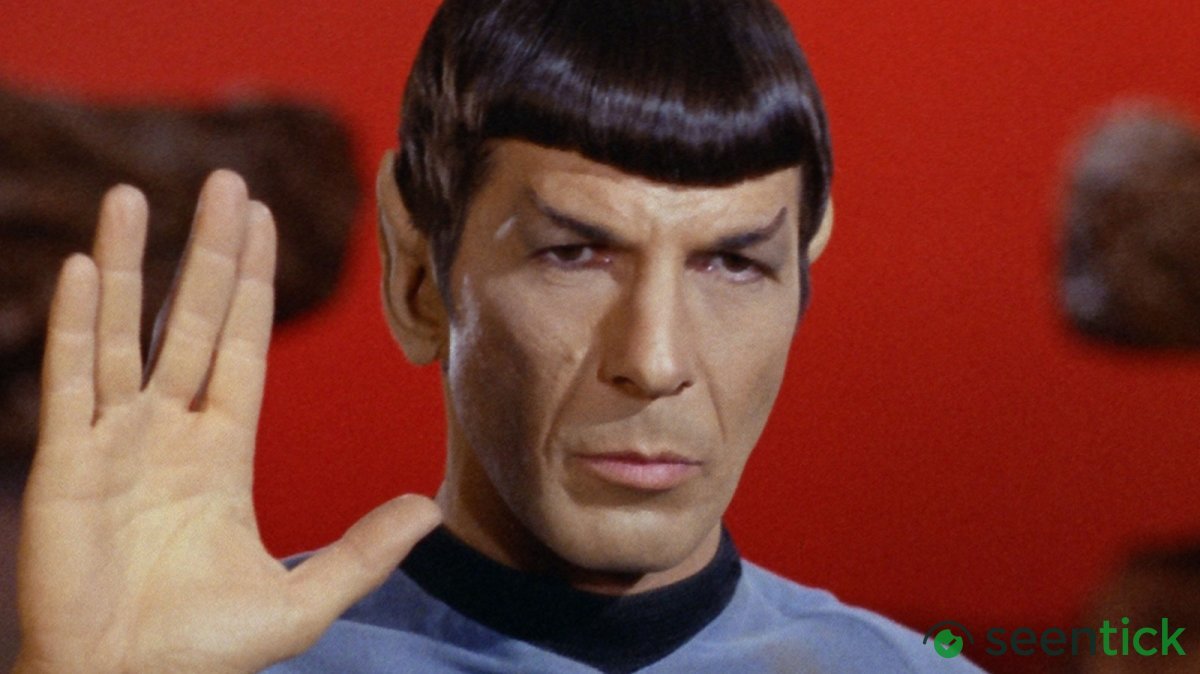
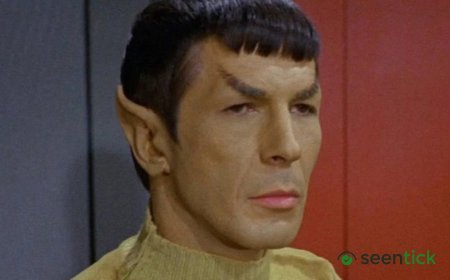
Even Spock could be considered a rubber-forehead alien, as his pointed ears are about all that distinguishes him as something other than human. Examples of humanoid aliens like this abound in works that have come out since "Star Trek." The Marvel Cinematic Universe is full of alien species that basically look like normal humans.
"Star Wars" has more non-humanoid aliens, but that franchise has its share of rubber forehead aliens, including twi'leks and Darth Maul's species, zabraks.
Rubber-forehead aliens are not inherently bad or lazy, though. While an amoeba-like alien that subsists on methane might be a more realistic inhabitant of another planet compared to something basically humanoid, human audiences have a much easier time connecting with beings that look like we do. Rubber-forehead aliens helped make "TOS" relatable to audiences.
When Gene Roddenberry came up with "Star Trek," he pitched the show as "'Wagon Train' to the Stars," comparing it to the classic Western of the same name. That show, which aired on NBC and ABC between the '50s and '60s, had members of the titular wagon train encounter new people and places on their journey across the American frontier.
As the opening narration of "Star Trek" explains, the series simply changed the setting to "the final frontier," and the Starship Enterprise's mission was to "explore strange new worlds." "Strange New Worlds" has become a signature sci-fi element, to the point where one of the more-recent "Star Trek" spin-offs bears the phrase as its subtitle.
The concept of planet-hopping, using each new celestial body as a unique setting for adventure, complete with its own look, peoples, and culture, has become an integral part of science-fiction. If the universe is infinite, the storytelling possibilities are infinite too, and "The Original Series" helped pave the way for "Star Wars," "Stargate," "Mass Effect," "Futurama," and many more series to explore the stars.
Frequently Asked Questions
What's Your Reaction?
 Like
0
Like
0
 Dislike
0
Dislike
0
 Love
0
Love
0
 Funny
0
Funny
0
 Wow
0
Wow
0
 Sad
0
Sad
0
 Angry
0
Angry
0

Movies, series, and everything happening around Indian entertainment keep me busy. I cover OTT releases, box-office conversations, celebrity news, and the changing world of streaming, with a particular interest in the stories and trends that audiences are talking about right now.






![Why [SPOILER] Wasn't Killed In House Of The Dragon's Season 3 Finale](https://seentick.com/uploads/images/202608/why-spoiler-wasnt-killed-in-house-of-the-dragons-season-3-finale_1787583610_460-140x98.jpg)



Comments (0)