
The U.S. Now Uses Nearly 40% Of The World’s Data Center Electricity
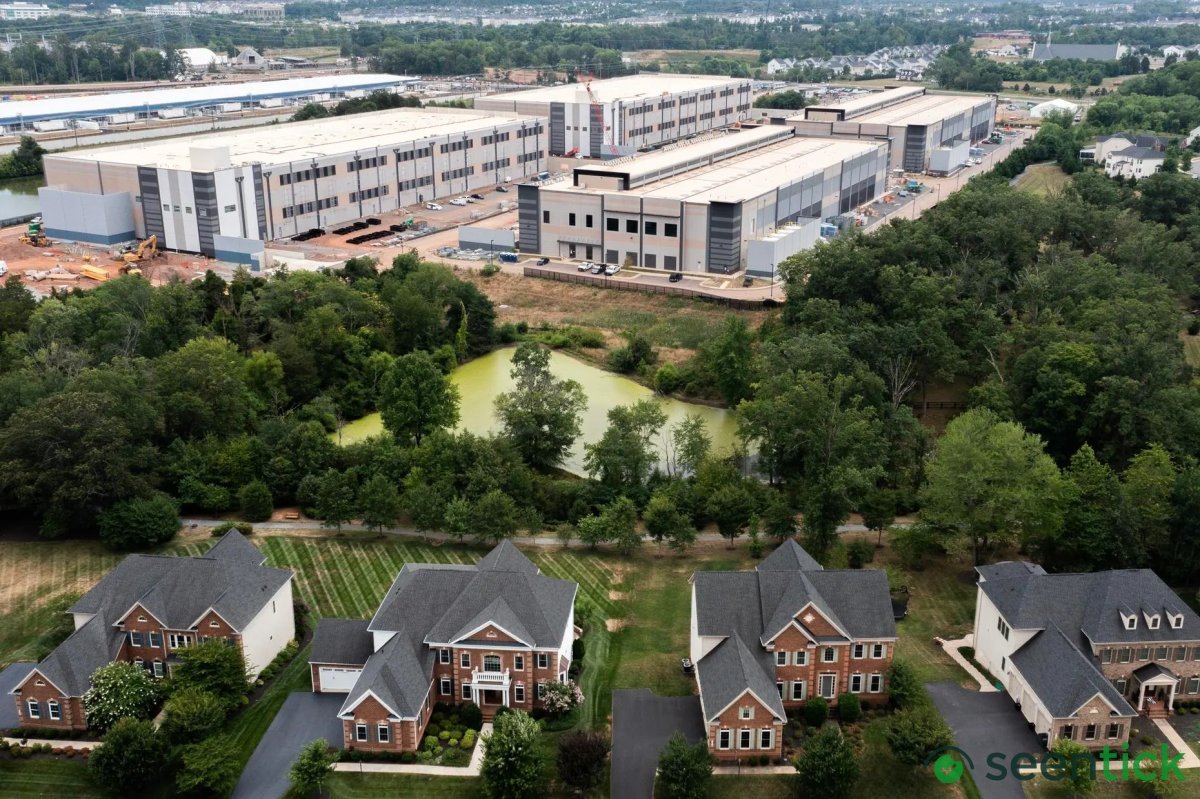
- Global data-center electricity demand is skyrocketing, nearly doubling in five years, reaching 787.8 TWh in 2025. The United
- power sector, ending decades of stagnant electricity demand and posing significant challenges for utilities and grid operator
- electricity This makes energy availability a critical limiting factor for AI development, requiring an "all-of-the-above" ene
Global data-center electricity demand is skyrocketing, nearly doubling in five years, reaching 787.8 TWh in 2025. The United States is leading this surge, consuming almost 40% of the global total and accounting for nearly half of the worldwide increase last year. This unprecedented growth is rapidly transforming the U.S.
power sector, ending decades of stagnant electricity demand and posing significant challenges for utilities and grid operators. The massive power requirements of AI-driven data centers are straining existing infrastructure, leading to transmission congestion and necessitating substantial investments in new generation and grid upgrades. Experts forecast continued rapid expansion, with data centers potentially consuming up to 12% of U.S.


Key Analysis and Detailed Timeline
electricity This makes energy availability a critical limiting factor for AI development, requiring an "all-of-the-above" energy response and impacting diverse industries. Global data-center electricity demand is growing at a remarkable pace, and no country is driving that growth more than the United States.
The Energy Institute’s 2026 Statistical Review of World Energy helps put the scale of the change into perspective.
For the first time in the Statistical Review’s 75-year history, it reported global data-center electricity consumption, using data from S&P Global Energy. According to the new data, worldwide data-center electricity demand reached 787.8 terawatt-hours in 2025, up from 658.2 TWh in 2024. That represents an extraordinary increase of nearly 20% in a single year.
Go back to 2020, when global demand was 410.8 TWh, and the scale of the expansion becomes even more striking: data-center electricity use has increased about 92% in just five years, representing an average annual growth rate of nearly 14%. For some perspective, if the world’s data centers were treated as a country, their electricity consumption would place them among the world’s largest power markets.
Broader Impact and Sector Outlook
This is no longer a niche load being absorbed around the edges of existing power systems. It is becoming a major new source of demand that utilities, grid operators, regulators, and power producers have to plan around. The growth has also been highly concentrated geographically.
The United States and China dominate global data-center electricity use, while Europe is a distant third. That distribution is important because adding a large amount of electricity demand to a mature grid that has experienced little growth for decades creates a very different challenge from adding it to an economy where power generation and transmission are already expanding rapidly.
data centers consumed an estimated 312.6 TWh of electricity in 2025, representing 39.7% of the global total. China ranked second at 205.7 TWh, or 26.1%, while Europe accounted for 144.6 TWh, or 18.4%.
Other parts of the Asia-Pacific region consumed another 63.2 TWh, with the remaining demand spread across Latin America, the Middle East, Africa, and the rest of North America.
That means the United States and China together accounted for nearly two-thirds of all data-center electricity consumption worldwide. But the U.S. share of the growth last year is even more remarkable.
consumption increased from 249.0 TWh in 2024 to 312.6 TWh in 2025, a gain of 63.5 TWh. Since worldwide data-center demand increased 6 TWh, the United States alone accounted for roughly 49% of the global increase. data-center electricity consumption has risen 5% increase in 2025 represents a significant acceleration.
This helps explain why the discussion around artificial intelligence has rapidly become an energy discussion. From the perspective of a utility, an AI data center is first and foremost an enormous electrical load that must be served reliably every hour of the day. That load is arriving after a long period in which U.S.
electricity demand barely changed. The Energy Information Administration reports that electricity demand grew 1% annually between 2005 and 2019. Since 2020, however, demand has increased at an average annual rate of about 1.7%, and EIA specifically identifies electricity use Virginia offers perhaps the clearest illustration of what this can mean for an individual power market.
Commercial electricity sales there increased In the Dominion portion of the PJM grid, summer peak demand in 2025 was 23% higher than in 2019, while the 2025–26 winter peak was 45% higher than six years earlier. PJM currently expects summer peak demand in that region to grow at an average annual rate of 5.4% over the coming decade, largely because of continued data-center development.
That growth has consequences far beyond the generating plant. Electricity has to move through transmission lines, transformers, substations, and local distribution equipment before it reaches the servers consuming it. During the first half of 2026, transmission congestion costs across PJM jumped 43% to $6 billion, with Northern Virginia among the areas experiencing significant constraints.
Read More: Chicago And Styx Return Home As ‘The Windy Cities’ Tour Hits Chicago
Data centers are not solely responsible for those costs, but rapidly rising demand is adding pressure to a grid where major transmission projects can take years to permit and build. There is little disagreement that data-center electricity demand will continue to rise, although there is considerable disagreement over exactly how fast.
S&P Global Energy estimates that worldwide demand could increase at an annual rate of 12% to 16% between 2025 and 2030.
Its power-sector scenario reaches about 1,550 TWh Under that scenario, data centers would consume about 6% of global electricity. The range of U.S. forecasts is similarly wide.
A Department of Energy-supported analysis estimated that data centers consumed about 4.4% of U.S. electricity in 2023 and could consume between 6.7% and 12% This is where the AI story begins to collide with physical reality.
Someone has to build the generation needed to supply these facilities, and someone has to build the transmission lines and substations that deliver the electricity.
Natural-gas generation can often be built faster than nuclear power, but turbine supply chains have tightened. Renewable capacity can be added relatively quickly, but intermittency increases the need for storage, firm generation, and transmission. Nuclear plants that once seemed destined for retirement have suddenly become attractive sources of around-the-clock power for technology companies looking for large blocks of reliable electricity.
The technology industry naturally focuses on computing capacity, but the limiting factor in the AI buildout may increasingly be outside the data center itself. A company can order advanced chips and design an enormous computing campus, but those servers are not very useful without access to hundreds of megawatts of reliable electricity.
At the largest proposed campuses, the requirement can reach gigawatt scale, putting an individual data-center complex into the same general category of power demand as a sizable city.
This also means that the economic impact of AI is spreading into sectors that have little to do with software. Utilities are revising load forecasts. Power developers are planning new generation.
Pipeline companies may benefit from additional natural-gas demand, while manufacturers of turbines, transformers, switchgear, cooling equipment, and electrical components are seeing a new source of orders. Battery storage and renewable power will have roles to play, as will nuclear plants and existing fossil generation.
The AI revolution increasingly requires an all-of-the-above energy response because the scale and speed of the demand growth leave little room to rely on a single technology.
For most of the past two decades, the U.S. power sector was built around an assumption of relatively stagnant electricity demand. That assumption is rapidly becoming obsolete.
Data centers are not the only reason, but they are emerging as one of the most powerful forces behind the change. In only five years, global data-center electricity consumption has nearly doubled, and in 2025 the United States accounted for almost half of the worldwide increase.
The debate over artificial intelligence usually centers on software, chips, productivity, employment, and whether technology valuations have moved too far ahead of reality.
From an energy perspective, however, something very physical is happening underneath that digital revolution. The United States now consumes nearly 40% of the electricity used AI may live in the cloud, but the cloud is increasingly dependent on power plants, pipelines, transmission lines, transformers, cooling systems, and a grid that was never designed for demand to grow this quickly.
What's Your Reaction?
 Like
0
Like
0
 Dislike
0
Dislike
0
 Love
0
Love
0
 Funny
0
Funny
0
 Wow
0
Wow
0
 Sad
0
Sad
0
 Angry
0
Angry
0

SeenTick is a digital news platform bringing you the latest and most important stories from India and around the world. Explore news and updates across politics, business, technology, AI, gaming, health, sports, entertainment, science and more.












Comments (0)