

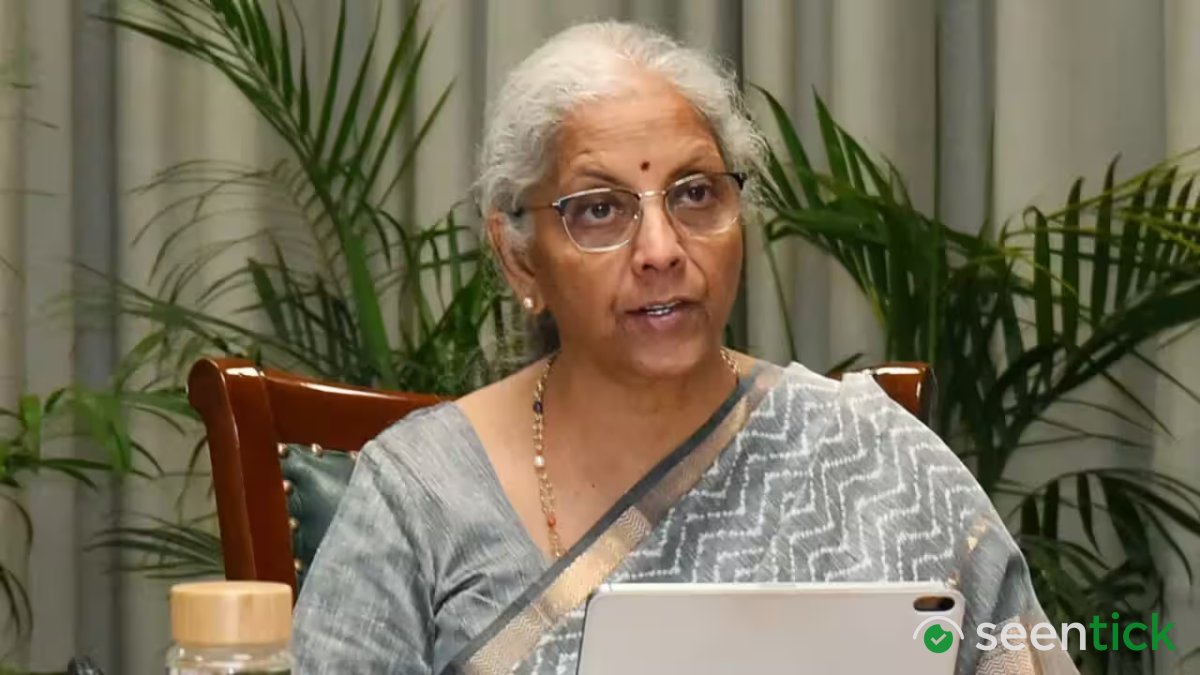
Sitharaman Urges Early India-US Trade Deal Amid China Market Access Barriers
Key Highlights
- Sitharaman urges early India-US trade deal.
- Non-tariff barriers hinder India-China trade.
- India's strong growth despite disruptions.
The Finance Minister has emphasized the importance of expediting the India-US trade agreement. Citing its significance for bilateral economic relations and global trade.
Her comments come on the heels of Commerce and Industry Minister Piyush Goyal's announcement that the first phase of the trade pact had been finalized and was currently undergoing legal drafting.
Sitharaman has expressed her expectation that the agreement will be signed soon. This highlights the need for swift negotiations in the interest of global trade and the trade between India and the US. Industry analysts anticipate that the trade agreement will be concluded at the earliest to facilitate mutually beneficial trade practices.
Read More: Farmer Wins ITAT Case, Cash Deposits Ruled as Agricultural Income
Sitharaman has also raised concerns about India's trade relationship with China. Particularly the growing imbalance and the difficulties Indian businesses face in accessing the Chinese market. Despite years of engagement with Beijing, India has made limited progress in securing greater market access for several products.
This includes generic medicines, bovine meat, and perishable goods.
Non-tariff barriers, such as phytosanitary measures, pose a significant hurdle in the trade between India and China. However, Sitharaman notes that discussions and investigations can help address these issues. She emphasizes that India has chosen negotiations over punitive tariffs as a means of tackling substantial trade imbalances with its trading partners.
Borrowing is used to create assets, which has benefited the economy, Sitharaman said. This approach has allowed the economy to grow and benefit from infrastructure investment. This has a stronger multiplier effect than direct transfers of funds.
Sitharaman also highlighted the importance of the BRICS grouping. Which comprises 11 to 12 countries that collectively account for around 45% of global trade. She notes that BRICS is not intended to counter other nations but rather to strengthen partnerships through collective cooperation.
Also Read: Tata Electronics to Develop India's Semiconductor Ecosystem with Rs 91,000 Crore Investment
Despite global disruptions, India has maintained strong economic growth, particularly since the COVID-19 pandemic. The country has been the fastest-growing major economy over the previous four to five years, according to Sitharaman.
She emphasizes the role of infrastructure investment in supporting economic activity, citing its stronger multiplier effect compared to direct transfers of funds. Infrastructure investment also generates employment and allows money to reach people through economic activity.
Sitharaman notes that public expenditure on infrastructure enables money to reach people through economic activity while avoiding pressure on the fiscal deficit. She also links government borrowing to the creation of infrastructure assets, arguing that this approach has delivered economic benefits.
What's Your Reaction?
 Like
3
Like
3
 Dislike
 Love
Love
 Funny
Funny
 Wow
1
Wow
1
 Sad
Sad
 Angry
Angry

I write about the forces shaping business and the global economy, from startup growth and changing markets to international trade and policy. My work focuses on breaking down complex developments into clear, practical insights and understanding what they could mean for businesses, investors, and the wider economy.









Comments (0)