

Retail's Top 10 Lists Have Been Wrong For A Century
Retail's Top 10 Lists Have Been Wrong For A Century
- The 2018 Sears bankruptcy underscored retail's transient nature, a lesson Jeff Bezos and former Walmart CEO Doug McMillon also emphasiz
- Today, identifying the largest retailer between Walmart and Amazon is complex due to varied financial reporting, especially regarding g
- On October 15, 2018, Sears Holdings Corporation filed for Chapter 11 bankruptcy protection. Sears had been the largest retailer in the
The 2018 Sears bankruptcy underscored retail's transient nature, a lesson Jeff Bezos and former Walmart CEO Doug McMillon also emphasize. Both leaders warn that even giants like Amazon aren't too big to fail, stressing customer focus and constant adaptation.
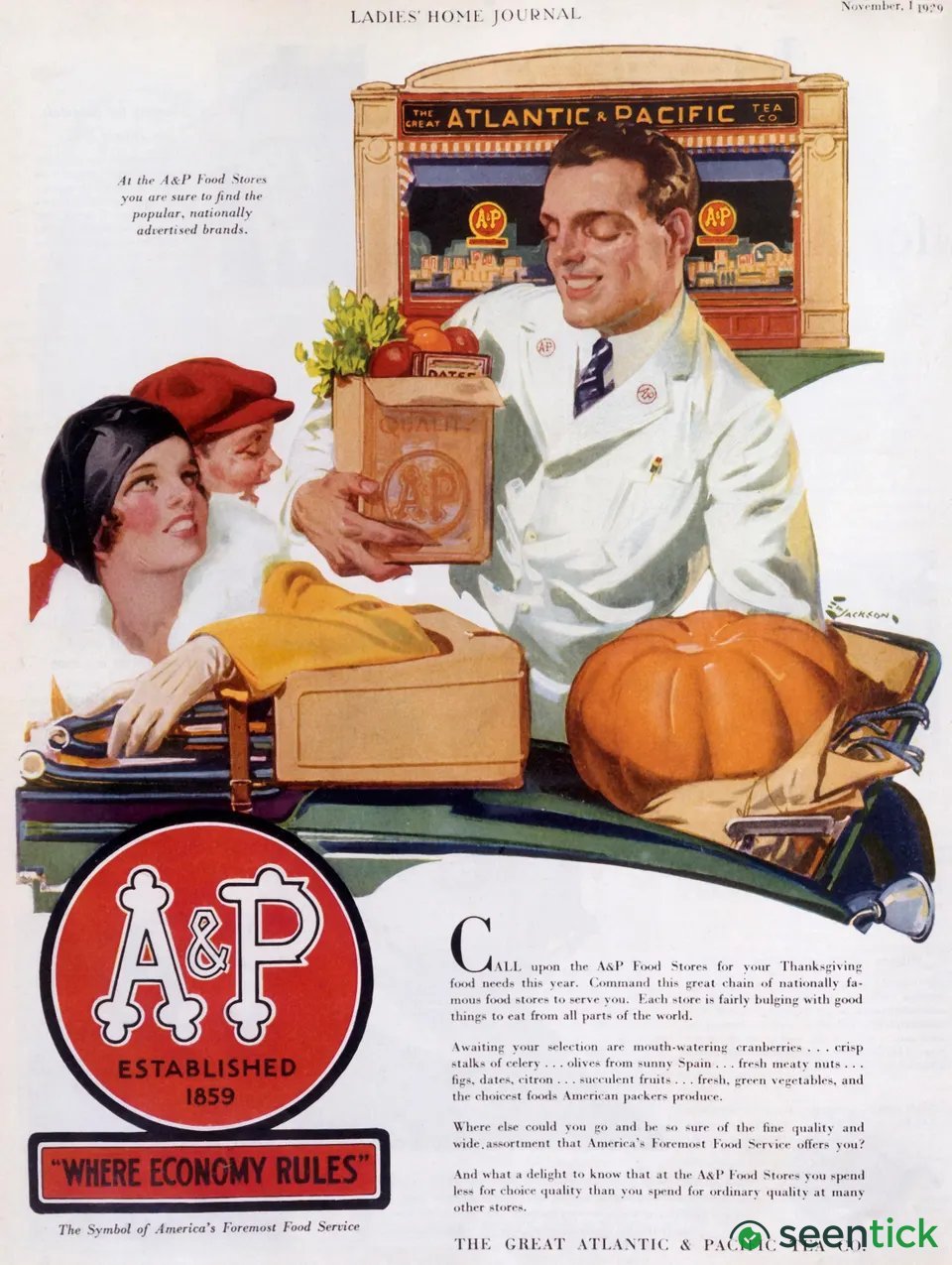
Historically, retail rankings were flawed, often missing true leaders like A&P, which dominated for decades before Sears and Walmart.


Today, identifying the largest retailer between Walmart and Amazon is complex due to varied financial reporting, especially regarding gross merchandise value. Moreover, current industry analyses risk overlooking rapidly growing international online players like Temu and SHEIN, already surpassing established US retailers.
The article cautions against competitive blind spots, urging companies to look beyond conventional lists to identify future threats and opportunities.
October Overview & Context
On October 15, 2018, Sears Holdings Corporation filed for Chapter 11 bankruptcy protection. Sears had been the largest retailer in the United States for 26 years, from 1964 through 1989. A few weeks later, Jeff Bezos held an all-hands meeting at Amazon's Seattle headquarters.
An employee asked him what he made of the retail landscape, and specifically what he took from the Sears bankruptcy. Bezos did not reassure anyone.
Doug McMillon, who retired as Walmart’s chief executive on January 31 of this year after nearly 12 years, kept a version of the same idea on his phone: an image of the 10 largest US retailers in each decade.
Companies at the top of that list do not stay there, and the position has to be earned again every year. Walmart became the largest retailer in America in 1990 and has held the title for 36 consecutive years -- McMillon’s entire tenure running Sam's Club, then Walmart International, then the company.
I admire the pragmatic paranoia in both men.
But Overview & Context
But the retail historian in me has never been able to let go of the fact that the chart is wrong, and that the wire story announcing Walmart's rise in 1991 was wrong in exactly the same way. The 1950, 1960 and 1970 columns on Doug’s list include Fortune Brands, Brown Shoe, Hartmarx, Magnavox and S&W Fine Foods -- companies that manufactured goods rather than sold them.
That is not carelessness. It is an artifact of the source. Whoever built the chart worked from the Fortune 500, and retailers were not eligible for the Fortune 500 until 1994.
The list could not contain the answer, so it returned the closest thing it had. The cost shows up in what is missing.
A&P appears in no column at all -- and A&P was the largest retailer in the United States for at least 35 years, and the first retailer anywhere to pass $1 billion in sales, which it did in 1929, at 2.4 times the size of Sears.
When the handover finally happened, UPI broke it on March 8, 1991, with a lede worth the price of admission: "It was about as conceivable as the Brooklyn Dodgers moving to Los Angeles. But the Dodgers did move, and now Sears is no longer the nation's largest retailer." Then, in the next breath, the error: Sears' 1990 results "knocks it off the top spot for the first time since 1900 when its catalog sales overtook those of Montgomery Ward." Correct about Montgomery Ward.
Wrong about the title. Sears did pass Montgomery Ward around the turn of the century and did become America's largest general merchandiser. It did not become America's largest retailer until the fiscal year that ended in January 1965, because for the six decades in between, a grocer was bigger.
Sears' reign was 26 years, not 90. The mistake underneath both is the same one the industry still makes. Each looked only at the companies that resembled its subject.
Fortune's list saw manufacturers. UPI saw the rival department store. Neither looked at food, which was then and remains now the largest thing Americans buy.
Three companies, and only three, have led American retail in the last century. A&P held it for at least 35 years -- through 1963, and the beginning of its reign is earlier than any sourceable list reaches. Sears held it for 26 years, from 1964 through 1989.
Read More: ?Mandalorian & Grogu’ Comes To Disney+ This Week Following Rough Theatrical Run
Walmart has held it for 36 years, from 1990 through today. Which produces a fact that ought to be uncomfortable in Bentonville: Walmart has already been No. 1 for a decade longer than Sears ever was.
The handover itself is the best argument Bezos and McMillon have. In 1989 Sears led Walmart 8 billion, a 22% gap. One year later, Walmart's sales grew 26% while Sears' grew 1.2%, and Walmart, Kmart and Sears finished within $616 million of each other on a $32 billion base -- less than 2%.
Walmart went from third to first in a single year, and Sears went from first to third in that same year, according to the three companies' annual reports. Sears then took another 28 years to die. So I rebuilt the chart, from the companies' own annual reports rather than from a list that excluded them.
One acknowledgement it produces: Kroger is the only retailer to appear in the top 10 in every decade since 1929. It ranked fourth in 1929. It ranks fourth today.
Many readers will be surprised to see Walmart still ahead of Amazon. The honest answer is that in 2026, nobody knows which of them sells more goods to American consumers. Or more precisely, some people probably do know, and they are not saying.
Neither company reports the value of the goods it sells -- what the industry calls gross merchandise value, or GMV. They report revenue, and revenue is a different thing, because both operate marketplaces alongside their own retail business. When Amazon makes a first-party sale, the revenue is the full value of the goods.
When it makes a third-party sale, the revenue is only the commission, or take rate, that Amazon earns. That distinction is not a rounding error.
Third-party sellers accounted for 61% to 62% of Amazon's paid units in every quarter of 2025, according to the company's quarterly earnings releases -- and because third-party items carry a higher average selling price than Amazon's own, the third-party share of GMV is higher still, somewhere around 63% of Amazon's US sales.
Because the one number you would need is the one nobody publishes. Credible estimates of Amazon's 2025 US GMV run from $447.9 billion to $630.6 billion. The whole spread comes down to what you assume Amazon's blended take rate is, generally somewhere between 25% and 35%.
Every five points of assumed take rate moves Amazon's worldwide GMV The consequence is that the ranking is not a fact, it is a function of an assumption: A word about the number most often quoted in the press. NRF's Top 100, prepared 9 billion.
That figure is not wrong so much as not comparable -- it is not a GMV number.
It also sits well above the measured first-party estimate of roughly $159 billion and far below any GMV estimate, and its method cannot be reproduced from the outside. If you see Amazon and Walmart ranked against each other, check which basis each one is on before you draw a conclusion from the gap.
The Fortune 500 could not see A&P in 1950 because A&P did not fit its definition of a company worth ranking.
Today, four of the 12 largest online sellers to American consumers -- Temu, SHEIN, TikTok Shop and AliExpress -- appear nowhere in NRF's Top 100, because none of them files with the Securities and Exchange Commission as a US retailer. Temu's US digital business is larger than Target's. SHEIN's is larger than Sam's Club's.
TikTok Shop grew 68% last year. If your competitive set is built from a standard ranking, it might have a similar hole in it. The blind spot is never the company you are watching.
It is the category you did not think to look at. It is a virtual certainty that these will not always be the top retailers in America, and that some player nobody is talking enough about today will eventually sit atop the list. TikTok Shop?
An AI-native retailer? Something none of us has heard of?
Frequently Asked Questions
What's Your Reaction?
 Like
Like
 Dislike
 Love
Love
 Funny
Funny
 Wow
1
Wow
1
 Sad
Sad
 Angry
Angry

I write about the forces shaping business and the global economy, from startup growth and changing markets to international trade and policy. My work focuses on breaking down complex developments into clear, practical insights and understanding what they could mean for businesses, investors, and the wider economy.










Comments (0)