

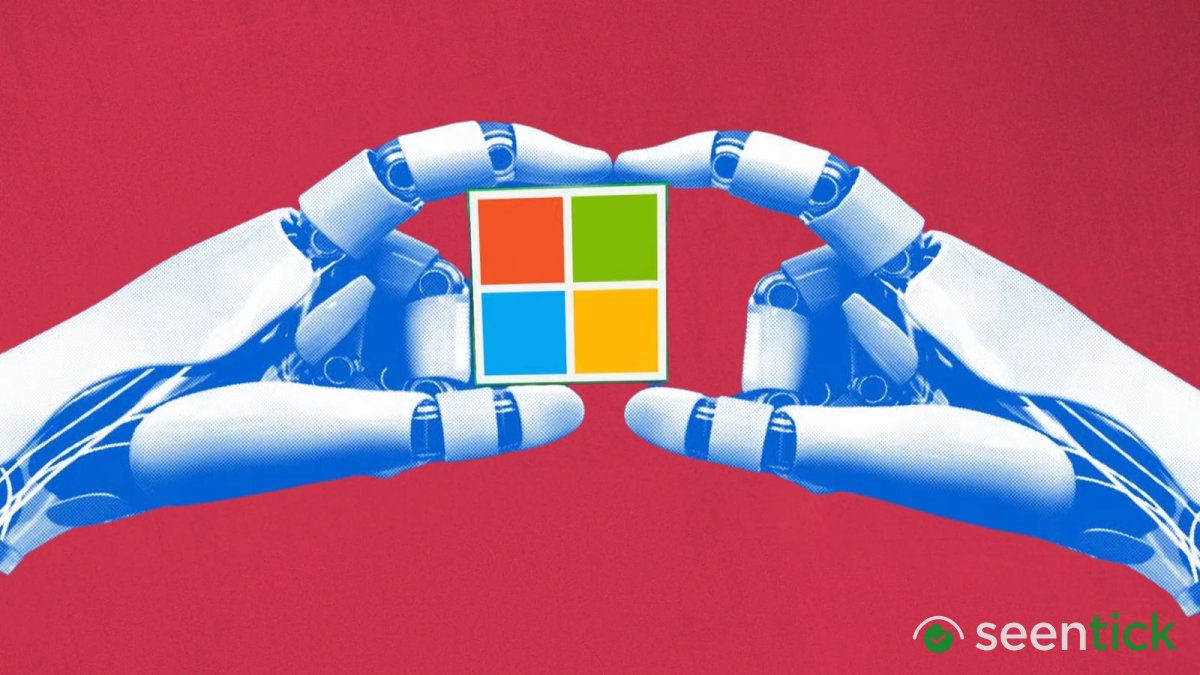
Microsoft Sets One-Hour Outage Fix Goal After Global Service Failure
Microsoft has established a rigorous internal mandate to resolve widespread service disruptions within a single hour. This strategic shift follows a catastrophic technical failure on November 12 and 13 that paralyzed essential cloud services for nearly an entire day.
The disruption severely hindered operations for Exchange Online, Teams, Outlook, and Copilot, creating significant backlogs for government departments in Australia, Japan, and the United States. Beyond the public sector, the outage disrupted critical communication channels for the aviation industry and hampered high-frequency trading activities at global financial firms.
Technical post-mortems conducted by the company identified the root cause as a latent scalability flaw within Windows that was inadvertently introduced during a July update. The crisis intensified when a traffic failover in Teams overwhelmed shared infrastructure, leading to a state of lock contention that exhausted memory and CPU capacity.
Because previous stress tests were performed on hardware with fewer processing cores, the vulnerability remained undetected until the November surge. At the height of the emergency, more than 80 percent of the gateway servers were non-functional, leaving engineers struggling to stabilize the environment.
Read More: Kalyan Krishnamurthy Quits as Flipkart CEO After 11 Years
Internal communication hurdles further complicated the recovery efforts. Microsoft staff reportedly managed the crisis across 11 separate chat channels, exchanging over 11,000 messages while attempting to diagnose the failure. Executives at the firm characterized the chaotic atmosphere as a fog of war.
Meanwhile security experts from firms like, Daloopa noted. That the breakdown was primarily a failure of established protocols rather than individual performance. They argued that standard operational procedures are often insufficient when faced with disasters of such immense scale.
In response, Microsoft has activated an initiative internally referred to as Code Red. This plan reorganizes recovery efforts into five distinct workstreams designed to accelerate incident containment and fix deployment. Key components of this strategy include geographic traffic partitioning to prevent localized errors from cascading globally, as well as enhanced load-shedding capabilities.
The company is also prioritizing the ability to push urgent security patches worldwide within 60 minutes, a massive improvement over recent deployments that spanned several days.
Industry analysts, including representatives from Gartner, suggest that while the one-hour target shows Microsoft’s commitment to improvement, it should be viewed as an internal benchmark rather than a guaranteed service level. Experts emphasize that recovery speed is often dictated by the unique nature of each technical failure.
Consequently, organizations such as Persistent Systems have begun conducting independent drills to ensure their own business continuity remains intact regardless of provider performance.
Also Read: OpenAI Launches Realtime Voice API and Prompt Caching: Architecture, Pricing, and Latency Analysis
To meet these aggressive recovery goals, Microsoft intends to deploy autonomous AI agents to assist engineers in data analysis. While the company confirmed that artificial intelligence played no role in causing the November outage, security specialists warn that integrating these tools requires strict human oversight.
There are concerns that granting AI agents high-level system access could introduce new security vulnerabilities if not managed with rigorous permissions and sign-off requirements.
External pressure is also mounting due to the Digital Operational Resilience Act (DORA), which became enforceable in the European Union on January 17, 2025. This legislation mandates that financial institutions strictly monitor the risks associated with their primary technology vendors.
With European regulators designating Microsoft for direct oversight later this year, the tech giant faces unprecedented legal requirements to prove its infrastructure can withstand and rapidly recover from systemic shocks.
What's Your Reaction?
 Like
2
 Dislike
 Love
 Funny
 Wow
2
 Sad
 Angry

Tech journalist and AI enthusiast who enjoys keeping up with the latest in hardware, processors, emerging AI tools, and software. I like digging into new technology, understanding how things actually work, and following the developments that could shape the way we use technology in the future.




















Comments (0)