
How Dolly Parton Became A Superstar With ‘9 To 5’
- Dolly Parton was bigger than country music. She was a philanthropist whose generosity touched everything from childhood literacy to dis
- But Parton did not always occupy such a broad cultural stage. For much of the 1970s, her fame was rooted largely in country music. But
- Landmark songs like “Jolene,” “Coat of Many Colors,” and “I Will Always Love You” were already behind her. She had successfully separat
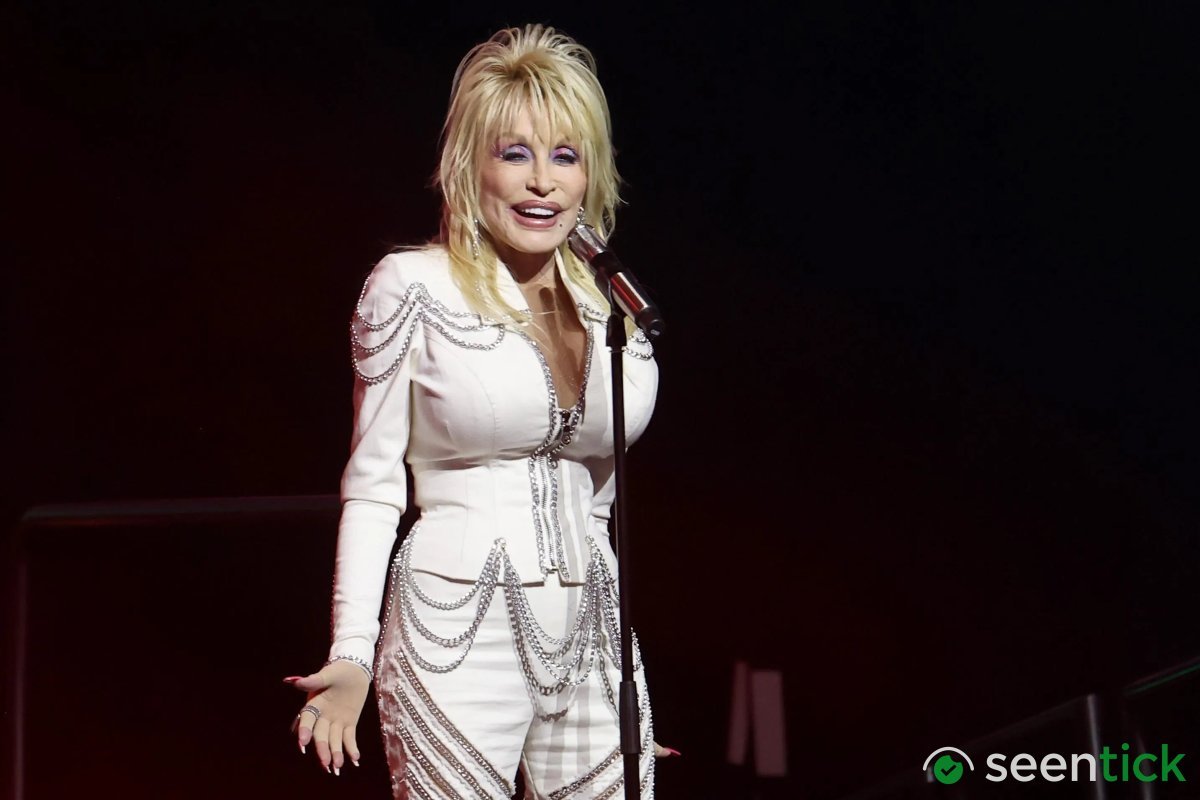
Dolly Parton was bigger than country music. She was a philanthropist whose generosity touched everything from childhood literacy to disaster relief and medical research, a symbol of self-empowerment and that rare celebrity who was larger than life without ever seeming above anyone. She became one of the few public figures capable of bringing people together in a polarized world.
But Parton did not always occupy such a broad cultural stage. For much of the 1970s, her fame was rooted largely in country music. But everything changed in 1980 when she was cast as Doralee Rhodes in the movie 9 to 5 .


For related coverage, explore our detailed analysis on Technology and Digital Systems.
Core Findings and Detailed Timeline
Landmark songs like “Jolene,” “Coat of Many Colors,” and “I Will Always Love You” were already behind her. She had successfully separated professionally from Porter Wagoner and established herself as a solo artist and songwriter. She had already started engineering a crossover beyond country music, too.
The pop song “Here You Come Again” ( 3 on the Billboard Hot 100, while the album of the same name went platinum. Fonda had already resolved she wanted to cast Lily Tomlin. Then, while driving home after seeing Tomlin’s one-woman show, she heard Parton’s “Two Doors Down” on the radio.
Fonda later described her reaction as essentially instantaneous: she pictured Parton sitting at a typewriter . She thought Parton would be perfect for a movie that, among other subjects, addressed sexual harassment. Parton later recalled that Fonda wanted to reach Southern audiences, something Parton could help the film do.
Broader Implications and Future Outlook
The character of Doralee is sexually objectified because of how she looks. Her boss lies about having an affair with her. Other women misjudge her because of her appearance.
Underneath the exaggerated femininity is an intelligent, capable woman who refuses to let other people define her. It’s difficult to imagine a more natural role for the public persona Dolly Parton had already created. When Fonda offered her the movie, Parton responded that she would do it if she could write the theme song.
In a recent account, Parton remembered her “ business brain ” kicking in. She knew she was entering unfamiliar territory with two established stars, Jane Fonda and Lily Tomlin, and she saw the opportunity to bring her strongest asset, songwriting, with her. Parton had never acted in a movie.
She arrived extraordinarily prepared. She reportedly memorized the entire script, including everyone else’s lines, before discovering that filmmaking involved enormous stretches of waiting around. During that downtime, she started clicking her long acrylic fingernails together.
They sounded like a typewriter. That became the rhythmic foundation of “9 to 5.” She wrote the song while making the movie and eventually played it for the cast and crew on set. 9 to 5 opened December 19, 1980.
Critical reaction was more mixed than its later reputation might suggest. But even critics who had reservations about the movie recognized Parton’s star power. Roger Ebert thought the movie itself was only a fairly successful comedy.
Parton was another matter. He called her a “ natural-born movie star ” and compared the unmistakable quality of her debut to the emergence of Marilyn Monroe, James Dean, and John Travolta. He was especially struck Watch her in the background, he advised readers: she remained in character, reacting to everything around her and generating enormous energy.
Not every critic was convinced. Jay Scott of The Globe and Mail thought Parton was more confident singing the theme song than acting . But audiences rendered their own verdict.
9 to 5 eventually grossed about $103 million domestically , finishing behind only The Empire Strikes Back among American releases that year. Parton received Golden Globe nominations for Best Actress in a Musical or Comedy and New Star of the Year, while “9 to 5” was nominated for Best Original Song.
Jane Fonda had seen something in Dolly Parton that much of America had not.
Now America could see it too. The movie would have expanded Parton’s audience without the song. The song multiplied the effect.
Read More: Upper Deck Debuts Transformers 40th Anniversary Card Set To Kick Off New Hasbro Partnership
“9 to 5” went to No. 1 on the country, pop, and adult contemporary charts. It became Parton’s first No.
1 pop single. It earned an Academy Award nomination for Best Original Song and three Grammy nominations. Parton won Grammys for Best Country Song and Best Female Country Vocal Performance.
The album 9 to 5 and Odd Jobs reached No. 1 on the country album chart, stayed there for 10 weeks, reached No. 11 on the Billboard 200, and was certified platinum.
The title song became an anthem about working life. The genius of it is that you don’t have to know Doralee, Violet, Judy, or Franklin Hart to understand it. Anyone who feels underpaid, underappreciated, or trapped Parton had created two crossover vehicles simultaneously: a blockbuster movie and a No.
1 pop record. Before 9 to 5 , people outside country music might know Dolly Parton’s songs. After 9 to 5 , they knew Dolly Parton.
The film revealed qualities that a record couldn’t fully communicate: her comic timing, self-awareness, warmth, humor, vulnerability and camera presence. And she didn’t retreat to Nashville after the movie ended. She built on the new audience almost immediately.
The Best Little Whorehouse in Texas , opposite Burt Reynolds, followed in 1982. A year later, “Islands in the Stream,” her duet with Kenny Rogers, reached No. 1 on the Billboard Hot 100.
Her movie career had setbacks, including the poorly received Rhinestone in 1984, but Her ambitions were also expanding beyond entertainment. In 1986, Parton partnered with the owners of Silver Dollar City Tennessee, an amusement park near her hometown in the Great Smoky Mountains, to transform it into Dollywood.
She could use the wealth and celebrity she had accumulated to create jobs, attract visitors and celebrate the culture of East Tennessee.
Attendance surged from roughly 700,000 at Silver Dollar City in 1985 to more than 1.2 million during Dollywood’s first year . Two years later, she established the Dollywood Foundation to support education in Sevier County. Its work would eventually lead to the Imagination Library, the book-gifting program that became one of the defining achievements of her life.
9 to 5 didn’t create Dolly Parton’s ambition, business instincts, generosity, or ability to connect with people. Those qualities were already there. The popularity of the movie and the song brought them to a much larger audience.
The story of 9 to 5 shows a lot about the type of person Dolly Parton was and why she became a global superstar. Parton brought credibility with an audience Fonda wanted the movie to reach, while the movie gave Parton access to Fonda’s and Tomlin’s audiences. Each side brought something the other lacked.
Jane Fonda recognized qualities in Parton that country audiences already understood and put them into a medium where millions of other people could discover them. But Parton wasn’t content merely to appear in somebody else’s movie. She wanted to contribute something she knew she did exceptionally well.
The result was a song she wrote, performed and owned as intellectual property. A lesser crossover strategy might have involved sanding away everything that made Dolly Parton country. Instead, she arrived in Hollywood looking and sounding unmistakably like Dolly Parton.
Jane Fonda hearing “Two Doors Down” while driving home was luck. What Parton did with the opportunity wasn’t. She approached her first movie with the same ambition and business instincts that had already made her a country music star, then used its success as a springboard into movies, pop music, television and business.
Dolly Parton had already built her stage. 9 to 5 made that stage bigger. And she never looked back.
Frequently Asked Questions
What's Your Reaction?
 Like
0
Like
0
 Dislike
0
Dislike
0
 Love
2
Love
2
 Funny
1
Funny
1
 Wow
0
Wow
0
 Sad
0
Sad
0
 Angry
0
Angry
0

I write about the forces shaping business and the global economy, from startup growth and changing markets to international trade and policy. My work focuses on breaking down complex developments into clear, practical insights and understanding what they could mean for businesses, investors, and the wider economy.












Comments (0)