

Lone Democrat on the FCC Wants to Keep Fighting
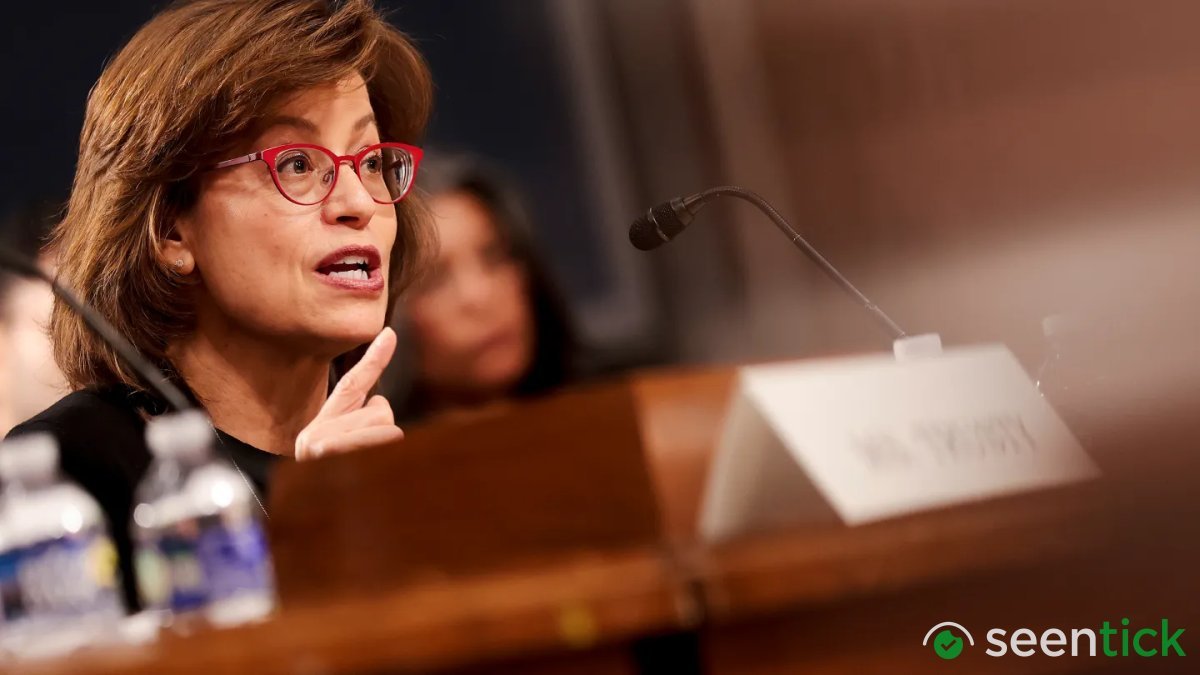
Lone Democrat on the FCC Wants to Keep Fighting
- As the lone Democratic commissioner at the Federal Communications Commission, Anna Gomez has been in the unique position of speaking out on some of the agency’s biggest decisions and even publicly urging Disney to fight back against the FCC .
- And while she doesn’t exactly relish having to speak out against her own agency, Gomez says she’d like to keep going in the role.
- As it stands, Gomez’s term ended at the end of June, and the commissioner is currently in a carryover period that could last until the end of 2027, unless another commissioner is nominated and confirmed The commission has operated as a bipartisan agency, with the law stating that the maximum number of FCC commissioners from the same political party is three, but it remains unclear what the future makeup could look like.
As the lone Democratic commissioner at the Federal Communications Commission, Anna Gomez has been in the unique position of speaking out on some of the agency’s biggest decisions and even publicly urging Disney to fight back against the FCC . She’s been unabashed about condemning agency decisions she sees as violations of First Amendment rights and what she views as the FCC’s directed targeting of critics of the Trump administration.
And while she doesn’t exactly relish having to speak out against her own agency, Gomez says she’d like to keep going in the role. “I’d love to be reconfirmed, and I have supporters in the Senate, which I’m very grateful for, and appreciate very much,” Gomez tells The Hollywood Reporter . “ I think it’s important that we maintain somebody that pushes back against this administration’s overreaches,” she adds.
As it stands, Gomez’s term ended at the end of June, and the commissioner is currently in a carryover period that could last until the end of 2027, unless another commissioner is nominated and confirmed The commission has operated as a bipartisan agency, with the law stating that the maximum number of FCC commissioners from the same political party is three, but it remains unclear what the future makeup could look like.
A former telecommunications lawyer, with a career that includes several government posts including positions at the FCC, Gomez was appointed as FCC commissioner under President Biden in 2023. She has remained in place as President Trump appointed his pick, Republican Brendan Carr, to head up the agency, with Republican Olivia Trusty named as another commissioner in 2025.
The commission is typically made up of five members, though can operate with a quorum of three. Gomez notes that she would like to return to having a full slate. Earlier this month, Trump nominated FCC chairman Carr’s senior counsel, Danielle Thumann, a Republican, to serve a five-year term as an agency commissioner.
However, she has yet to be confirmed, and the President has yet to weigh in on whether he would appoint another commissioner to reach five members, whether they would be a Democrat or whether he would support a renomination of Gomez. Throughout her term, Gomez has pushed back on topics like the FCC decision to approve the Paramount-Skydance merger (which was approved 2-1 over her dissension), which included having the company eliminate its DEI programs and put controls on newsroom decisions at CBS. Last spring, Gomez launched a nationwide First Amendment tour, in which she traveled the country to raise awareness about “the FCC’s actions in support of this administration,” which she saw as threatening newsroom and broadcasters rights.
And recently, she’s been particularly outspoken about the FCC’s decision to call Disney’s broadcast licenses for early renewal. The agency shared the action was related to Disney’s DEI policies, but it came after the administration had called for the FCC to take action against late night host Jimmy Kimmel over a joke he made on his program.
“The FCC is once again targeting an administration critic Let’s not pretend this FCC hasn’t already made up its mind. All they want is for their pro-censorship partisan allies to nod in agreement. My message to Disney: Don’t flinch.
Fight,” Gomez wrote in a particularly fiery social media post in May, after the FCC also began challenging The View , owned As for what kind of workplace environment this creates, Gomez says the commissioners, perhaps surprisingly, largely get along. “One thing that I don’t think people realize is that I actually work very well, and I work hard at maintaining a relationship with my colleagues, and because of that relationship, I am able to bring a lot of good outcomes for consumers.
And in most of what we do, the majority of actions that have come before the commission, I have actually supported,” Gomez shared, listing the crackdowns on robocalls and scams as one example. The big exception, of course, is when it comes to what she sees as agency overreach in violation of the First Amendment rights, a topic that she continues to passionately speak out about, to the degree that she recently praised Disney for suing the FCC .
It was particularly critical for Disney to stand up to the agency, she shared, because if it did not do so it would put pressure on others, and particularly smaller broadcasters, to capitulate. As for how her position on Disney and the FCC goes over with her colleagues, Gomez is more circumspect. “I don’t talk about my private conversations with my colleagues, but I will say, when I talk about this, I talk about the importance of upholding the First Amendment, which is really a bipartisan belief, and I try to keep it out of the personal realm,” Gomez said. A spokesperson for the FCC did not respond to a request for comment.
Carr previously shared in a hearing that even if a broadcaster is critical of Trump, “any broadcaster that complies with the public interest standard is not in any risk at all.” However, when pressed on whether he would commit to not retaliating against those broadcasters, he shared “there is no First Amendment right to an FCC license.” In the hearing, Carr also shared the FCC was “not formally an independent agency” and would not directly answer whether or not President Trump was his boss.
Unlike many of the administration’s outspoken critics, Gomez says she has been relatively spared from backlash so far and has also received a degree of bipartisan support , including from conservative think tanks, as well as from former chairs of the FCC and Republican senators including Sen. Ted Cruz (R-TX), who spoke out against the FCC’s decision to launch its early review of Disney‘s broadcast TV licenses after Jimmy Kimmel made his “expectant widow” joke.
“It is not government’s job to censor speech, and I do not believe the FCC should operate as the speech police,” Cruz told Punchbowl News in April. And, as she noted, Senate Democrats are making a particular push for her reconfirmation, as well as a return to a five-person commission with a bipartisan makeup. “The FCC’s job is to protect consumers and promote innovation in the communications sector.
It can’t do this job unless it’s fully staffed, including Anna Gomez has fought for consumers and against censorship and should be renominated to the FCC,” Sen. Maria Cantwell (D-Wash) shared in a statement sent to THR , a ranking member of the Senate Committee on Commerce, Science, and Transportation, which oversees the FCC.
Read More: Daboo Malik Supports Son Amaal Mallik Amid Yeh Awarapan Row
Ben Ray Luján (D-NM) similarly expressed support for Gomez’s renomination, calling her “a strong voice pushing back against political interference.” Gomez initial nomination was also seen as pivotal as she was named to the position after the FCC had been in a 2-2 partisan deadlock for the majority of Biden’s presidency, which made it difficult to take on administration priorities like net neutrality.
Biden’s prior nominee, Gigi Sohn, withdrew herself after a years-long fight for confirmation, but Gomez, who held prior positions including deputy assistant secretary of the National Telecommunications and Information Administration and senior advisor at the State Department’s Bureau of Cyberspace and Digital Policy, was confirmed 55-43 about six months after her nomination. As it stands with this FCC commission, Gomez says she is beginning to see the broader effects of the agency’s decision-making, as she has been hearing from broadcasters who admit to being afraid to report on certain topic areas, for fear of running afoul of the administration and possibly facing consequences.
“I get asked all the time, “Is it safe for me to report on X? And my response to them is always the fact that you’re asking me that question is the problem because it is not for the FCC to make your editorial decisions,” she said. In calling for early license renewals of Disney and others, Gomez also warns that this action “devalues the licenses themselves,” which causes greater uncertainty for broadcasters around licenses and could lead to a broader economic issue. Outside of her role speaking out against what she sees as First Amendment violations, Gomez shared she finds the job of commissioner enjoyable. “It really is a very satisfying job because when your lodestar is to ensure consumers are the beneficiaries of everything we do, it brings you a lot of satisfaction when you’re able to do things and achieve outcomes that are in fact pro-consumer, pro-competition,” Gomez said. And while she says she’s not someone who “enjoys dissenting for the sake of dissenting,” she shared she’s committed to continuing to do so in the remainder of her term, and if nominated again.
“I just think it’s so important to our democracy. This is a moment in time where I feel I have to do this, whether I enjoy it or not,” she shared.
As the lone Democratic commissioner at the Federal Communications Commission, Anna Gomez has been in the unique position of speaking out on some of the agency’s biggest decisions and even publicly urging Disney to fight back against the FCC.
She’s been unabashed about condemning agency decisions she sees as violations of First Amendment rights and what she views as the FCC’s directed targeting of critics of the Trump administration. And while she doesn’t exactly relish having to speak out against her own agency, Gomez says she’d like to keep going in the role.
“I’d love to be reconfirmed, and I have supporters in the Senate, which I’m very grateful for, and appreciate very much,” Gomez tells The Hollywood Reporter.
“I think it’s important that we maintain somebody that pushes back against this administration’s overreaches,” she adds. As it stands, Gomez’s term ended at the end of June, and the commissioner is currently in a carryover period that could last until the end of 2027, unless another commissioner is nominated and confirmed The commission has operated as a bipartisan agency, with the law stating that the maximum number of FCC commissioners from the same political party is three, but it remains unclear what the future makeup could look like.
A former telecommunications lawyer, with a career that includes several government posts including positions at the FCC, Gomez was appointed as FCC commissioner under President Biden in 2023. She has remained in place as President Trump appointed his pick, Republican Brendan Carr, to head up the agency, with Republican Olivia Trusty named as another commissioner in 2025.
The commission is typically made up of five members, though can operate with a quorum of three. Gomez notes that she would like to return to having a full slate. Earlier this month, Trump nominated FCC chairman Carr’s senior counsel, Danielle Thumann, a Republican, to serve a five-year term as an agency commissioner.
However, she has yet to be confirmed, and the President has yet to weigh in on whether he would appoint another commissioner to reach five members, whether they would be a Democrat or whether he would support a renomination of Gomez. Throughout her term, Gomez has pushed back on topics like the FCC decision to approve the Paramount-Skydance merger (which was approved 2-1 over her dissension), which included having the company eliminate its DEI programs and put controls on newsroom decisions at CBS.
Last spring, Gomez launched a nationwide First Amendment tour, in which she traveled the country to raise awareness about “the FCC’s actions in support of this administration,” which she saw as threatening newsroom and broadcasters rights. And recently, she’s been particularly outspoken about the FCC’s decision to call Disney’s broadcast licenses for early renewal.
The agency said the action was related to Disney’s DEI policies, but it came after the administration had called for the FCC to take action against late night host Jimmy Kimmel over a joke he made on his program.
“The FCC is once again targeting an administration critic Let’s not pretend this FCC hasn’t already made up its mind. All they want is for their pro-censorship partisan allies to nod in agreement. My message to Disney: Don’t flinch.
Fight,” Gomez wrote in a particularly fiery social media post in May, after the FCC also began challenging The View, owned As for what kind of workplace environment this creates, Gomez says the commissioners, perhaps surprisingly, largely get along. “One thing that I don’t think people realize is that I actually work very well, and I work hard at maintaining a relationship with my colleagues, and because of that relationship, I am able to bring a lot of good outcomes for consumers.
And in most of what we do, the majority of actions that have come before the commission, I have actually supported,” Gomez shared, listing the crackdowns on robocalls and scams as one example. The big exception, of course, is when it comes to what she sees as agency overreach in violation of the First Amendment rights, a topic that she continues to passionately speak out about, to the degree that she recently praised Disney for suing the FCC.
“I’ve been talking for almost two years about the need to push back and to protect the free press and free expression, and I’m hoping that I played no small part in ensuring that Disney did stand up and sue the FCC about this retaliation from this administration and this pressure campaign,” Gomez said. It was particularly critical for Disney to stand up to the agency, she said, because if it did not do so it would put pressure on others, and particularly smaller broadcasters, to capitulate.
Also Read: Before The Walking Dead, Jon Bernthal Was In A Forgotten Sitcom With A Modern Family Star
As for how her position on Disney and the FCC goes over with her colleagues, Gomez is more circumspect. “I don’t talk about my private conversations with my colleagues, but I will say, when I talk about this, I talk about the importance of upholding the First Amendment, which is really a bipartisan belief, and I try to keep it out of the personal realm,” Gomez said.
A spokesperson for the FCC did not respond to a request for comment. Carr previously said in a hearing that even if a broadcaster is critical of Trump, “any broadcaster that complies with the public interest standard is not in any risk at all.” However, when pressed on whether he would commit to not retaliating against those broadcasters, he said “there is no First Amendment right to an FCC license.” In the hearing, Carr also said the FCC was “not formally an independent agency” and would not directly answer whether or not President Trump was his boss.
Unlike many of the administration’s outspoken critics, Gomez says she has been relatively spared from backlash so far and has also received a degree of bipartisan support, including from conservative think tanks, as well as from former chairs of the FCC and Republican senators including Sen. Ted Cruz (R-TX), who spoke out against the FCC’s decision to launch its early review of Disney‘s broadcast TV licenses after Jimmy Kimmel made his “expectant widow” joke.
“It is not government’s job to censor speech, and I do not believe the FCC should operate as the speech police,” Cruz told Punchbowl News in April. And, as she noted, Senate Democrats are making a particular push for her reconfirmation, as well as a return to a five-person commission with a bipartisan makeup.
“The FCC’s job is to protect consumers and promote innovation in the communications sector.
It can’t do this job unless it’s fully staffed, including Anna Gomez has fought for consumers and against censorship and should be renominated to the FCC,” Sen. Maria Cantwell (D-Wash) said in a statement sent to THR, a ranking member of the Senate Committee on Commerce, Science, and Transportation, which oversees the FCC.
Ben Ray Luján (D-NM) similarly expressed support for Gomez’s renomination, calling her “a strong voice pushing back against political interference.” Gomez initial nomination was also seen as pivotal as she was named to the position after the FCC had been in a 2-2 partisan deadlock for the majority of Biden’s presidency, which made it difficult to take on administration priorities like net neutrality.
Biden’s prior nominee, Gigi Sohn, withdrew herself after a years-long fight for confirmation, but Gomez, who held prior positions including deputy assistant secretary of the National Telecommunications and Information Administration and senior advisor at the State Department’s Bureau of Cyberspace and Digital Policy, was confirmed 55-43 about six months after her nomination. As it stands with this FCC commission, Gomez says she is beginning to see the broader effects of the agency’s decision-making, as she has been hearing from broadcasters who admit to being afraid to report on certain topic areas, for fear of running afoul of the administration and possibly facing consequences.
“I get asked all the time, “Is it safe for me to report on X? And my response to them is always the fact that you’re asking me that question is the problem because it is not for the FCC to make your editorial decisions,” she said.
In calling for early license renewals of Disney and others, Gomez also warns that this action “devalues the licenses themselves,” which causes greater uncertainty for broadcasters around licenses and could lead to a broader economic issue.
Outside of her role speaking out against what she sees as First Amendment violations, Gomez said she finds the job of commissioner enjoyable. “It really is a very satisfying job because when your lodestar is to ensure consumers are the beneficiaries of everything we do, it brings you a lot of satisfaction when you’re able to do things and achieve outcomes that are in fact pro-consumer, pro-competition,” Gomez said.
What's Your Reaction?
 Like
Like
 Dislike
 Love
Love
 Funny
Funny
 Wow
1
Wow
1
 Sad
Sad
 Angry
1
Angry
1

Movies, series, and everything happening around Indian entertainment keep me busy. I cover OTT releases, box-office conversations, celebrity news, and the changing world of streaming, with a particular interest in the stories and trends that audiences are talking about right now.












Comments (0)