
Ajit Doval, Wang Yi look to ‘make progress on boundary delimitation’
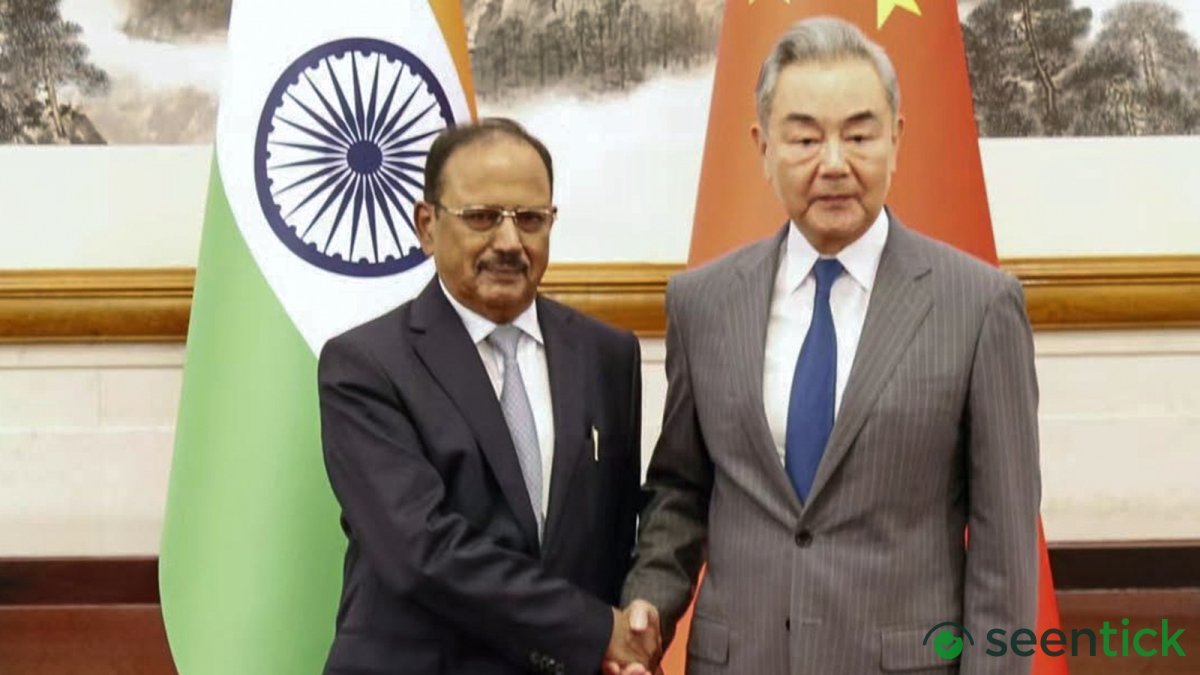
- In Beijing, National Security Advisor Ajit Doval held talks with Chinese Foreign Minister Wang Yi, discussing ways to 'make progress on
- The Doval-Han meeting set the stage for Xi’s likely visit to India for the summit of the BRICS leaders on September 12-13. After the me
- China and India are important neighbours and representatives of major developing countries and emerging economies. Wang said that the h
In Beijing, National Security Advisor Ajit Doval held talks with Chinese Foreign Minister Wang Yi, discussing ways to 'make progress on boundary delimitation' while sustaining transboundary cooperation. Before his talks with Wang, Doval met Chinese Vice President Han Zheng and China urged India to view and handle their relationship from a strategic and long-term perspective.
The Doval-Han meeting set the stage for Xi’s likely visit to India for the summit of the BRICS leaders on September 12-13. After the meeting, China’s Ambassador to India, Xu Feihong, said Han Zheng stated that over the past two years, President Xi Jinping and Prime Minister Modi have met twice – in Kazan and Tianjin – and reached a series of important consensuses on the development of China-India relations.


For related coverage, explore our detailed analysis on Technology and Digital Systems.
Doval-Han Meeting
China and India are important neighbours and representatives of major developing countries and emerging economies. Wang said that the healthy and stable development of China-India relations is in the fundamental interests of both peoples, meets the common aspirations of countries in the Global South, and aligns with the trend of the times.
The two sides agreed to continue their work in seeking a political settlement of the boundary question in the context of their overall and long-term interests. The Indian side highlighted the importance of maintaining peace and tranquillity in the India-China border areas for the continued development and progress of the bilateral relationship.
China-India relations have transcended the bilateral scope and possess global and strategic significance.” In June, Wang visited India for the meeting of the BRICS NSAs.
Wang Yi’s Views
Meeting Doval on the sidelines, Wang underlined it was “imperative” for India and China to respect each other’s “core interests” and take concrete actions to implement the “important consensus” reached
National Security Advisor Ajit Doval and Chinese Foreign Minister Wang Yi, who are the special representatives of their countries on the boundary issue, held talks in Beijing Tuesday and the Indian embassy later stated they discussed ways to “make progress on boundary delimitation” while “sustaining the ongoing work on transboundary cooperation”. Before his talks with Wang, Doval met Chinese Vice President Han Zheng and China stated it urged India to view and handle their relationship from a “strategic and long-term perspective” and “properly manage differences”.
India, on its part, stated Doval and Han discussed ways to strengthen peace and tranquillity in the border areas and further improve bilateral relations. Read | China’s Xi Jinping may attend BRICS summit in Delhi next month with large delegation A long part of Han’s career was spent in Shanghai, under Xi Jinping, and he was CPC secretary of Shanghai during 2012-2017.
Read More: Union Minister Nitin Gadkari Sparks Speculation About Possible
He is considered a member of the powerful Shanghai Clique. Doval’s meeting with Han and Wang also set the stage for Xi’s likely visit to India for the summit of the BRICS leaders on September 12-13.
After the Doval-Han meeting, China’s Ambassador to India, Xu Feihong, stated, “Han Zheng stated that over the past two years, President Xi Jinping and Prime Minister Modi have met twice – in Kazan and Tianjin – and reached a series of important consensuses on the development of China-India relations, guiding the bilateral relationship back onto a track of recovery and improvement.” “As neighbouring major developing nations and key emerging economies, China and India should view and handle their relationship from a strategic and long-term perspective; jointly implement the important consensuses reached The Indian embassy in Beijing stated, “NSA and VP Han discussed ways to strengthen peace and tranquillity in the border areas and further improve bilateral relations across economic, political and multilateral fora, in accordance with the consensus reached between the leaders of the two countries”. Ahead of their talks, Doval informed Wang: “I am happy that over the past year our relationship has been steadily returning to normalcy.
The normalcy in our relationship has been a direct result of both sides maintaining peace and tranquillity in the border areas.” After the Doval-Wang meeting, the Indian embassy stated, “The two sides positively reviewed the ongoing momentum in bilateral relations which is in line with the directions and vision of Prime Minister Narendra Modi and President Xi Jinping. They discussed ways to further expand bilateral cooperation, maintain stability and ensure peace and tranquility in the border areas, and make progress on boundary delimitation, while sustaining the ongoing work on transboundary cooperation.” The Ministry of External Affairs, in a statement, stated, “Under the strategic guidance of Prime Minister Shri Narendra Modi and President Xi Jinping, and in a constructive and forward-looking spirit, the two Special Representatives had a candid and in-depth exchange of views on the India-China boundary question, and concurred to continue their work in seeking a political settlement of the boundary question in the context of their overall and long-term interests.” It stated the “Indian side highlighted the importance of maintaining peace and tranquility in the India-China border areas for the continued development and progress of the bilateral relationship”.
“The two sides noted the progress made in implementing the important consensus reached between their leaders in Kazan in October 2024 and Tianjin in August 2025. Both sides expressed satisfaction at the steady resumption of people-to-people and cross-border exchanges, including the ongoing Kailash Manasarovar Yatra and border trade through the three designated border trading passes,” the MEA stated, adding that the two sides also discussed bilateral, regional and international issues of mutual interest.
The Chinese Foreign Ministry, in a readout in Mandarin, stated the two sides engaged in “in-depth discussions” on “advancing border demarcation negotiations, strengthening border control, improving mechanisms, and promoting cross-border cooperation”. “They reaffirmed their commitment to adhering to the political guiding principles reached in 2005, and to working in a spirit of mutual respect and understanding to leverage the Special Representatives’ meeting mechanism to seek a fair, reasonable, and mutually acceptable comprehensive solution to the border issue.
Both sides will continue to properly handle the border issue through dialogue and consultation, and jointly maintain peace and tranquillity along the border,” it stated. It quoted Wang saying that China and India are important neighbours and representatives of major developing countries and emerging economies.
“The healthy and stable development of China-India relations is in the fundamental interests of both peoples, meets the common aspirations of countries in the Global South, and aligns with the trend of the times. China-India relations have transcended the bilateral scope and possess global and strategic significance.” In June, Wang visited India for the meeting of the BRICS NSAs.
Meeting Doval on the sidelines, Wang underlined it was “imperative” for India and China to respect each other’s “core interests” and take concrete actions to implement the “important consensus” reached
Frequently Asked Questions
What's Your Reaction?
 Like
0
Like
0
 Dislike
0
Dislike
0
 Love
0
Love
0
 Funny
0
Funny
0
 Wow
0
Wow
0
 Sad
0
Sad
0
 Angry
0
Angry
0
Tech journalist and AI enthusiast who enjoys keeping up with the latest in hardware, processors, emerging AI tools, and software. I like digging into new technology, understanding how things actually work, and following the developments that could shape the way we use technology in the future.











Comments (0)