
India’s Ringg gets backing from Peak XV as it pushes voice AI past the phone call
- Back More than 76% of consumers in India prefer talking to businesses over a phone call, according to a recent study from Truecaller. S
- The company shared today it has landed $10 million from Peak XV Partners as an extension of its Series A. It had previously raised $5.5
- Indian fintech Cred became its first customer, and Ringg has since signed Indian startups like Flipkart, Practo, Groww, and PolicyBazaa
Back More than 76% of consumers in India prefer talking to businesses over a phone call, according to a recent study from Truecaller. Since voice is still consumers’ preferred way to communicate, that leaves a big opportunity to automate support and outreach calls using voice AI in the country.
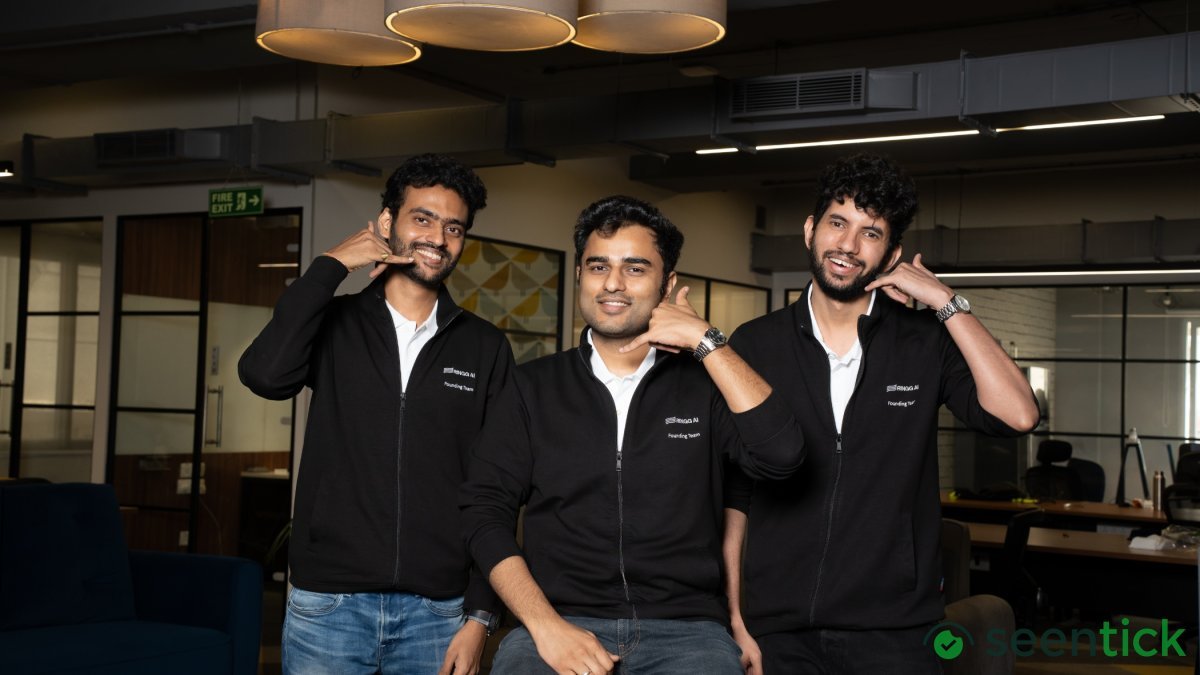
Voice AI startup Ringg, which already processes 20 million call attempts a month, is betting that volume keeps climbing over the coming months, and it just raised more money on that belief.


The company shared today it has landed $10 million from Peak XV Partners as an extension of its Series A. It had previously raised $5.5 million in a Series A round earlier this year, bringing the round’s total to $15.5 million.
Ringg started life as a text-to-speech startup called DesiVocal, but training its own speech models proved expensive, so the founders moved up the stack — building voice AI agents for enterprises instead. For related coverage, explore our detailed analysis on Technology and Digital Systems.
Indian Fintech Cred Became Updates
Indian fintech Cred became its first customer, and Ringg has since signed Indian startups like Flipkart, Practo, Groww, and PolicyBazaar. “At the start, we were doing high-volume, low-complexity use cases like outbound calling, lead qualification, loan collection, and more.
We quickly realized these are not sticky use cases, and so it’s always going to be a price game,” the startup’s co-founder Siddharth Tripathi informed TechCrunch.
Ringg still serves some of those simpler use cases, but it has set its sights on more complex workflows: appointment booking for healthcare clinics, abandoned-cart recovery for e-commerce sites, and onboarding/KYC (“know your customer”) checks for fintech apps. Tripathi shared Ringg’s voice agent now runs across 1,200 clinics for the healthcare app Practo, helping patients book visits or follow up on next steps post-visit.
Voice calls still make up over 70% of Ringg’s business, but the startup has started branching into other channels, including chat and WhatsApp. For some clients like Shell, it’s also automating browser-based support requests. “We are trying to position ourselves as a platform for agents that bring outcomes or get things done rather than voice agents for enterprises,” Tripathi said.
Most Ringg’S Customers Based Updates
Most of Ringg’s customers are based in India, with a handful in the Middle East and the U.S. But the startup isn’t trying to sell directly to U.S.
companies; instead, it wants to partner with so-called Global Capability Centers in India — the offshore hubs multinationals increasingly lean on for back-office and support work — to sell automation capacity alongside human support.
Read More: General Intuition Raises $320M at $6B Pre-Money Valuation, Eyes
Tripathi shared the company builds its own speech recognition and generation models, and would eventually like to own the full voice stack, including infrastructure and deployment. For now, though, that remains too costly, so the product works as an orchestration layer, routing tasks to different models depending on the use case.
Rishen Kapoor, a principal at Peak XV, shared that because Ringg started as a research lab building its own models, that technical depth shows up in the complex use cases it’s now tackling.
“Because of the technical capabilities, they can actually do these hard-won enterprise workflows end to end. They can complete these higher-value tasks like merchant onboarding, like L1 and L2 support, with quality and with consistency,” Kapoor informed TechCrunch. Voice AI in India is a crowded field.
Model makers including Deepgram, ElevenLabs, Cartesia, and local players like Sarvam and Smallest.ai, are all jockeying for pole position. Orchestration-focused startups like Bolna and Blue Machines are chasing the same layer Ringg occupies, while sector-focused players like Gnani and Arrowhead concentrate heavily on finance.
That layered stack — model makers, orchestrators, and application-layer players all trying to lock in enterprise workflows — is itself the story.
The money and the defensibility increasingly sit with whoever owns the customer relationship and the outcome. Ringg currently has 40 employees, with more than 15 hired in the last three months. The startup is hiring for forward-deployed engineer roles that combine technical chops with product management skills, along with researchers focused on bringing down the cost of running its models.
When you purchase through links in our articles, we may earn a small commission. This doesn’t affect our editorial independence. Ivan covers global consumer tech developments at TechCrunch.
He is based out of India and has previously worked at publications including Huffington Post and The Next Web. You can contact or verify outreach from Ivan com or via encrypted message at ivan.42 on Signal. In less than 48 hours, your chance to save up to $300 on your tickets will end!
Two years after launch, Walmart’s Flipkart is closing in on India’s quick-commerce leaders Inherent, founded Michael Polansky is training an AI model on skin that’s still alive How AI accounting startup Rillet raised $100M and became a unicorn in 48 hours Nvidia just demonstrated that the harness, not the AI model, is now the real hero Tesla’s solar roof is dead — here’s what went wrong Oura faces legal case accusing it of misleading consumers about sleep-tracking accuracy
Frequently Asked Questions
What's Your Reaction?
 Like
0
Like
0
 Dislike
0
Dislike
0
 Love
0
Love
0
 Funny
0
Funny
0
 Wow
0
Wow
0
 Sad
0
Sad
0
 Angry
0
Angry
0

Tech journalist and AI enthusiast who enjoys keeping up with the latest in hardware, processors, emerging AI tools, and software. I like digging into new technology, understanding how things actually work, and following the developments that could shape the way we use technology in the future.














Comments (0)