
HAL and Safran Jointly Develop High-Power Engine for India's Next-Gen Helicopters
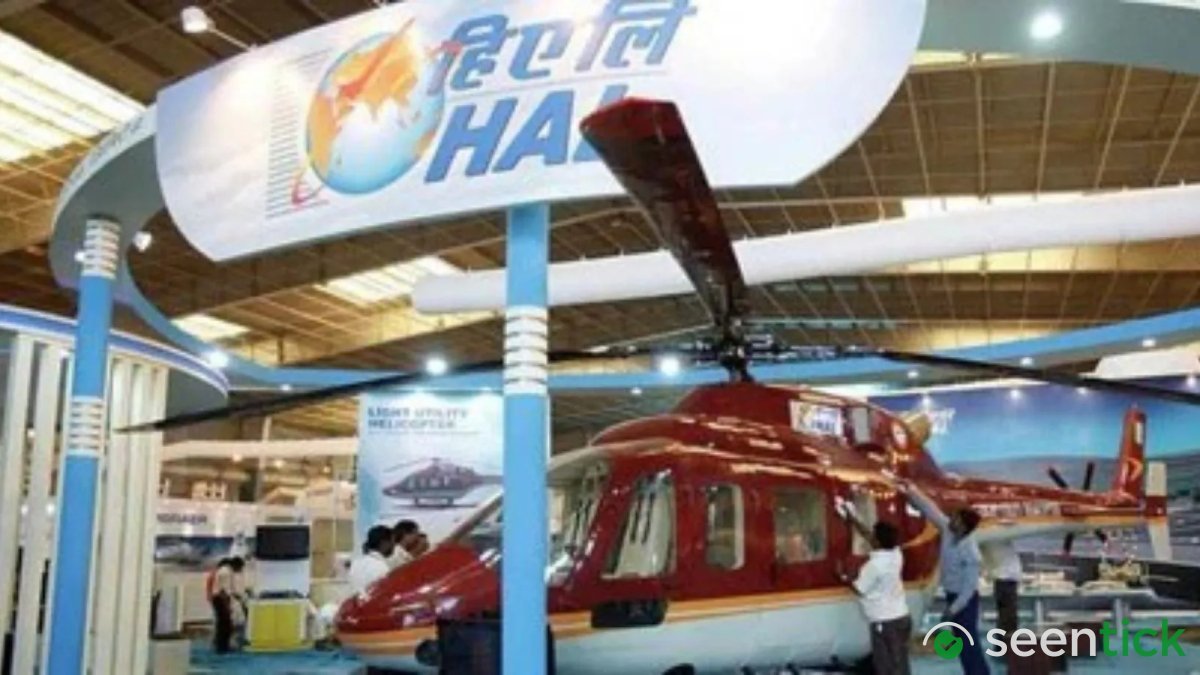
- Hindustan Aeronautics Limited (HAL) and France’s Safran Helicopter Engines have signed a deal to jointly develop a new high-power engin
- The design development of the Aravalli engine is expected to be completed in phases, with the first phase focusing on the core engine t
- The programme will provide HAL access to core engine technologies including the High Pressure Compressor, power turbine, fuel and oil s
Hindustan Aeronautics Limited (HAL) and France’s Safran Helicopter Engines have signed a deal to jointly develop a new high-power engine for India’s next-generation helicopters. The 'Aravalli' engine will power the 13-tonne Indian Multi-Role Helicopter (IMRH) and its naval version, the Deck-Based Multi-Role Helicopter (DBMRH).
The design development of the Aravalli engine is expected to be completed in phases, with the first phase focusing on the core engine technologies. For related coverage, explore our detailed analysis on Technology and Digital Systems.


Design Development
The programme will provide HAL access to core engine technologies including the High Pressure Compressor, power turbine, fuel and oil systems components, accessory gearbox and engine external systems capabilities that are critical for developing future generations of indigenous aero-engines.
The programme represents a significant investment in India’s long-term capability to design, develop and manufacture advanced helicopter engines and strengthens the technological foundation for future-generation rotorcraft programs.
The IMRH and DBMRH will first need clearances of the Defence Acquisition Council and the Cabinet Committee on Security. The programme is expected to generate significant revenue, HAL officials noted.
Future Impact and Next Steps
The programme will create opportunities for Indian industry in advanced engine manufacturing areas such as raw materials, precision machining and castings, while also supporting the development of indigenous Maintenance, Repair and Overhaul (MRO) capabilities.
SAFHAL, the joint venture between HAL and Safran Helicopter Engines, will leverage the complementary expertise and strengths of its parent companies to develop cutting-edge propulsion technologies that deliver superior performance, reliability, maintainability, and operational effectiveness.
SAFHAL, the statement noted, will leverage the complementary expertise and strengths of its parent companies to develop cutting-edge propulsion technologies that deliver superior performance, reliability, maintainability, and operational effectiveness.
The statement mentioned that Safran Helicopter Engines has been a trusted partner of HAL, starting with the Artouste engines powering the Cheetah and Chetak helicopters, followed “The Aravalli engine programme further elevates this enduring partnership through the joint design and development of a state-of-the-art turboshaft engine tailored to meet the evolving requirements of medium-lift rotorcraft platforms for India and global markets,” it said.
Read More: One of loitering munitions might have landed on Pakistan’s Kirana hills: Former CDS Anil Chauhan
State-owned Hindustan Aeronautics Limited (HAL) and France’s Safran Helicopter Engines have signed a deal to jointly develop a new high-power engine for India’s next-generation helicopters. Called ‘Aravalli’, the engine will power the 13-tonne Indian Multi-Role Helicopter (IMRH) and its naval version, the Deck-Based Multi-Role Helicopter (DBMRH).
The contract has been signed through their 50:50 joint venture, SAFHAL Helicopter Engines Pvt Ltd (SAFHAL), and will include lifecycle support for the 3,500-4,000 shaft horsepower helicopter engine. This marks the first instance of a high-power helicopter engine being designed and developed in India.
According to HAL authorities, the Aravalli program marks an important transition from licensed production to joint development of a high-power helicopter engine, allowing India to build deeper capabilities in critical propulsion technologies. IMRH is a new 13-ton multi-role helicopter designed A naval version, the 12.5-ton DBMRH, is also being developed for the Indian Navy.
The engines will be designed to operate in diverse and challenging environments in which these helicopters are deployed. It is understood that IMRH and DBMRH have potential applications beyond military helicopters, including offshore transportation, utility missions and VVIP transport, opening avenues for future civil aerospace opportunities.
The engine will be manufactured The program will provide HAL access to core engine technologies including the High Pressure Compressor, power turbine, fuel and oil systems components, accessory gearbox and engine external systems capabilities that are critical for developing future generations of indigenous aero-engines. According to HAL authorities, it will also enable HAL to gain expertise and intellectual property in the areas of engine design undertaken The programme is also understood to be providing exposure to international design methodologies, testing practices and certification requirements, while the knowledge and experience developed through Aravalli can provide a foundation for future indigenous aero-engine development programs.
According to HAL authorities, the programme will also create opportunities for Indian industry in advanced engine manufacturing areas such as raw materials, precision machining and castings, while also supporting the development of indigenous Maintenance, Repair and Overhaul (MRO) capabilities. Design development The design development of the Aravalli engine is expected to be completed The IMRH and the DBMRH will first need clearances of the Defence Acquisition Council and the Cabinet Committee on Security.
The programme represents a significant investment in India’s long-term capability to design, develop and manufacture advanced helicopter engines and strengthens the technological foundation for future-generation rotorcraft programs and is expected to generate significant revenue, HAL authorities noted. Named after one of the world’s oldest mountain ranges, the Aravalli engine symbolises India’s aspirations towards achieving greater self-reliance in critical aerospace propulsion technologies and strengthening indigenous capabilities for future-generation rotorcraft programmes, a HAL statement noted.
Ravi K, Chairman and Managing Director, HAL, stated, “The signing of this contract marks a significant step forward in India's pursuit of self-reliance in aero-engine technologies.” “Through this collaborative programme with SAFHAL and Safran Helicopter Engines, we are creating a strong foundation for powering next-generation Indian helicopter platforms,” he stated. Cédric Goubet, Chief Executive Officer, Safran Helicopter Engines, stated the initiative reflects the shared commitment to innovation, technology development, and industrial excellence.
SAFHAL, the statement noted, will leverage the complementary expertise and strengths of its parent companies to develop cutting-edge propulsion technologies that deliver superior performance, reliability, maintainability, and operational effectiveness. The statement mentioned that Safran Helicopter Engines has been a trusted partner of HAL, starting with the Artouste engines powering the Cheetah and Chetak helicopters, followed “The Aravalli engine programme further elevates this enduring partnership through the joint design and development of a state-of-the-art turboshaft engine tailored to meet the evolving requirements of medium-lift rotorcraft platforms for India and global markets,” it stated.
Frequently Asked Questions
What's Your Reaction?
 Like
0
Like
0
 Dislike
0
Dislike
0
 Love
0
Love
0
 Funny
0
Funny
0
 Wow
1
Wow
1
 Sad
0
Sad
0
 Angry
0
Angry
0

Tech journalist and AI enthusiast who enjoys keeping up with the latest in hardware, processors, emerging AI tools, and software. I like digging into new technology, understanding how things actually work, and following the developments that could shape the way we use technology in the future.















Comments (0)