

Five Years Later: Inside The World That Made Kanye West’s ‘Donda
Five Years Later: Inside The World That Made Kanye West’s ‘Donda
- In the summer of 2021, as the world began emerging from the isolation of the COVID-19 pandemic, Kanye West returned to the stage-but no
- Donda , named for his late mother, became one of the defining musical events of that strange summer: part album, part live experiment,
- Donda was already a moving target before Mercedes-Benz Stadium entered the picture. West first teased the album in March 2020, initiall
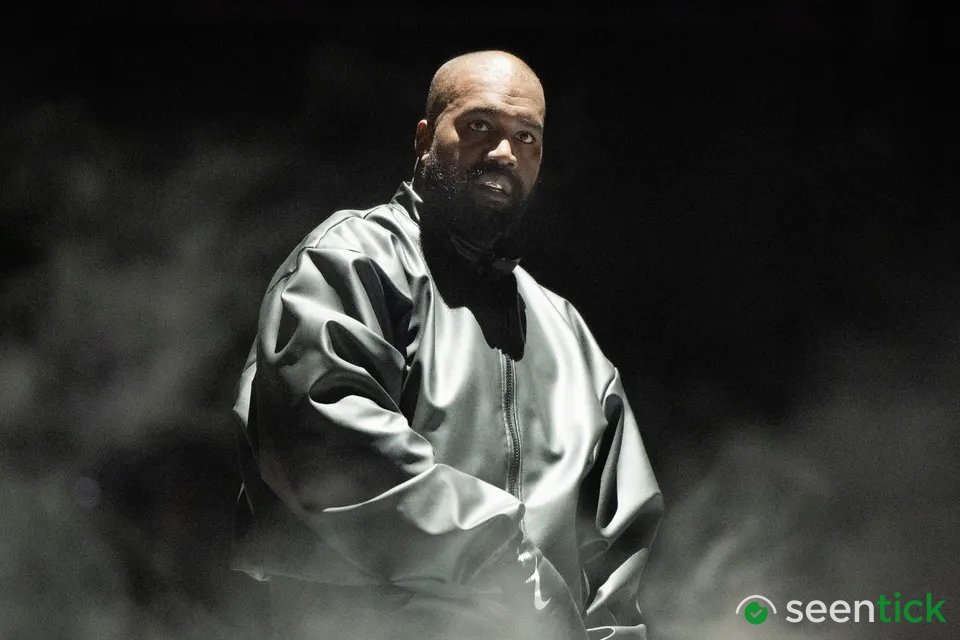
In the summer of 2021, as the world began emerging from the isolation of the COVID-19 pandemic, Kanye West returned to the stage-but not simply to perform. Inside Atlanta’s Mercedes-Benz Stadium, West transformed the venue into a temporary creative universe, working on an album that was still taking shape as thousands of fans waited outside and millions more watched from home.
Donda , named for his late mother, became one of the defining musical events of that strange summer: part album, part live experiment, part cultural phenomenon. What made the process extraordinary was that the stage itself became the studio.


Five years later, the people who helped bring Donda to life offer a glimpse behind the album’s creation-and into a process where the boundaries between performance, recording and audience largely disappeared. For related coverage, explore our detailed analysis on Technology and Digital Systems.
Core Findings and Detailed Timeline
Donda was already a moving target before Mercedes-Benz Stadium entered the picture. West first teased the album in March 2020, initially targeting a summer release, just as the COVID-19 pandemic upended the music industry and the rhythms of live performance.
Over the next year, the project changed names, tracklists and direction, with West repeatedly pushing its release further into the future.
It had become an evolving project whose final form remained unclear. Three days before the event, West previewed “No Child Left Behind” in a Beats commercial during the NBA Finals and confirmed a July 23 release date . The following night, he walked onto the field at Mercedes-Benz Stadium.
Donda was supposed to be finished. It wasn’t. West held a second major Donda listening event at Mercedes-Benz Stadium on Aug.
Broader Implications and Future Outlook
Once again, the album was still moving: songs were updated, new material appeared and the sequencing shifted. The Apple Music broadcast even demonstrated West working from his temporary room inside the stadium before the event. IRKO, acclaimed audio engineer, mixer and longtime collaborator of Ye, describes the concept almost like software development.
“How cool is the idea of beta-testing songs for a live audience and, I don't know, a few million people streaming it live?” That was essentially the Donda process. Rather than keeping unfinished music behind closed doors until it was polished, West repeatedly put new iterations in front of enormous audiences, then returned to the studio-or, in this case, the stadium-to keep working.
The second event reportedly drew 5.4 million Apple Music viewers, surpassing the first event’s record. A third listening event followed at Chicago’s Soldier Field on Aug. 26, just three days before the album finally arrived.
The audience wasn't simply hearing Donda . It was watching the album become Donda . Some of Donda ’s most memorable moments came together in ways that would sound improbable in a conventional studio.
“Moon,” the album’s dreamlike fan favorite, features Don Toliver on the hook and Kid Cudi delivering the main verse and closing harmonies. The song was still evolving as West moved between rooms at Mercedes-Benz Stadium: it debuted at the first Atlanta listening party with Toliver, gained Cudi Recording engineer Roark Bailey remembers how quickly an idea could move from a passing thought to the actual song.
Toliver had sent his part back, and West heard something he wanted to respond to. There was no formal recording session or elaborate setup. Bailey simply captured the idea on West’s phone and worked it into the track.
“If I remember correctly Don sent Ye back his part. And Ye was in the main locker room working with the folks on styling options for his outfit.
Read More: 2026-27 UEFA Champions League Draw Reveals Challenging Matches
Ye heard an idea for his part and then we actually grabbed it on voice note on the phone and I put that back in Ableton and lined it up with the song.” The sessions were scattered across the stadium.
Bailey remembers them as “hectic” enough that he can’t recall whether Toliver was physically there or had sent his part from another room. Cudi, meanwhile, recorded his contribution elsewhere.
“Cudi definitely cut his part in one of the other rooms.” It is a small but telling snapshot of how Donda was made: ideas moved between artists, rooms and devices, with the stadium functioning less like a venue than a sprawling, improvised studio.
The scale of Donda created another problem. The album ultimately contained 27 tracks and ran nearly 109 minutes, making it the longest album to top the Billboard 200 in the 2020s at the time. For IRKO, the challenge wasn’t simply getting all those recordings to sound good.
It was making radically different recordings feel as though they belonged to the same world. “My biggest challenge mixing ‘Donda’ was the huge number of contributors: producers, musicians and talent; each with very different characteristics.
Each needed to be mixed cohesively, even though the recordings came from different rooms, engineers, locations, mics and so on.” Then comes the line that may best explain the entire project: “The album needed to sound like one body of work.
One movie,” IRKO explains. That meant preserving the personality of each contributor while giving the sprawling album a common sonic language. “With so many well-known featured artists, I made sure each talent sounded like themselves, to preserve their individuality while making them belong to the same record.” That tension-individuality versus unity-runs through Donda .
The album moves between sparse, drumless passages and enormous, low-end-heavy productions, between gospel, hip-hop, trap and atmospheric minimalism. IRKO says he built its sound around that contrast. “I set up the sonics of the album so that it would be experienced in its enormity through contrast, bandwidth, dynamic placements and empty spaces,” he revealed.
The chaos, in other words, still required architecture. Some collaborations carried their own history. Jay-Z’s appearance on “Jail” marked a reunion between two artists whose partnership had produced Watch the Throne , while Ba But the guest list also became part of Donda ’s controversy.
“Jail Pt. 2” featured DaBa Marilyn Manson, who was facing multiple sexual-assault allegations at the time, also appeared alongside West at the Chicago listening event and received credits on the album. Their presence drew inquiry as West continued to reshape the record in public.
The result was less a closed creative statement than a gathering-West’s longtime collaborators, established stars and a younger generation of artists converging within an album that was still changing around them. There is a temptation, five years on, to reduce Donda to its lore: the masks, the stadium, the delays, the unfinished songs, the celebrity cameos, the image of West floating above the stage at the listening event.
But the people who were there remember something more elusive: an album taking shape in fragments, across rooms, voices and fleeting ideas. IRKO remembers disparate recordings arriving from different corners of the world and being pulled toward a single sound. Bailey remembers an idea surfacing in a locker room, captured on a phone before it could disappear.
Five years later, Donda stands as a document of a moment when the boundaries between studio, stage, audience and artist briefly fainted. The stadium was the studio. The audience was the test.
The unfinished was the method. And Donda was the final form.
Frequently Asked Questions
What's Your Reaction?
 Like
0
Like
0
 Dislike
0
Dislike
0
 Love
0
Love
0
 Funny
0
Funny
0
 Wow
2
Wow
2
 Sad
0
Sad
0
 Angry
0
Angry
0
I write about the forces shaping business and the global economy, from startup growth and changing markets to international trade and policy. My work focuses on breaking down complex developments into clear, practical insights and understanding what they could mean for businesses, investors, and the wider economy.







Comments (0)