

China Warns of High Risk as Lake Formed by Landslide Near Nepal-Tibet Border
China Warns of High Risk as Lake Formed by Landslide Near Nepal-Tibet Border
- China has issued a warning over the risk of a second flood in the Tibet region after a deadly flash flood on Wednesday, which scientist
- A barrier lake has formed at the confluence of the Chhochen Khola and Purepu Tsangpo rivers, with an estimated 2.5 million cubic metres
- The lake is expected to receive an additional three million cubic metres of water between Thursday and the weekend, posing a "high risk
China has issued a warning over the risk of a second flood in the Tibet region after a deadly flash flood on Wednesday, which scientists say was triggered
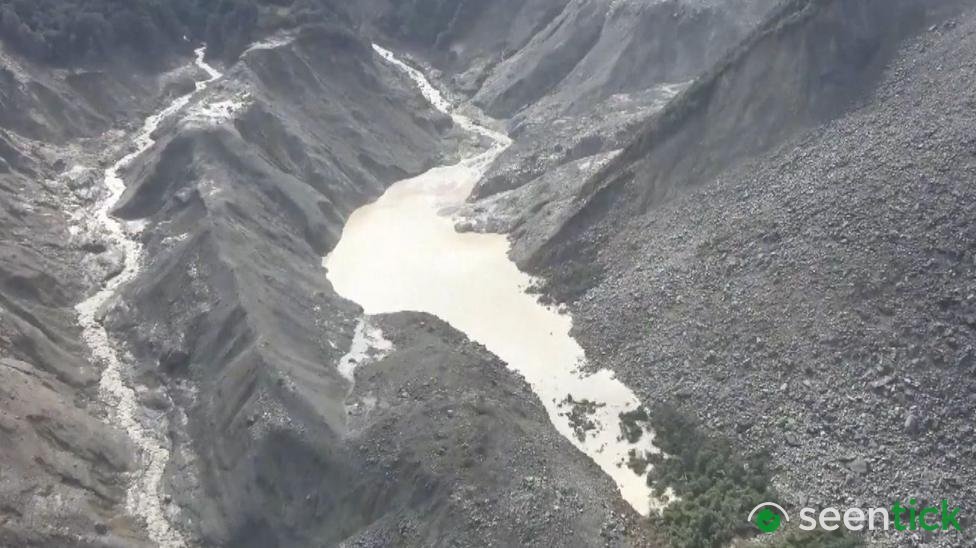
A barrier lake has formed at the confluence of the Chhochen Khola and Purepu Tsangpo rivers, with an estimated 2.5 million cubic metres of water accumulated as of Friday morning, according to state broadcaster CCTV. For related coverage, explore our detailed analysis on Technology and Digital Systems.


Formation of Barrier Lake
The lake is expected to receive an additional three million cubic metres of water between Thursday and the weekend, posing a "high risk of breach"
The barrier lake has already started to overflow, with officials warning that most of China's emergency services are stuck at a village about 7km from Gyirong Port due to the overflowing lake.
This has led to the suspension of search and rescue operations near the Nepal-Tibet border, according to CCTV.
Overflowing Lake
Nepali authorities have warned of the risk of blockages causing further floods along the Bhote Koshi and Trishuli rivers, with people advised to stay away from these areas until further notice.
Scientists have said that the flood on Wednesday was likely caused
Read More: China advises its citizens to leave Taiwan ally Eswatini over 'security risks
Scientists have shared that the flood on Wednesday was likely to have been caused
Chinese state media has aired footage of the lake that has formed
The lake has formed in a location upstream from the site of Wednesday's flash flood China has cautioned there is a "high risk" that a lake which formed after the recent landslide near the Nepal-Tibet border may breach its banks, causing a second flood downstream.
The warning comes after Wednesday's deadly flash flood in the same area which scientists say was triggered As of Friday earlier today, an estimated 2.5 million cubic metres of water had accumulated at the barrier lake, according to state broadcaster CCTV. A barrier lake is a body of water formed when debris dams up a river.
Authorities stated that three million cubic metres of water is expected to flow into the lake between Thursday and the weekend, posing a "high risk of breach".
The barrier lake, which formed at the confluence of the Chhochen Khola and Purepu Tsangpo rivers, has already started to overflow, according to China's Ministry of Water Resources. The area has also seen heavy rain.
Frequently Asked Questions
What's Your Reaction?
 Like
1
Like
1
 Dislike
0
Dislike
0
 Love
0
Love
0
 Funny
0
Funny
0
 Wow
0
Wow
0
 Sad
1
Sad
1
 Angry
2
Angry
2

I write about the forces shaping business and the global economy, from startup growth and changing markets to international trade and policy. My work focuses on breaking down complex developments into clear, practical insights and understanding what they could mean for businesses, investors, and the wider economy.














Comments (0)