

8 Movies That Blindsided the Box Office in 2026
8 Movies That Blindsided the Box Office in 2026
- Ben Brewster is a filmmaker, critic, screenwriter, and actor whose work sits at the intersection of film culture, craft analysis, and s
- Ben is an active film festival participant, having worked with Newport Film, the Nantucket Film Festival and as a screener for the Aust
- His background spans documentary and narrative filmmaking, film marketing, and production, including work with award-winning directors.
Ben Brewster is a filmmaker, critic, screenwriter, and actor whose work sits at the intersection of film culture, craft analysis, and storytelling. He is a movie list contributing writer at Collider and a contributing writer for High on Films, where he covers contemporary cinema, independent film, and festival releases with an eye toward narrative structure, performance, and visual language.
Ben is an active film festival participant, having worked with Newport Film, the Nantucket Film Festival and as a screener for the Austin, Boston & Woodstock film festivals. He brings to that work a programming instinct shaped This comes with a deep investment in the kinds of films that rarely find their way into the mainstream conversation without someone willing to advocate for them.


His Overview & Context
His background spans documentary and narrative filmmaking, film marketing, and production, including work with award-winning directors. This as well as developing his own indie production company, Lilac Creative Studio, through which he develops and produces original work across fiction and nonfiction forms.
His debut documentary, Diamond in the Rust, is an examination of economic redevelopment and displacement in the Queens area of New York City.
The film was recently accepted to the Unisphere Film Festival, the Defense of Democracy Film Festival, and the Urbanite Arts & Film Festival. This would mark his first festival recognition as a director.
In addition to his writing and programming work, Ben hosts Beneath the Bloom, a film podcast exploring the work behind the scenes in cinema, and the struggles one can face to make a movie become a reality.
The show reflects the same sensibility that runs through all of his work. A conviction that film is not merely entertainment but one of the most powerful tools human beings have for understanding each other. Across mediums, his work is driven The box office has become completely unpredictable in 2026, and the numbers back it up.
Obsession Overview & Context
Obsession turned into one of the year's defining stories purely on the strength of its revenue against a miniscule budget, while Backrooms proved that a twenty-year-old director with a camera and a genuinely unsettling idea could outmaneuver studios with a hundred times the resources. Even sequels that had no business working somehow found audiences anyway, holding their own in a landscape that Christopher Nolan's The Odyssey was supposed to dominate What is so telling about this year's chaos is the environment it happened in.
Attention spans have scattered and withered under the constant pull of social media, and conventional wisdom shared audiences simply were not walking into theaters for anything that did not come pre-branded with franchise recognition or algorithm-worthy spectacle. This year proved that theory wrong again and again.
The greatest triumph of 2026 hasn't been any single film, but rather the further confirmation that ambition and genuine skill can sill break through regardless of budget, pedigree, or marketing spend.
That should terrify the studios who have every conceivable advantage and still keep missing. The films below defied expectations for wildly different reasons, some emerging from total obscurity while others succeeding despite conventional wisdom insisting they had no business working at all.
Together these films paint a clearer picture: the old model is reeling and if the industry wants any real direction heading into next year's film season, it needs to start paying attention to exactly what these eight movies got right.
Going into release there was real reason to question whether the music biopic genre had simply gone stale, and whether a movie like Michael had any business becoming a box office draw. Michael Jackson remains one of the most checkered, complicated figures in pop culture, his legacy permanently shadowed On paper, this looks like a project that mainstream audiences would approach with hesitation, if not outright avoidance, especially against a reported budget between 155–200 million dollars.
Instead, the film blew past every expectation, grossing over a billion dollars worldwide as well as becoming the highest-grossing biopic of all time, surpassing both Oppenheimer and Bohemian Rhapsody in the process. Black audiences showed up in real, sustained numbers, and the film's box office run sparked broader conversations about Jackson's overall influence and where his music sits today culturally.
Regardless, turning 200 million into over a billion dollars in ticket sales proved that movie watchers are capable of separating complicated feelings about a person from genuine curiosity about their cultural impact. A fifth entry into an animated franchise invites an obvious question: has the core idea simply run its course?
Pixar has spent the better part of a decade struggling to land original ideas the way it once had effortlessly.
A fifth Toy Story installment, nearly thirty years after the original, felt to many like the kind of safe played-out sequel that signals a studio has paused taking the creative risks necessary to produce quality work. The box office proved that concern entirely wrong.
Even with a hefty budget in the 250–275 million dollar range, Toy Story 5 opened to a franchise best $160 million dollar domestic weekend and has since crossed $1.1 billion worldwide, comfortably clearing its break-even point and becoming the third highest grossing release of the year to date.
Audiences turning out in numbers like these suggest an affection for these classic characters that remains fully intact, even a decade removed in what many considered a perfect ending in Toy Story 3. It is proof that franchise fatigue is not automatic, and that beloved characters can still draw a crowd of all ages.
Read More: 55 Years Later, These Are the 10 Best Movies of 1971
Especially, when the emotional connection has been built with such care as it has here.
Nearly two decades removed from the original, The Devil Wears Prada 2 arrived carrying the weight of every warning sign of a flop sequel. Meryl Streep, Stanley Tucci, and Anne Hathaway are all well past the specific cultural moment that made the first film such a lightning strike.
There was a real sense, that whatever made the original so sharp and quotable simply could not be recreated on demand twenty years later, even with a comparatively modest $100 million dollar budget behind it.
The film proved that skepticism wrong almost immediately, opening to $233.6 million worldwide, one of the best global debuts of the year, as well as posting the biggest opening ever for a Meryl Streep movie in the process. It has since crossed $666 million worldwide, already outgrossing the original's entire lifetime total of $326 million while running at a fraction of the budget of most studio tent poles.
Critics and longtime fans noted the sequel occasionally strained to recapture the original's magic, but audiences responded to the union anyway. The sweet combination of charm, nostalgia and a beloved cast that can still turn a six and a half times return on investment even when the concept has technically outlived its cultural moment.
Sam Raimi's last major directing credit was Doctor Strange in the Multiverse of Madness, a film that earned mixed reviews and left plenty of Marvel fans wondering whether his signature style could still survive inside a franchise built to accommodate a dozen other competing interests.
However, Send Help marked his return to something closer to his roots. A contained survival horror thriller, following Rachel McAdams and Dylan O'Brien stranded on a remote island after a plane crash. It is the kind of scrappy, tightly controlled setup that first made him a household name with the Evil Dead series.
Carrying a modest $40 million budget, it was easy to assume the film would get buried in a stacked January and February slate. Instead, it opened to $28.1 million worldwide, and went on to gross over $94 million globally against a 93 percent fresh Rotten Tomatoes score.
It has become an obvious example of the year's appetite for original, adult-skewing genre films.
It is also clear evidence that Raimi's instincts for horror craftsmanship still has real commercial pull especially once he was freed from the chains of a massive studio franchise engine. A cerebral, hard-hitting science fiction epic based around a lone astronaut solving humanity's survival through math and chemistry sounds like the kind of ambitious original blockbuster that studios have grown increasingly afraid to green-light, let alone market successfully.
Carrying a hefty $200 million dollar budget and led It became the studio's first smash hit instead, opening to one of the biggest debuts of the year, at $140.9 million globally and eventually crossing $680 million worldwide, comfortably clearing its break-even point. It proved audiences will still turn out for risky original non-franchise blockbusters when the execution is as strong as it is here.
A truly reassuring sign for a studio system that had become increasingly (and unhealthily) reliant on betting the house on pre-existing IP. Iron Lung had no studio backing, no marketing budget, and no traditional path to theaters whatsoever. Written, financed, directed and starring youtuber Mark Fischbach, the project was produced for under three million dollars.
The kind of movie that traditional industry logic shared had no business competing with major studio horror releases in a crowded January corridor. It ended up grossing roughly $50 million worldwide, decisively outperforming its budget and even briefly outpacing Send Help at the box office in its opening weekend.
Iron Lung became one of the clearest proof points that a built-in online audience and a specific creative vision can outdo stereotypical studio infrastructure entirely, a signal the industry has been reckoning with ever since.
Adapting an internet urban legend into a theatrical release and directed It is not a pitch that traditionally inspires studio confidence. Backrooms carried a modest $10 million budget and relied almost entirely on organic Reddit-driven fan culture over stereotypical advertising to build any form of awareness ahead of its release. The results shattered every expectation anyone had.
The film opened to $81.5 million domestically, more than tripling A24's previous opening weekend record set It is an incredibly clear signal that a built-in internet fan base can now translate directly into box office dominance, regardless of how unconventional the source material or the filmmaker's background might be. Obsession tops this list easily and with good reason.
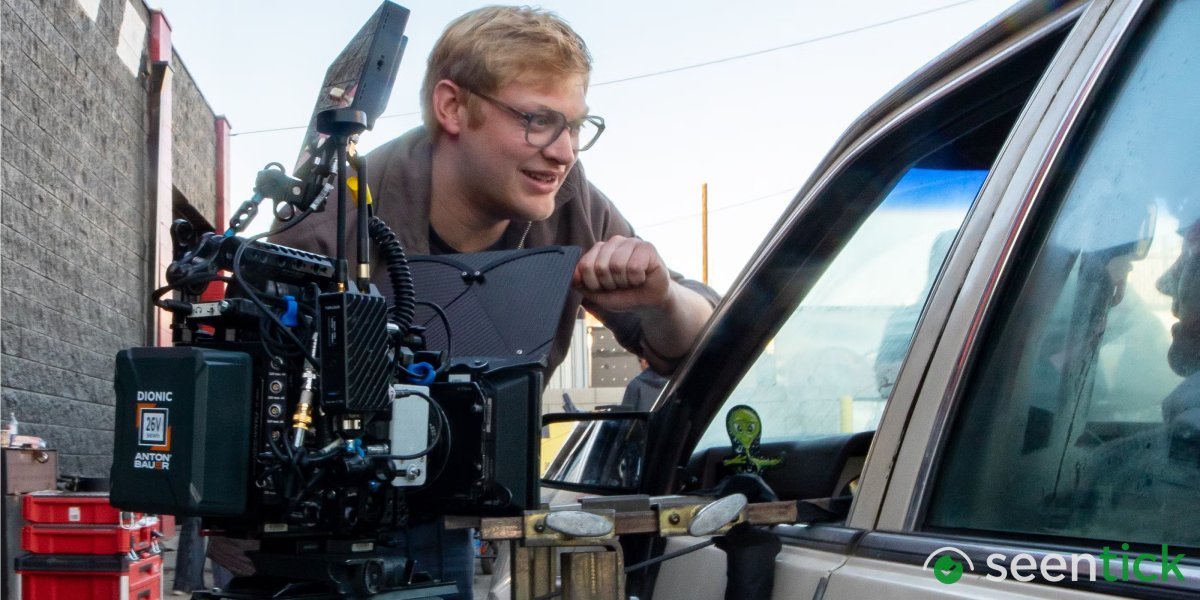
A twisted romantic thriller from first-time filmmaker Curry Barker, made for a reported $750,000 and had every reason to disappear quietly into a crowded Spring release calendar dominated Nothing about its scale suggested it was capable of competing with, let alone outperforming, films with budgets hundreds of times its size. Instead, it became one of the most profitable films of the decade, grossing over $426 million worldwide and counting.
It has set records for the largest second weekend spike for a horror movie as its audience only grew week after week rather than shrink. Turning three quarters of a million dollars into nearly half a billion in ticket sales is not just a box office surprise.
It is close to unprecedented, and it stands as the single clearest argument this whole list makes, that a true creative vision distributed the right way, and through the right audience can outperform every conventional advantage a major studio has.
Frequently Asked Questions
What's Your Reaction?
 Like
0
Like
0
 Dislike
0
Dislike
0
 Love
1
Love
1
 Funny
0
Funny
0
 Wow
0
Wow
0
 Sad
0
Sad
0
 Angry
0
Angry
0

Movies, series, and everything happening around Indian entertainment keep me busy. I cover OTT releases, box-office conversations, celebrity news, and the changing world of streaming, with a particular interest in the stories and trends that audiences are talking about right now.












Comments (0)