
OpenAI is building AI agents for everything. Will everyone use
- How much control are you willing to give an LLM over your digital life? Getting the most value from a model means giving it the keys. F
- For Andrew Ambrosino, the lead engineer for OpenAI’s desktop app, it’s the only way to test the future, which is why that app now has a
- Yes,” Ambrosino informed TechCrunch. “I’ll do it for the job. I will take the personal hit here and there if I have to.
How much control are you willing to give an LLM over your digital life? Getting the most value from a model means giving it the keys. For a control freak or the AI-hesitant, it seems like a lot.
For Andrew Ambrosino, the lead engineer for OpenAI’s desktop app, it’s the only way to test the future, which is why that app now has access to, and control over, his inbox, his Slack account, his phone, apps like Notion and Figma, and more. “If I’m asking it to write a document, is there a possibility that it’s going to pull from a private DM on that subject and not know that it’s not supposed to share some info?


For related coverage, explore our detailed analysis on Technology and Digital Systems.
Key Analysis and Detailed Timeline
Yes,” Ambrosino informed TechCrunch. “I’ll do it for the job. I will take the personal hit here and there if I have to.
And I haven’t had to.” Ambrosino works on OpenAI’s biggest bet, ChatGPT Work, which was released last month and is available on the company’s lowest subscription tier, for $20 a month. The product is intended to allow white-collar workers to field AI agents — hooking LLMs up to the digital workflows used OpenAI’s marketing copy puts the goal succinctly: A world where “where [artificial] intelligence goes beyond answering questions to helping everyone turn their biggest ideas into reality.” For software developers, that shift is already happening, but it’s been slow to spread to other departments.
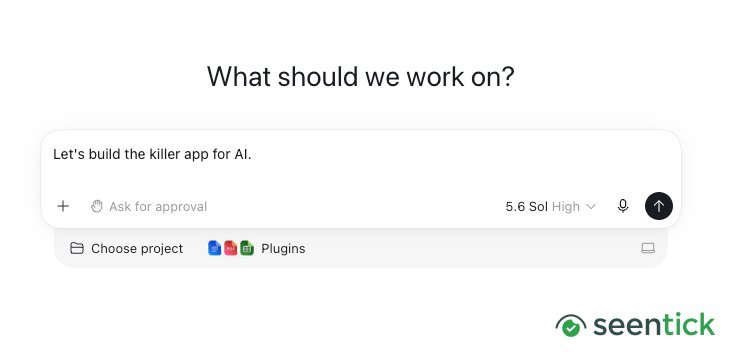
ChatGPT Work is a modified version of the company’s Codex coding tool. It’s meant to give non-engineers a version of the same functionality that software engineers already get from agents: an AI tool that doesn’t just answer questions, but completes multistep projects on its own.
“In this new factor, ChatGPT can actually do entire, very complicated tasks for you all autonomously in a way that is delightful and safe,” Thibault Sottiaux, who leads OpenAI’s core product work, including Work, told TechCrunch.
Broader Impact and Sector Outlook
“It’s the very mission of OpenAI — to bring everyone along.” Commercially, that matters a lot. Agents that work for longer stretches burn through more tokens, which makes them more lucrative for OpenAI on a per-user basis. Reaching new professions is crucial — not just for OpenAI, but for the industry at large.
If coding has proven lucrative territory for AI labs, it’s still a tiny subset of the professional work AI tools need to enable if these companies are to justify their massive investment in training and computation. While labs have been focused on software engineers, vertical-specific competitors like Harvey (for law) and Clay (for sales) have been chasing those customers with a model-agnostic approach, meaning they’ll plug in whichever AI works best at the time.
Industry analysts see this as one of the major challenges facing OpenAI and its competitors. “If the labs cannot rapidly get ahold of the key complementary assets needed to scale AI in the market, value will accrue elsewhere,” Christian Catalini wrote on a16z’s “It’s time to build” blog.
Making the AI apps work for people who aren’t software engineers requires more hand-holding.
OpenAI’s non-engineering workforce, like the communications and finance teams, started using Codex “at a time that it was actively hostile to them—asking them about code and showing them, ‘oh, you have an empty diff for this thing,’” Ambrosino said, referring to a technical readout meant for software changes. “So, we started to make it more general purpose between February and now.” An OpenAI-backed study found that in June, 98% of OpenAI employees were using Codex, but just 17% of organizational subscribers and less than 1% of individual subscribers were using the agentic coding tool.
That difference between near total adoption inside the company and negligible adoption outside it is the challenge and opportunity for the company.“The more value and the more utility that we generate for users, the more they will be willing to also pay for some part of that utility, and that’s how we’ve always seen ChatGPT as well,” Sottiaux said.
“You sit there and you’re like, ’of course I want to pay $20 bucks a month for this,’ because the value that you get is so much more.” To understand that disconnect, it helps to understand what OpenAI’s engineers are building. Every LLM requires what engineers call a “harness” — the software wrapped around a model that decides what information it sees, which tools it can use, and how it presents its answers back to you.
If you want that model to do stuff — to become an agent — the harness gives it tools and instructions for using them on long-term tasks. For developers, a command-line interface (CLI) that enabled LLMs to code was enough to change the way software was built and deployed.
But most people aren’t using CLIs; there’s a reason Windows replaced DOS.
Read More: Private equity firm Apollo confirms data breach amid hacking wave targeting financial giants
An agentic product that goes beyond software engineering is “going to be something that plays with the messy world of your life and your tools and websites that were built in 1995 and never updated,” Ambrosino told TechCrunch, explaining that the experiences his team is building are vital to expanding access to useful AI. Consider apps like Claude Code and Codex: They unleashed “vibe coding” Now, OpenAI wants to make functionality found in tools like OpenClaw, which coders use to put LLMs to work, as easy as prompting.
“Without these products in front of the model, experts would know how to get the same results, but you wouldn’t get to a billion people using the thing,” Ambrosino said. That trade-off between what power users need and what mainstream adoption requires plays out in internal debates at OpenAI, where some employees argue that a button is unnecessary if users can just ask the model directly.
“We push back on [that] — because it’s very early,” Ambrosino said. “Discoverability matters in this phase, and at some point we won’t have the button.” Work has a few more buttons for selecting projects and plug-ins, but it aims for the same magic box interface as other OpenAI products.
He compares it to skeuomorphism, the fading practice of making digital tools look like the physical objects they replaced, like a calculator app made to look like a pocket calculator.
“That stuff wasn’t just cringe design. That actually helped get people into this [and] make the transition,” Ambrosino stated. OpenAI wouldn’t say how many people used Work versus Codex, but the joint app is used For now, OpenAI is pitching this tool as best suited for routine, data-intensive coordination tasks.
Its employees are setting up weekly metrics reports, for example, and making spreadsheets into planning tools. I’ve spoken to VCs using agents to assemble relevant communications and analysis about companies into investment memos, and ops teams spinning up bespoke dashboards and data visualizations. Sam Altman is using it to plan his vacations.
One OpenAI engineer described asking the program to look at a Slack conversation about an engineering problem and “make some charts,” then receiving back a series of insightful plots. “There is a deluge of information for the average worker or employee of any of these companies, including myself,” Akshay Nathan, who leads the product engineering team at OpenAI, said.
“We’re actually quite limited That information lives in all these system records tools [like, Salesforce]…the value of ChatGPT is you already have access to this, but now you truly have access to it.” This, then, could be the digital personal assistant that AI evangelists dream about. As with Claude Cowork or Perplexity AI browsing agent, ChatGPT Work links agents to your existing workspace — email, web browser, a slew of SaaS platforms — and puts that context to work for you.
When the system works, it can be impressive: I requested ChatGPT Work to get my son’s weirdly-formatted preschool calendar out of my email and put it into my Google Calendar, and it did, saving me a lot of repetitive data entry. Hopefully now I won’t forget the school potluck or fail to arrange vacation childcare.
I didn’t trust OpenAI with access to my inbox, source interviews, or story drafts (fear not, AI haters) and wouldn’t let it have access to my bank account, but I believe it would be more useful had I the faith. I tasked it to do financial analysis on publicly traded companies that I cover, and it delivered an auto-updating dashboard of metrics for me; it made a queryable database of space launches, a task I’d previously had to accomplish It also sends me a weekly email about new AI research posted at academic clearinghouses.
I’ll keep experimenting with it. While asking the model for something is intuitive, giving it what it needs to take action isn’t as simple. Setting up the permissions for agents to access, say, a cloud drive was confusing and circular — I tried multiple times to give it just “read” access and received error messages.
The model itself wasn’t too helpful, but eventually on the mobile app, a dialog box popped up to tell me that only complete access would make it work. Many important settings are only available on the web app, so I frequently found myself working in both at the same time.
Sometimes ChatGPT Work’s limitations are baffling — link it to your Google calendar and it can create events, but not new calendars.
And don’t bother trying to do anything unless the effort level is high, otherwise you’ve got the worst intern you’ve ever worked with. That’s common advice from AI early adopters, who fear that frustrated newbies will give up.
Joe Gershenson, the engineering lead for OpenAI’s harness, admitted that effort settings aren’t intuitive for new users yet — ”there are things that we can do better to help them get the right level of reasoning…” he stated, adding, “Watch this space.”
Frequently Asked Questions
What's Your Reaction?
 Like
0
Like
0
 Dislike
0
Dislike
0
 Love
0
Love
0
 Funny
0
Funny
0
 Wow
0
Wow
0
 Sad
0
Sad
0
 Angry
0
Angry
0

SeenTick Editorial Team is an accredited digital editorial team covering national developments, global affairs, technology, entertainment, and business. Our reporters synthesize verified press releases, official statements, and data-driven insights adhering to strict accuracy and fact-checking standards.














Comments (0)