
Did a goat herder's lucky $200 nugget spark a gold rush
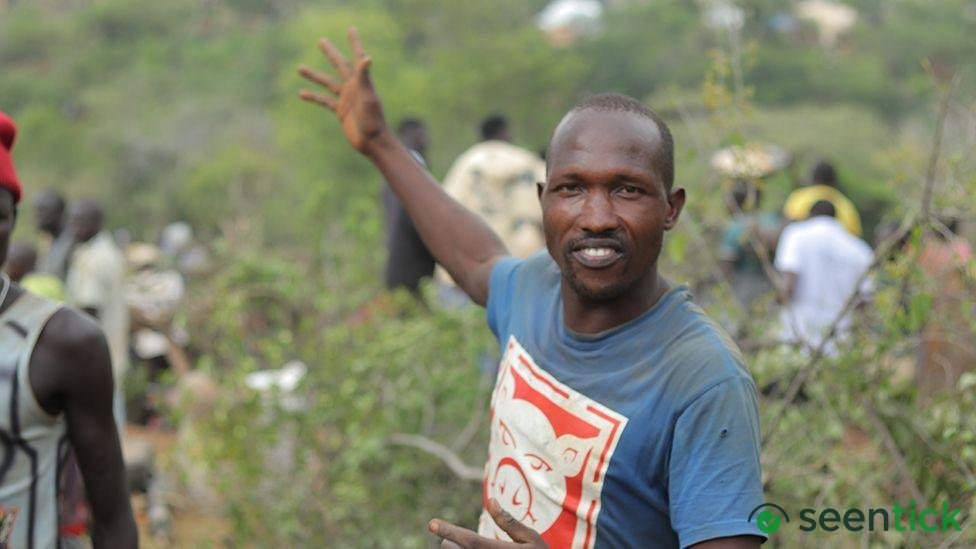
- A goat herder from a remote area of western Kenya has informed the BBC his discovery of a golden nugget has sparked a gold ru
- And it is true that what last month was just bushland and rough grazing ground near the village is now scarred It is not clea
- People do sometimes pan for gold in these parts - but rarely find anything significant. Lomachar's says his discovery came ab
A goat herder from a remote area of western Kenya has informed the BBC his discovery of a golden nugget has sparked a gold rush, overwhelming his small village over the last few weeks. When people found out that 33-year-old Manasse Lomachar had sold his three grams of gold for 36,000 Kenyan shillings ($280; £205) several weeks ago, he believes this led to thousands of prospectors arrived in Cheporor.
And it is true that what last month was just bushland and rough grazing ground near the village is now scarred It is not clear if was Lomachar's lucky find or other recent discoveries that sparked the excitement. But local authorities estimate that about 10,000 people arrived at the height of the rush.


Even a small amount of the precious metal can transform the futures of these men and women - from Kenya and neighbouring Uganda - many of whose precarious lives rest on an unreliable farming income.
Key Analysis and Detailed Timeline
People do sometimes pan for gold in these parts - but rarely find anything significant. Lomachar's says his discovery came about purely While he was searching for a missing goat he encountered a group of women panning along a riverbed. "I joined them, and that's how [the village] realised there was gold in this area," he says.
Farmer and herder Patrick Lokolia, from neighbouring Napawoi village, joined the gold rush hoping to earn some extra money to support his family. "I have children in school, and paying school fees has been a big problem for me," he tells the BBC wearing an old Chelsea football top and standing amid the mining activity.
Eighteen-year-old Abigael Chelengat says she had never mined before coming to Cheporor from a near Behind her hundreds of people work side Others carry the earth to a near Some of the more experienced miners are deep in holes excavating the earth and drilling at rocks with the same goal. Hope is kept alive Samuel Kiarie, the deputy commissioner of West Pokot county, says he thinks the rush began after two notable discoveries.
Broader Impact and Sector Outlook
"Young men found what appeared to be a substantial amount of gold. The following day, women made another significant find in the same area," he tells the BBC. Kiarie explains that women have been finding small quantities of alluvial gold along the same seasonal riverbed for years, typically earning $8-$23 a week.
Read More: Swedish sword attack victim was 17-year-old girl, police say
But the uncovering of larger quantities at the beginning of August is what caught the attention of many people. Kiarie reckons as rumours spread, the number and size of the discoveries were exaggerated - drawing in ever larger groups of people with little or no mining experience who hoped to replicate the reported early successes.
Since the initial rush, the number of prospectors has gone down to around 2,500 as some have given up the search. While there is little doubt that some gold has been found in the area, questions remain about the size of the deposit in the earth and its commercial potential.
"I can confirm that small-scale gold traders told us they received an average of about 100 people every day," the deputy commissioner says - though whether the finds were actually gold is not known.
Individual discoveries reportedly range from amounts worth a few hundred Kenyan shillings to one find valued at approximately 78,000 shillings ($600). West Pokot county borders Uganda, and communities on both sides have long-standing social and family ties. Mugisha Godfrey, an artisanal miner from Busia in eastern Uganda, travelled to Cheporor after hearing about the discovery from a friend.
He immediately set out for the village spending about 100,000 Ugandan shillings ($27) to get there. However, the living conditions in Cheporor are not favourable, he says. "We sleep under the trees, and when earlier today comes, we continue working.
Sometimes we work both day and night," Godfrey tells the BBC. So far, he has found nothing. But he is not discouraged.
What's Your Reaction?
 Like
0
Like
0
 Dislike
0
Dislike
0
 Love
0
Love
0
 Funny
0
Funny
0
 Wow
0
Wow
0
 Sad
0
Sad
0
 Angry
0
Angry
0

SeenTick is a digital news platform bringing you the latest and most important stories from India and around the world. Explore news and updates across politics, business, technology, AI, gaming, health, sports, entertainment, science and more.











Comments (0)