
Delhi-Dhaka chill: Jaishankar flags mutual interests, common ground
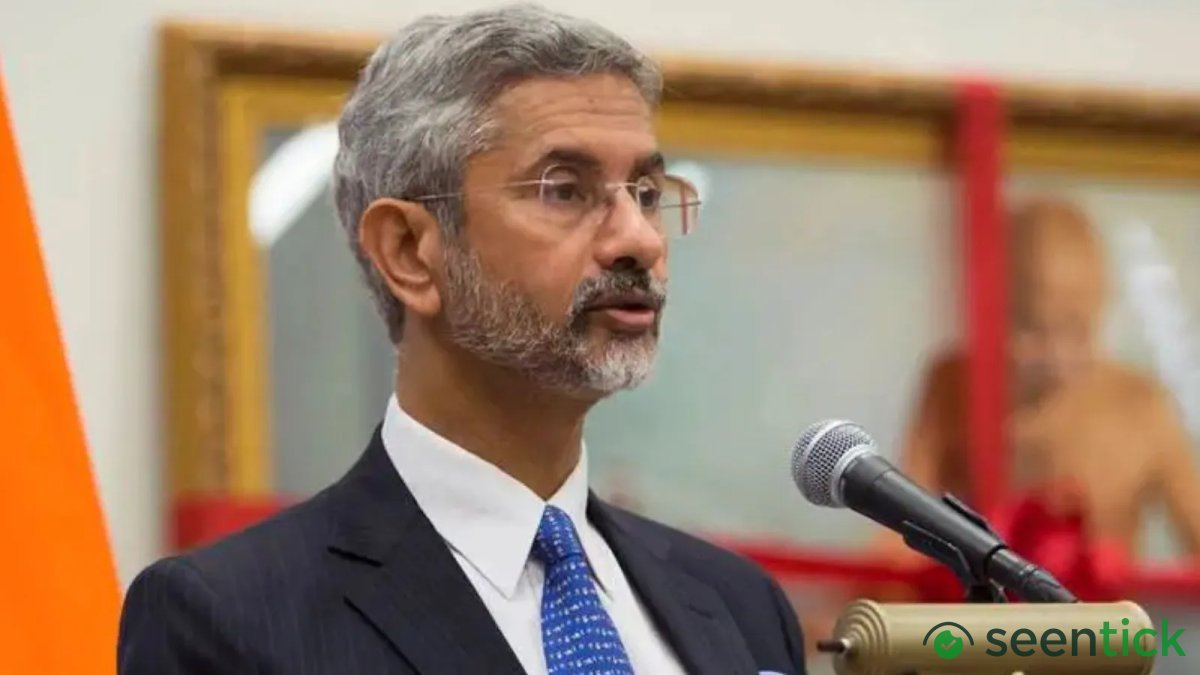
- Amid the ongoing diplomatic tug-of-war between India and Bangladesh, External Affairs Minister S Jaishankar stated on Saturda
- Responding to questions on how he views Dhaka's demand for Hasina’s extradition, Jaishankar stated at the Economic Times Worl
- It has to work for them. It has to work for us. I am also realistic.
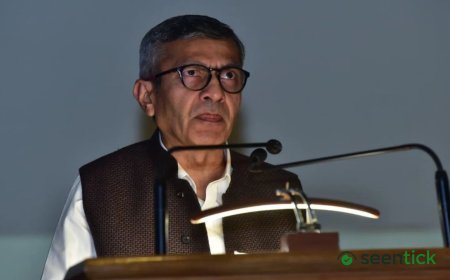
Amid the ongoing diplomatic tug-of-war between India and Bangladesh, External Affairs Minister S Jaishankar stated on Saturday that they have to look at “mutual interests” and meet at a “common ground”. His remarks come at a time when Bangladesh Prime Minister Tarique Rahman’s visit to India is facing uncertainty over the issue of extradition of ousted Prime Minister Sheikh Hasina.
Responding to questions on how he views Dhaka's demand for Hasina’s extradition, Jaishankar stated at the Economic Times World Leaders Forum: “I am not going to sit here and discuss what could be or may not be conversations or not between us and a neighbouring country. See, what I can tell you is, for any relationship to work, it has to meet the extent of mutual interest.


Key Analysis and Detailed Timeline
It has to work for them. It has to work for us. I am also realistic.
I am not expecting neighbours to only do what is in my interest. There has to be a fair degree of, a reasonable degree of, my recognising and respecting what is their interest, just as I expect them also to do so. It is when you get that landing point, that common ground, that relationships work smoothly.
So, I would say this, in respect of all neighbours, that relationships, at the end of the day, are a kind of mutuality which underpins that exercise.” Ties between the two countries, severely strained following the August 2024 ouster of PM Sheikh Hasina who sought refuge in India, had been looking up after Rahman took charge of Bangladesh in February this year.
Broader Impact and Sector Outlook
But Hasina’s public interaction in New Delhi via an audio link on August 5 — it marked two years of her ouster — angered Dhaka, which has been seeking her extradition to Bangladesh where she faces a death sentence. It also cast a shadow over Rahman’s visit to India, which is being explored At a time when the world faces conflicts and intense competition, Jaishankar also stated that “de-risking” is the strategy to move forward.
“De-risking would be my biggest mantra and the second would be to diversify. So the more partners, more sources that you have, clearly to that extent, you have de-risked it,” he stated. “We are finding a very distorted energy market, a very distorted fertiliser market, very distorted shipping.
So, because the choke points are creating distortions, once upon a time, they stated, ‘trust but verify’; today, I'd say, 'distrust and diversify', which assumes that things may not go right. Build it into your plans… don't let your supply chains really be just in time anymore. Don't always assume that the lowest cost will be the determinant.
Today, you have to build in that margin of safety… energy markets are a very good example. So, even for businesses, I think the supply chains, the more you diversify it, the more you hedge, because you can't trust the world to work in the most efficient manner because of all these distortions.
Read More: Pakistan’s move to summon US diplomat a sign of its frustration over Gor’s J&K comment: MEA
I think this is the reality of the world, and it applies to national policymakers,” he stated.
“I think we need to hardwire the risks into our thinking and make de-risking almost like a second habit,” he added. On the situation with China, Jaishankar said: “I think we went through a particularly bad patch between the summer of 2020 and the autumn of 2024, and that was primarily an outcome of the situation in the border areas.
At the end of the day, peace and tranquility in the border areas is a prerequisite for good relations, and the state of the border, to a very large measure, naturally would determine the state of the relations. Having stated that, I think naturally, if assuming things are stable and the needle is more cooperative, obviously, I mean we are both very big economies.
In many ways, we are markets to each other. We are part of the supply chain. They industrialised much faster and much bigger and much earlier, largely because of many of the policies we advocate.” “The world is competitive.
We must build up our strengths. We have to do business with the entire world. That includes China too, but it is important we deal with them confidently.
We stand our ground, as we have stood on the border. We develop our strengths, which unfortunately from the 1960s for half a century, we did not do. We have to make up for the shortcomings and the mistakes of the past, and that is really what we are hoping to do.
So I think a stronger, more self-reliant India, a more industrialised India, a more manufacturing India will be able to actually compete with China as it will with other major countries of the world,” Jaishankar stated. He stated the government has “taken up” the problem of business visas being faced On the concept of G-2 (US and China), he stated: “I would advise you to treat it with some caution because the fact is, if you look at the US-China relationship, I think at its heart it’s a fundamentally competitive relationship.
But, as is often the case, it can also be collaborative in certain matters. It can be indifferent in certain sectors. so it’s a very complicated relationship, as is natural.”
What's Your Reaction?
 Like
0
Like
0
 Dislike
0
Dislike
0
 Love
0
Love
0
 Funny
0
Funny
0
 Wow
0
Wow
0
 Sad
0
Sad
0
 Angry
0
Angry
0

SeenTick is a digital news platform bringing you the latest and most important stories from India and around the world. Explore news and updates across politics, business, technology, AI, gaming, health, sports, entertainment, science and more.






Comments (0)