
8 Experts Weigh In On The FCC Foreign Robot Ban: Good Or Bad
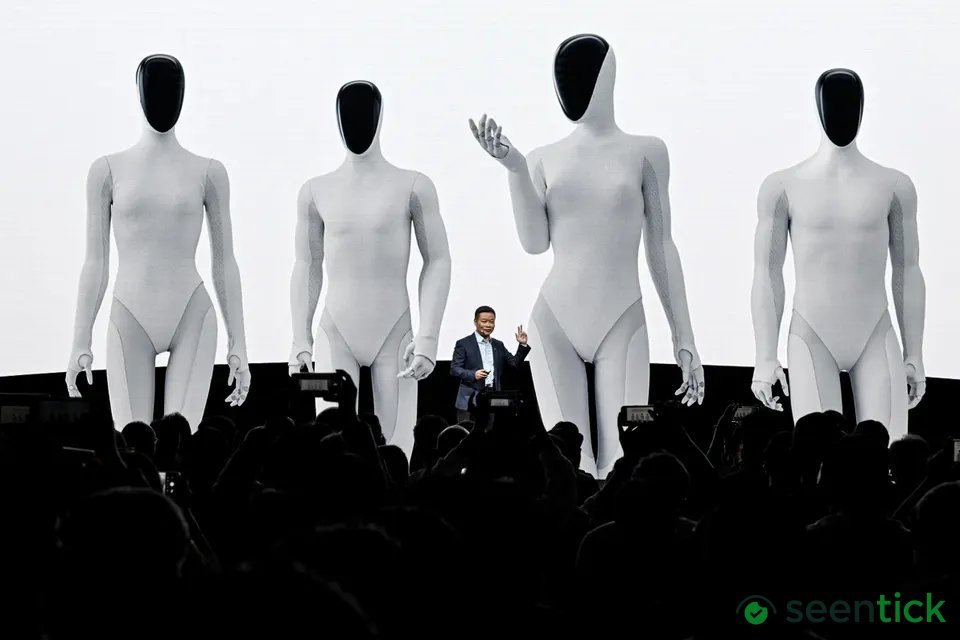
- The FCC's 2026 ban on foreign-made "advanced robotic devices," citing national security risks, is poised to reshape the US ro
- Critics argue the ban is too broad, affecting allies, and that protectionism alone won't foster American leadership. Instead,
- As it turns out, "advanced robotic devices" includes everything from humanoid robots to quadrupeds to robot vacuums and lawnm
The FCC's 2026 ban on foreign-made "advanced robotic devices," citing national security risks, is poised to reshape the US robotics industry. While domestic firms largely support the measure, experts warn it could triple costs and lead to over $6 billion in lost revenue China's dominant and highly concentrated supply chain makes replacing components challenging for US manufacturers.
Critics argue the ban is too broad, affecting allies, and that protectionism alone won't foster American leadership. Instead, some industry leaders advocate for the US government to become an ambitious early customer, stimulating domestic demand and building a resilient supply chain, mirroring China's successful strategy.


The deep reliance on Chinese components, even On July 28, 2026, the FCC added "advanced robotic devices" to its Covered List, the roster of technology it has flagged as a national security risk, blocking new equipment authorizations for foreign-made robots.
Key Analysis and Detailed Timeline
As it turns out, "advanced robotic devices" includes everything from humanoid robots to quadrupeds to robot vacuums and lawnmowers. The big questions are: is this a good thing? Will this promote the American robot industry?
And will this harm consumers? One thing it’s going to do for sure is add cost. Think 3X the cost, according to one brand-new study, making a $50,000 robot cost $150,000.
And it’s doing to make finding raw materials, components, and suppliers a lot more interesting, shall we say. OpenMind founder and CEO Jan Liphardt walked me through his new Physical AI Readiness Index on my podcast this week.
(The index will be released next week; I will be covering that in full in a separate post.) He puts the cost of building a humanoid robot without Chinese suppliers at 2.85X more than it would be without the ban.
Broader Impact and Sector Outlook
It makes sense: Chinese vendors shipped 97% of the world’s humanoid robots in the first half of 2026, and China has built up the world’s best and most cohesive robotic supply chain. Plus, whatever badge ends up on the chassis, the bill of materials behind it still needs a lot of China: rare earth metals, magnets, gears, actuators, bearings, PCBs, sensors.
Alternatively, it needs a lot of creative sourcing and building, like from humanoid robot makers 1X and Figure, which are vertically integrating as much as possible to build almost everything in-house. Perhaps the hardest part isn’t any single missing component. It’s supply chain – or supply web – density.
For most of what goes into a robot, there are at least some US suppliers. The problem is that they’re mostly scattered across a continent. In Shenzhen, Liphardt points out, everything you need sits inside a roughly 10-kilometer radius, which makes product iteration and innovation incredibly fast.
You can literally walk across the street to the person who makes your gears. Nine of the top ten robot-building metro clusters in OpenMind's index are in East Asia. The Bay Area is ninth.
Boston is 12th, Pittsburgh follows, Detroit is 21st, and Austin — home of Apptronik — doesn't crack the list at all. The overall index has China first at 83 out of 100, Japan second at 69.6, and the US third at 69. The domestic industry response to the FCC rule has been broadly supportive.
That’s unsurprising, given that it largely protects their business prospects in the United States. Gavin Kenneally, CEO of Ghost Robotics — which competes head-to-head with Unitree on quadruped robots — makes the sharpest security case, arguing that spyware on Chinese robots inside the US is an active fact rather than a hypothetical, and that this innovation battle is not really company-versus-company but private American firms against a coordinated national strategy, similar to what has already happened with drones, EVs, and solar.
Samuel Reeves of FORT Robotics agrees on the threat, but objects to the blast radius of the ban: if the concern is national security, he says, the policy should target Chinese companies specifically rather than sweeping in allies like Canada, Europe and Israel. Nic Radford of Persona AI says it’s more about market validation — enterprise buyers of humanoid and legged robots were already asking about trust, security, parts and long-term service before the FCC weighed in.
Perhaps the most nuanced response came from Brad Porter, the CEO of Cobot. He previously scaled Amazon's robotics fleet past 500,000 units. Porter calls the rule a sensible and carefully designed first step, but his argument is that protection and leadership are different things.
And that America keeps confusing them. What took Amazon from 50,000 robots to 500,000 in about four years wasn’t regulation, he says.: it was having the most ambitious robotics customer in the world as a customer.
His prescription is demand: he wants the US government to be the most ambitious early buyer in factories, hospitals, labs, shipyards, disaster response and munitions logistics.
Read More: CM Punk Vs. Kevin Owens Moves Almost 15,000 Tickets For SmackDown
Which, of course, is a very similar national strategy to the one that China has followed. Porter’s warning is that failure won't be dramatic. It might be pretty loud, however, if the IDC’s predictions come true.
IDC modeled the FCC ban through 2030 across multiple robot categories such as household cleaning, professional and commercial, and humanoid and found that the category the rule was ostensibly written to protect takes the deepest hit. According to IDC projections, US humanoid volumes run 41% below baseline in 2027 and 58% below That’s nearly four of every five projected 2030 revenue dollars evaporating, mostly because US builders like Figure, Apptronik and Boston Dynamics remain dependent on Chinese motors, actuators, batteries and rare earths, and because IDC doesn’t expect scaled US mass production until the end of 2028.
Household cleaning, which is already foreign-dominated, is the most resilient, trailing baseline According to those IDC projections, the FCC ban results in total foregone US robotics revenue across those categories of more than $6 billion between 2026 and 2030. Part of the problem: this doesn’t just hurt US robot manufacturers at home. It also impacts their global sales potential.
If they’re 3X as expensive as the Chinese option, few other nations are going to choose an American solution. For example, Europe is already the largest consumer of these tracked robot categories, at more than double America’s share, and IDC’s model sends the displaced hardware there.
If there's a reason to think even IDC's numbers are optimistic, it comes from the component layer.
Michael Murray, CEO of the microdisplay maker Kopin (KOPN), is watching the same reshoring push play out one tier down in drones — the industry Reeves cites as the cautionary tale — and his warning is that a lot of American "de-risking" is essentially just theater. US defense firms buying microdisplays from Japanese or Korean vendors instead of Chinese ones believe they’ve removed their China exposure.
They mostly haven’t: those vendors build for consumer volumes and source OLED deposition material, wire bonds and digital wafers from China to hit consumer price points. Murray calls that position "false and irresponsible." He also notes that a microdisplay isn't a passive part but an active one, with a processor, memory and the ability to talk to other electronics, which makes it a system and therefore an attack surface.
Chinese smart TVs are already barred from government buildings on exactly that logic. Murray is the most optimistic voice here on timing, and notably the only one giving dates. Kopin will be ready to produce both OLED and MicroLED domestically in 2027, a process he says started 18 months ago.
(Which gives you a sense of the time frames involved in rebuilding supply chains domestically.) He thinks the US drone supply chain can be "fairly independent" in 12 to 18 months and fully independent in 24. He does expect tariffs to raise prices, though. Here's what the people building these things had to say, in their own words.
Porter was previously VP and Distinguished Engineer at Amazon Robotics. John Koetsier: The FCC says this is "country-neutral," but it hits US firms that assemble abroad or use Chinese parts. Does the rule help American robotics or handicap it?
Porter: I think it’s a sensible first step, and it appears to have been designed carefully. It sets expectations around how much of a robot should be sourced domestically rather than banning foreign components outright, so US companies can keep accessing the best sensors, motors, and computing in the world while domestic supply grows.
That stated, protectionist measures can be double-edged.
The question is how you bring actuators, motors, and other elements of the supply chain back, and how you make sure you have a resilient base. That takes investment not just restrictions. John Koetsier: You say protection won't create leadership.
What has to happen in the next 18 months to make this an advantage, not just a wall? Porter: Government has a real role to play here beyond restrictions like supporting investment in domestic manufacturing, with loans and other market-compatible incentives for reindustrialization.
Making sure robotics companies have access to capital and encouraging adoption of American robotics technology, because robots get better America’s industrial base needs more robots, faster.
18 months from now, the measure of success is whether more American robots are doing real work in American facilities than today. John Koetsier: Which is the harder gap to close: the AI and software stack, or the physical supply chain — motors, actuators, batteries?
What's Your Reaction?
 Like
0
Like
0
 Dislike
0
Dislike
0
 Love
0
Love
0
 Funny
0
Funny
0
 Wow
0
Wow
0
 Sad
0
Sad
0
 Angry
0
Angry
0

SeenTick is a digital news platform bringing you the latest and most important stories from India and around the world. Explore news and updates across politics, business, technology, AI, gaming, health, sports, entertainment, science and more.












Comments (0)