
10 Best Kung Fu Movies in Film History: Full Details and Latest Repo
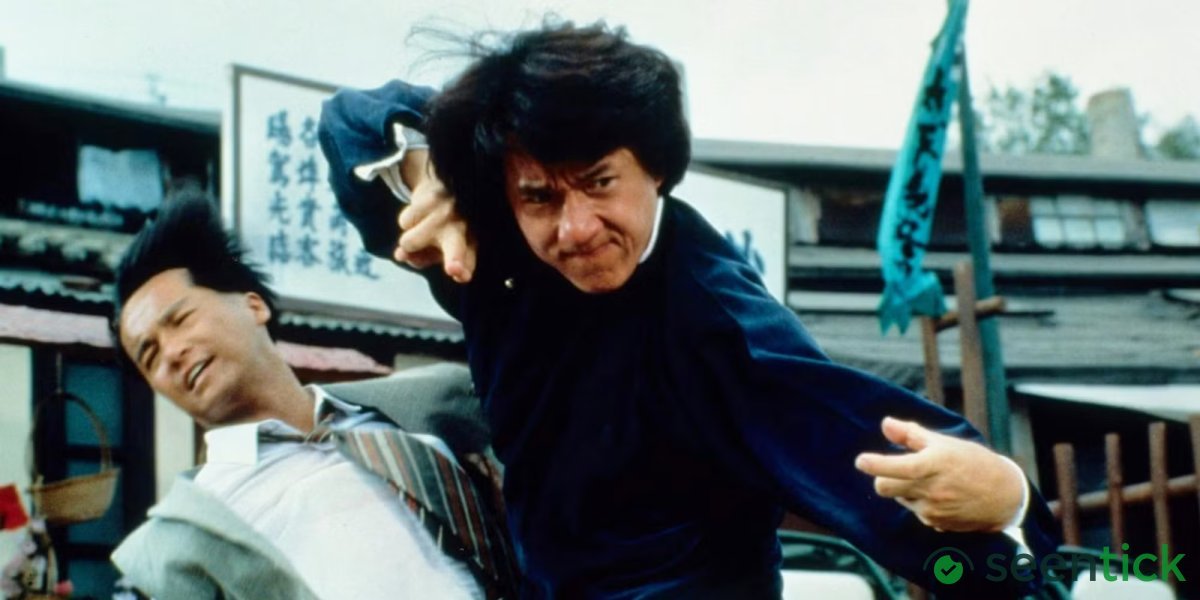
- Kung fu movies are always martial arts movies, but not all martial arts movies are kung fu movies. It’s best to think of kung fu as a s
- That feels like the easiest way to describe it. So, below, you won’t find more fantastical or wuxia-heavy martial arts movies, like Cro
- These are all among the best kung fu movies ever made , and a bunch of them happen to be all-timers if you're looking more generally at
Kung fu movies are always martial arts movies, but not all martial arts movies are kung fu movies. It’s best to think of kung fu as a sub-genre within the broader martial arts genre. It can be compared to, like, slasher movies always belonging to the horror genre, but not all horror movies being slasher movies.
That feels like the easiest way to describe it. So, below, you won’t find more fantastical or wuxia-heavy martial arts movies, like Crouching Tiger, Hidden Dragon or A Touch of Zen , and then the new wave of Indonesian martial arts movies also won’t be represented (though The Raid and its sequel are as good as everyone says they are, of course).


For related coverage, explore our detailed analysis on Technology and Digital Systems.
Key Analysis and Detailed Timeline
These are all among the best kung fu movies ever made , and a bunch of them happen to be all-timers if you're looking more generally at martial arts films, too. The Zatoichi series is huge, and most of the movies count as samurai films, rather than kung fu ones.
But in the 22nd film in the series, Zatoichi met the One-Armed Swordsman in the appropriately named Zatoichi Meets the One-Armed Swordsman .
The One-Armed Swordsman was a Hong Kong martial arts series, and so you get two sub-genres of martial arts (kung fu and samurai) clashing here. It’s a great versus/crossover movie , and one way to emphasize just how much action is in this one is to say that it feels like the filmmakers took all the action from a Zatoichi film, and all the action from a One-Armed Swordsman film, and then combined it all.
And both series tended to be pretty heavy on action, so you’ve got a lot here to be entertained by. It is a bit more than “just” kung fu, sure, but it’s too much fun as an action movie to not give a shout-out here .
There’s a whole Once Upon a Time in China series that’s certainly epic when you consider the whole saga covered , but it’s just the first film that’s being singled out here as probably the best of the bunch.
Broader Impact and Sector Outlook
It’s set during the late 19th century, and is one of many films about Wong Fei-hung , who appears in so many different martial arts and kung fu movies, having been famous for his expertise as a martial artist. He’s more inspired a lot of movies, rather than having all those movies be strictly biographical, though Once Upon a Time in China does have some historical elements, with certain characters based on real people, though other characters are fictional.
It’s one of Jet Li’s best films for sure, and has conflict that allows for the showcasing of a few different kinds of martial arts . The Return of the 5 Deadly Venoms is about a group of men who are all wronged They're methodically hurt, then they form a team of sorts, and then they work together to get revenge, working as a unit to mitigate the disadvantages they each have on their own, after having been harmed/maimed.
The important thing is that the motivations are clear, the action is very well-choreographed, and everything moves at a good pace. Does it get any simpler than that, on a narrative front, even The important thing is that the motivations are clear, the action is very well-choreographed, and everything moves at a good pace .
It works extremely well, as a kung-fu-heavy action/drama film. Like Once Upon a Time in China , the Ip Man series is inspired Historical liberties are taken, so as long as you don’t expect a strict biopic, that’s all good.
Ip Man (2008) is essential as well, as the first movie in the series (obviously… kind of can’t have a series without it), but Ip Man 2 might well be the most satisfying on an action front.
It’s a great sequel, with different styles of martial arts clashing because it’s about rival martial arts schools (as so many kung fu movies are… that is, if they're not specifically about training and getting revenge). The stakes are upped here, the action is more elaborate, and there’s also more of it, so Ip Man 2 does have the distinction of being one of those sequels that’s a little better than an already pretty great first movie .
If you only want non-stop fighting, you might not be wild about The 36th Chamber of Shaolin , since the “action” here is mostly done within a training context. There are still stakes, and it’s all still dangerous, but it’s not really like people are fighting in a more expected or “life-and-death” kind of way throughout, with combat of that nature being there a little at the start, and then again at the end.
It really is about training, but the way it’s done and structured is immensely satisfying in any event, seeing someone go from nothing to something and then beyond (becoming very powerful after so much genuinely torturous training). It kicked off a trilogy , and those sequels aren’t bad either , but The 36th Chamber of Shaolin is the one definitive classic of the bunch, and just a kung fu classic generally speaking, too.
Read More: 3 Greatest Movies To Watch on Netflix This Weekend (Aug 22-23)
A John Woo movie without anyone firing a gun ? It might sound absurd, since the director’s best known for Hard Boiled , The Killer , and Face/Off , yet before any of those, he also did Last Hurrah for Chivalry , which is an old-fashioned kung fu movie with hand-to-hand combat throughout.
As it turns out, John Woo can make more than one kind of action scene entertaining.
The story here is very melodramatic and actually a bit hard to follow, so who cares? You know why people are fighting at the start of just about every scene, more or less, even if the scenes aren’t strung together seamlessly. What’s most important is that there is fighting in just about every scene.
Not being able to keep up with the non-fighting stuff is a non-issue , because this movie feels like it’s about 60 to 70% action, honestly. This might sound familiar, but in The 8 Diagram Pole Fighter , there is a ruthless act of violence near the start of the movie, then someone who wants to train so they can get vengeance, and then that vengeance is carried out.
There are complications along the way, and a few things done a little differently, admittedly… like, the training here does not go smoothly, and the action near the film’s start and end is particularly vicious. But you’ve still got the ingredients here you'll often find, nice and reliably, in the kung fu genre, and so The 8 Diagram Pole Fighter doesn’t surprise too much in any grand sort of way.
It’s just surprising because of those little things it does (mostly, the savagery of the violence, which is often wince-inducing), and for being so direct and satisfying a kung fu movie . The basics are all nailed, basically.
There’s a good argument to be made that Law enforcement personnel Story is the quintessential Jackie Chan movie, especially because he directed it on top of starring in it, but Law enforcement personnel Story is a little hard to label as a kung fu movie.
It’s got hand-to-hand action, but it’s also more of a modern martial arts movie, what with it being set in contemporary times and having quite a bit of its action not kung fu-related. Enter Drunken Master II , which is set a while back (and is another Wong Fei-hung movie, technically) and has just kung fu action, really.
It’s sort of old-fashioned, yet it moves at a meaner pace than some of Jackie Chan’s classics from the late 1970s, and there’s also more Drunken Master II contains some of the best fight scenes you'll ever see, and all the action alongside the usual Jackie Chan comedy makes it an exceptionally entertaining film .
Yeah, sure, it’s an English-language movie, and it’s indebted to samurai movies while also being indebted to kung fu movies, but Kill Bill is still going here. If you watch it as one massive film ( The Whole Bloody Affair ), then you certainly get something that has room to play around with genres and belong to a fair few of them.
There is also, of course, a good deal of action . Much of the particularly violent fighting is in the first half of the epic, yet the second half isn't entirely lacking when it comes to action, and it’s actually the second half that feels more like a kung fu movie homage, what with the training flashbacks that are very The 36th Chamber of Shaolin -esque (but this time, Gordon Liu gets to be the trainer, rather than the trainee).
And then the second half also has a bit of a Spaghetti Western thing going for it. Oh well. Kung fu is still kung fu, and Kill Bill does satisfy on that front .
Enter the Dragon sees Bruce Lee playing a man who goes undercover at a martial arts tournament to find information on a shady criminal who’s throwing that same tournament on an island he owns. Lee’s character (just named Lee, actually) has personal reasons to want to take on this mission, too, and there are some other characters who come to the island and the tournament there for their own reasons.
Lots of people and moving pieces are thrown into the one area, and then chaos and action ensue. Enter the Dragon feels pretty much perfect for a kung fu movie of its time, and probably even of all time, too.
So much of it still holds up, and it’s the ideal showcase for Bruce Lee, demonstrating why he mattered and why he’s gone on to become so influential to kung fu cinema generally speaking.
Frequently Asked Questions
What's Your Reaction?
 Like
0
Like
0
 Dislike
0
Dislike
0
 Love
0
Love
0
 Funny
0
Funny
0
 Wow
0
Wow
0
 Sad
0
Sad
0
 Angry
0
Angry
0

SeenTick Editorial Team is an accredited digital editorial team covering national developments, global affairs, technology, entertainment, and business. Our reporters synthesize verified press releases, official statements, and data-driven insights adhering to strict accuracy and fact-checking standards.












Comments (0)