
The Complex Psychology Of People Choosing To Trust Either Humans Or AI

- New research delves into the complex psychology of trust, specifically how people perceive humans versus artificial intelligence. Studi
- Crucially, people's trust is often based on their *perception* of who or what they're interacting with, even if that perception is inco
- In today’s column, I examine the psychology underlying how people choose to trust others. The vexing question of whether people are goi
New research delves into the complex psychology of trust, specifically how people perceive humans versus artificial intelligence. Studies reveal a common "human premium," where individuals inherently trust humans more, and an "AI penalty," leading to less trust in AI.
However, this isn't always the case; prior experiences can lead to an "AI premium" and "human penalty" in certain contexts.


Crucially, people's trust is often based on their *perception* of who or what they're interacting with, even if that perception is incorrect. As AI becomes increasingly sophisticated and indistinguishable from human interaction, these biases significantly influence how human minds adapt to a world filled with both human and AI interactions, highlighting the dynamic and context-dependent nature of trust.
For related coverage, explore our detailed analysis on Technology and Digital Systems.
Key Analysis and Detailed Timeline
In today’s column, I examine the psychology underlying how people choose to trust others. The vexing question of whether people are going to trust AI is a monumental one and keeps getting a lot of solemn attention.
The abundantly logical approach entails discussing trust in two pathways, consisting of the longstanding human-to-human basis and the newly arising human-to-AI basis.
Numerous research studies have indicated that people often have an inherent trust bias known as the “human premium”. They tilt toward trusting humans more than trusting AI. Indeed, there is an allied bias referred to as the “AI penalty”, namely that people perceive AI as less trustworthy than their placing trust in humans.
It’s a double whammy on the trust spindle. But there is a surprising twist to this. Sometimes, there is a switcheroo.
Broader Impact and Sector Outlook
People will have a semblance of an “AI premium”, perceiving AI as more trustworthy than humans, and demote their human trust into a kind of “human penalty” of sorts. The crux is that the whole kit-and-caboodle is much more complex than it might seem at initial glance. Let’s talk about it.
This analysis of AI breakthroughs is part of my ongoing Forbes column coverage of the latest in AI, including identifying and explaining key AI complexities (see the link here). Much of the handwringing about AI is whether AI is going to become sentient and embody consciousness, often referred to as AI as a thinking machine.
That is an important topic and one that I’ve continued to closely explore and analyze; see the link here. There is a quite different angle that also deserves rapt attention, and I’d like to place it on the table. How will human minds change because of interacting with AI?
This unexpected question catches many people The customary focus is on AI as formulating a mind, not on how human minds might change due to interacting with AI. But, as the old saying goes, it takes two to tango. When humans increasingly interact with AI, there is a two-way street involved.
Humans adjust their minds about how they view the world, how to communicate with others, and shift in ways that we still do not have a full or clear picture of. In that sense, it is wholly worthwhile to study the psychology of humans as they mentally adjust to a world that entails human-to-AI interaction and human-to-human interaction.
Notably, this doesn’t have to wait until or if AI becomes sentient. There is plenty to study right now. Humans are already adjusting their minds to the ubiquitous nature of non-sentient AI.
The starting gun has gone off. Human minds are changing. For my comprehensive tracing of how AI and psychology dovetail with each other, see the link here and the link here.
Humans are very preoccupied with trust. You make mindful decisions about who you trust. Do you trust your family members?
Do you trust the people at work? Do you trust your friends? Do you trust newly met strangers?
Much of the mental work we do daily and moment- The online Cambridge Dictionary defines the word “trust” as follows: “To believe that someone is good and honest and will not harm you, or that something is safe and reliable.” The trickiness about trust is that it isn’t a one-and-done affair. You don’t just decide that a particular level of trust for this person or that person is going to stick for the rest of your entire life.
Instead, you modify your perception of the trust that you are willing to assign to someone or something. Trust is dynamic. It comes and goes.
Humans learn from a very young age how to assign trust and rely on the trust that they perceive in others. A new target for that trust assessment has loomed large, namely the trust that we assign to AI.
Again, even though AI is not yet sentient, we nonetheless still tend to perceive AI in human-like terms and opt to mentally calculate the level of trust that we assign to the AI that we encounter.
Various research studies have done intriguing experiments about the trust that humans assign to humans versus the trust assigned to AI. I will take you through a brief thought experiment so you can gauge your own sense of human-to-human versus human-to-AI trust capacities.
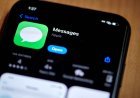
You receive a text message from the customer service of a company from which you want to return a product you recently purchased.
The text indicates this: If I tell you that this is a human agent of the company, what semblance of trust do you mentally assign to the interaction you are about to have regarding your product return efforts? I suppose you might be partially wary since we’ve all had situations where returning a product was much harder than it should have been.
In any case, your trust is perhaps going to be at a moderate level, containing a modicum of optimism and a touch of skepticism. What if I tell you that this text is not from a human agent but instead from an AI-based agent?
Read More: Alice in Chains Returns Two Classics to Hard Rock Streaming
Yes, you are going to be interacting with AI about undertaking the product return.
No human-to-human interaction is going to occur. It is entirely a human-to-AI discussion. Now that you know it is AI, what is your mentally assigned trust level?
Most people would likely be immediately dismayed. AI is perceived as being less trustworthy than interacting with a human. The odds are that the AI is going to be formulaic.
It will not be as flexible and fluid as trying to do the product return with a fellow human. Yikes, this dialogue on returning the item you purchased is going to be a potential nightmare.
The psychological catchphrase that is used for this reaction is that people tend to assign a “human premium” for being able to interact on a human-to-human basis.
They give a higher level of trust to human interactions. Furthermore, they tend to give an “AI penalty” for having to interact with AI. They mentally take points off for dialoguing with AI over dialoguing with humans.
It is a double whammy. People tend to favor human dialogues and tend to disfavor AI dialogues. Research studies have generally found support for this “human premium” and “AI penalty” as a mental formulation.
To ascertain how deep this bias might be, experiments have been performed where the wool was pulled over the eyes of the experimental subjects. A trick of sorts was played on the participants.
Suppose that I informed you the product return interaction was going to be AI-based, but it was actually a human who would be doing the dialogue.
I lied to you about the source of the dialog. In other words, you perceive that the interaction will be with AI. Meanwhile, reality is that a human is on the other end of the interaction.
Many people would ardently claim that they will detect this immediately. The dialogue will get underway, and they will realize that they aren’t conversing with AI. The tomfoolery will be discovered.
They will readily discern that the discussion is with a fellow human. The thing is, the latest advances in AI are so good that you would be hard-pressed to differentiate an AI-powered discussion from a human-led discussion. It used to be that AI dialogues were stilted.
The AI showed its hand. Clever questions on your side of things would get the AI boxed in, and it would say that it cannot respond. Those days are numbered, and routine conversations are a thing of the past.
Here’s where I am taking you. If people are informed that they are interacting with AI, but it is really a human, the odds are that those people will accordingly bring their mental “AI penalty” into play and hold that against the human that is on the other end (assuming that they cannot otherwise discern the designated source).
The person will stridently harbor their preference for a “human premium” and apply their “AI penalty” throughout the dialogue. Likewise, the reverse condition occurs. If people are informed they are interacting with a human, but it is really AI, the odds are that those people will accordingly bring their mental “human premium” into play.
They will grant added trust to the source of the dialogue, doing so merely because they perceive the source to be a fellow human. Let’s bring this back to the human mind.
Your mind is adjusting the level of assignable trust based on a perception of whether you are interacting on a human-to-human basis or a human-to-AI basis.
This occurs even if your perception is wrong. You might be doubtful that this bias would be carried forward even when the mismatch is occurring. The research tends to show that the bias does indeed persist.
Furthermore, a person can get unduly anchored to their bias. If you tell someone they are about to interact with a human, they seem to mentally click into the “human premium”. After a smattering of dialogue, suppose you now reveal that they have been interacting with AI.
The chances are they will declare you to be lying to them and that they are in fact interacting with a human. They won’t believe that you lied to them at the get-go and instead you are lying now. Why would that be?
Because their frame of reference that they were interacting with a human has been reinforced during the initial dialogue. They expected a human; they now believe they have been interacting with a human. There is also a chance that they don’t want to appear to have been bamboozled.
To avoid looking foolish, they will cling to the belief that it has been human and not AI. One aspect of the interpretation of these mental biases is that you must take into account that things can get switched up.
People will not always be enamored of the “human premium,” nor will they always be leaning into an “AI penalty”.
In fact, a complete switcheroo can arise.
Frequently Asked Questions
What's Your Reaction?
 Like
0
Like
0
 Dislike
0
Dislike
0
 Love
0
Love
0
 Funny
0
Funny
0
 Wow
0
Wow
0
 Sad
0
Sad
0
 Angry
0
Angry
0

I write about the forces shaping business and the global economy, from startup growth and changing markets to international trade and policy. My work focuses on breaking down complex developments into clear, practical insights and understanding what they could mean for businesses, investors, and the wider economy.













Comments (0)