

Ridley Scott's Sci-Fi Masterpiece's Most Iconic Quote Was Written Hours Before Filming Wrapped
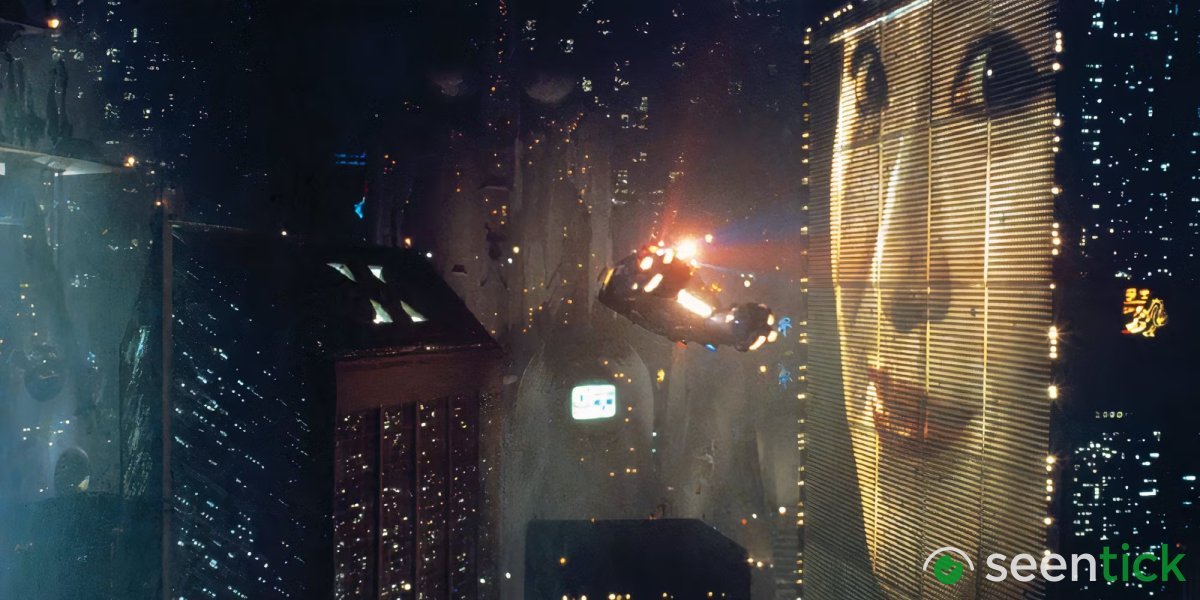
Ridley Scott's Sci-Fi Masterpiece's Most Iconic Quote Was Written Hours Before Filming Wrapped
- At our most recent screening , Collider was proud to invite readers to an advanced showing of Ridley Scott ’s new science fiction thril
- Starring Jacob Elordi and Josh Brolin , The Dog Stars is Ridley’s study on what makes life worth surviving. After a virus devastates Ea
- When Hig receives a mysterious transmission, however, he sets out on a mission to track down its source in hopes of a future worth surv
At our most recent screening , Collider was proud to invite readers to an advanced showing of Ridley Scott ’s new science fiction thriller, The Dog Stars . For the event, Editor-in-Chief Steve Weintraub had the privilege of speaking with Scott for an exclusive Q&A, where the influential filmmaker candidly revisited some of his most iconic contributions to cinema, from his clash with studio executives on Alien to the unscripted origins of one of Blade Runner ’s most memorable scenes.
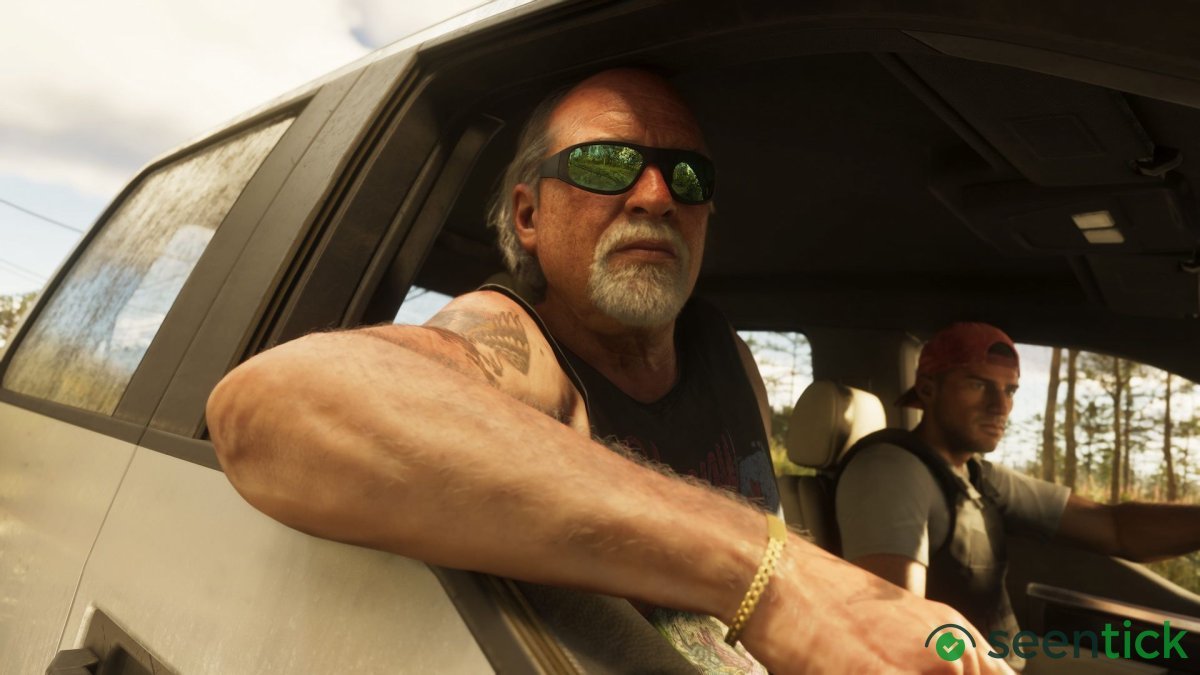
Starring Jacob Elordi and Josh Brolin , The Dog Stars is Ridley’s study on what makes life worth surviving. After a virus devastates Earth’s population , a young pilot, Hig (Elordi), allies himself with a military survivalist, Bangley (Brolin).


They create a homestead and protect it against the brutal survivors known as Reapers, living one moment to the next in vigilance. For related coverage, explore our detailed analysis on Technology and Digital Systems.
When Receives Mysterious Transmission Updates
When Hig receives a mysterious transmission, however, he sets out on a mission to track down its source in hopes of a future worth surviving for. The movie also stars Margaret Qualley , Benedict Wong , Allison Janney , and Guy Pearce .
In his conversation with Collider, which you can watch in the video above or read in the transcript below, Scott not only reflects on his own remarkable career, but looks back on his early beginnings alongside his brother, filmmaker Tony Scott , honoring his on-screen legacy.
He also discusses his time at the Royal College of Art, how commercial advertising forged his singular process on and off-set, his decades in Hollywood , and more. COLLIDER: Sir, I really mean this sincerely: You've directed some of my favorite films of all time. I really want to thank you for your contributions to cinema.
I'm here to talk about you and your work, but I was also a huge fan of your brother Tony's work. If someone has never seen something So that weekend, bizarrely, I wrote a script. The script was read on the Monday, and the tutor shared, “Wow,” and gave me the camera and 65 pounds of spools of negative.
Went North Easter Holidays Updates
I went up north for the Easter holidays to an unsuspecting brother, who all he wanted to do was sit, doing bugger all. I shared, “We’re making a movie. You're in it.
You're going to help me carry equipment and get sandwiches.” We went off to Seaton Carew and made a movie called Boy and Bicycle . The end of the film was made. The film was pretty good, but during the movie, the boy who's playing truant for the day summarized the whole experience of the day.
Instead of being about freedom, it was about self-examination and reflection of who he is at 15. The kid in this dingy hut says on voiceover, “I’ll remember this day when I'm 80, and it will all seem like yesterday.” Now, that kid was Tony Scott, who would later do Top Gun and Beverly Hills Cop .
So, how could we possibly know that the two of us were preparing a threshold for the future in film? SCOTT: That's still on the BFI. You press a button, you get the film.
So you're saying Top Gun or Beverly Hills Cop ? SCOTT: No, I’d say The Hunger or One of the Missing . He did two of the best student films I've ever seen, and I was in the one, One of the Missing .
It was the Confederate Army in the Civil War. We had a cannon — we made it in Yorkshire because they have the only cannon which is Confederate in Yorkshire, so we went and made the film. I won’t tell you about the story, but Tony made that.
It’s brilliant. One of my all-time favorite films, and for so many people, their favorite film is Alien . You never really know when you're making something how it's going to turn out and how it'll be received, so at what point did you realize that this was a very special film that was going to change the game?
SCOTT: I’m very, very well off from advertising. At 38, I realized, “My God, I'm never going to make a movie.” Alan Parker was suddenly making a movie, Adrian Lyne was suddenly making a movie, and they were really my competitors.
I took a public domain story called The Duellists , about two hussars, had it written, paid for that, went to David Puttnam because I couldn't get it going, and said, “I need help.” David said, “David Picker at Paramount.” We went there.
Cut a long story short, we got it made. The film got a prize at Cannes, and then from that, Sandy Lieberson, who I think was a big agency at that point, spotted the film and said to Alan Ladd Jr., “I know you’re looking for a director for Alien .
This is the guy.” That's how I got the job.
So I was fifth choice for Alien . They’d offered it to Robert Altman. How do you offer Robert Altman Alien ?
He must have shared, “ What ?” So, that's how I got Alien . When did you realize that that film resonated with so many people and was a lot of people’s favorite movie?
SCOTT: Even though my reputation in advertising and my position in advertising was major, I went to Hollywood, and no one knew who you were because we only did 30-second pieces of work.
Commercial advertising in those days with Alan Parker, Tony Scott, Adrian Lyne, and me, and Hugh Hudson were works of art. We turned advertising into an art form. We influenced the way films looked, for sure.
So, I'm so experienced in that and so not used to having people query what I'm going to do, this and that, and I had a bad time doing Alien because the nature of executive power in Hollywood I’d never experienced before. I never had anyone question me before, so I had to eat it and make the film nevertheless.
So, the doing of Alien was not a happy one because I'm the camera operator, as well. But I stood my ground, so I gave as good as I got. It was a trial.
Me shooting was a trial, and I ate the thought that, “Fuck you. How dare you?” Seriously. “ Fuck you.” I knew what I was doing.
I got [H.R.] Giger into it, and without Giger you would never have the film. Great cast, but without that monster, you don’t have a movie. So I flew to Switzerland and persuaded him and his mother to come with me to Shepperton to make the film.
So, you still don't know. The film goes out, and it's a major engine. What I got out of it was, Louis, and I walked down the side and watched along the side.
And as we approached the famous breakfast scene, people are already doing this [ducks head] because they know something awful is going to happen. Once that egg explodes in his face, they’re now in absolute abject terror, and they haven't seen the alien yet.
And now he's suddenly on the kitchen table coughing, and people I saw getting down underneath the seat.
Now, that is not healthy. I found it quite distressing that it was going that far. So, right there, it sets your responsibility as a filmmaker: should you be going that far?
And that was it. I definitely have to touch on Blade Runner because it's Blade Runner. One of my favorite scenes in the film and one of my favorite scenes in cinema is Rutger Hauer on the roof delivering the “Tears in Rain” monologue.
I'm just curious if you could reminisce a little bit about filming that scene. Did you realize at the time how much the dialogue of what he was saying was going to resonate, with the rain and the way you filmed it? SCOTT: Of course, because I'm so experienced Are you kidding?
These are the first three films. And I cast Harrison Ford, who hadn't really emerged yet, and hadn't cleared away from the Millennium Falcon, and his film, Indiana Jones , hadn’t come out.
The night they were going to pull the plug on me, this is the last night, and they’re pulling the plug, and it was 1:00 in the this this morning, and Rutger shared at lunchtime, “I've written a speech.
Can you come around to my trailer? I want you to hear it.” So I go around, and instead of Hampton Fancher’s “It's time to die,” there’s this thing: “I've seen things you people wouldn't believe.” The poetry.
And actually, I don't know if it was because it was 1:00 in the morning, but tears came to my eyes, and I said, “Dude, we have to do it.
You’ve got to do it.” He went out there, and it was pouring rain. He sat there and gave this beautiful speech. Harrison gamely and appropriately sat there and absorbed it and took it in.
Then it followed with Gaff saying, “It’s too bad she won't live. But then again, who does?” Some exec said, “What the fuck does that mean?” I said, “It means you’ll die, you moron.” Trust me, this is going in a book. I mean, it’s crazy what happens.
It’s really, as well, probably my all-time, staggering genius — at 21, he made Citizen Kane ; I made Boy and Bicycle for £65 at 21. Not even the same shadow of his shoe . So, that’s genius.
Do you have a favorite filmmaker or a favorite film? SCOTT: I would have to go way back to Citizen Kane . [Akira] Kurosawa.
The Norwegian [Ingmar Bergman], almost everything he did — Wild Strawberries , The Seventh Seal , etc. All of that. David Lean.
David Lean’s Great Expectations through to Lawrence [ of Arabia ]. They are major, major, major filmmakers, where everything was just right. Then came along Stanley Kubrick, who blew me away, not with the first World War film, but more with, but more with, honestly, 2001 .
Now, 2001, I was working down in the city. At lunchtime, I snuck out, saying, “I don't feel well,” and I went to a theater for the first week. The theater was empty, so I sat in the 70-mm theater with an empty room, packed a cigarette, and watched 2001 .
People aren't aware of this, but it was the first time a computer was ever mentioned and housed AI, and the massive message from the film is that the company, the corporation, feels that the information from the journey is more important than the crew. They're expendable. So, we use that in Alien .
Kubrick's a genius, and so ahead of everything in terms of what he put on film. SCOTT: I previewed Blade Runner , and it was disastrous. “Why is it always raining?” And I’m sitting there thinking, “Fuck you.” I promise I didn’t invent a world of grunge that people hadn't seen before.
I’m taking from New York and Hong Kong because New York at that point was scruffy, dirty, and filthy, and Hong Kong was medieval. The first look at the new sci-fi series is here. Later this year, at the Governors Awards, the Academy of Motion Picture Arts and Sciences will give you an honorary Oscar, which is about fucking time.
SCOTT: It is about fucking time. What does it mean to you getting this Oscar later this year? SCOTT: It means a lot.
Read More: ?The Dog Stars’ Jacob Elordi and Margaret Qualley
I mean, I have to be graceful and say, “Yes, it's terrific. Thank you very much.” A few people lobbied for me to get this, and I thank them, and I am honored. I love IMAX.
Why is it so important to you that people watch [ The Dog Stars ] in IMAX? SCOTT: Because I'm an image maker and images are my life. Images, honestly, can be as strong as a verbal narrative, sometimes stronger.
I think Lyne was probably one of the great exponents of the image, where the dialogue was secondary. The story is traveling with the image, right? Usually with orchestration and music.
But with image, the larger the screen, the better. It’s that simple. If it was wrap-around, bring it on.
I love IMAX and the way it brings you into the movie. You've worked with actors like Russell Crowe, Denzel Washington, Sigourney Weaver, Harrison Ford, Joaquin Phoenix, Matt Damon. It’s a massive list of people.
Who challenged you the most creatively while making a movie? SCOTT: Oh, none of them, really . They were all, at the time, new.
Sigourney brand-new. Russell, three films in from L.A. Confidential .
Russell was cast with my friend Michael Mann, who's editing the thing about the tobacco industry. He shared, “I know you're going to do the Roman Empire. I know you’re going to do sword and sand, and everyone's waiting for it to be a disaster, but I know you're going to pull it off.
You should meet this guy. He should be your leading character.” So I met with Russell and history was made. Yeah, that movie turned out kind of okay.
You shoot with a lot of cameras. You have a very unique way of working. It clearly works.
What's the biggest mistake a director makes when they spend months over-rehearsing actors? You've made survival stories before, from Alien to The Martian . What did The Dog Stars allow you to explore about survival that those films didn't?
SCOTT: You look into yourself. I think, as a survivor, I would make sure I did. I would react in a way that would protect me.
Because I've been under that situation before — I’m not going to tell you what it was — but I had to, I had to pull a gun, and it worked. So I had to arrest people. So, I know I'll do it.
That's it. That’s the answer. I was tested, and I would do it.
You've made plenty of films about people trying not to die, but The Dog Stars seems more interested in asking what makes staying alive worthwhile. Was that distinction important to you?
SCOTT: Dog Stars , to me, was surprising in that there was an in-built, subtle but beautiful optimism — a man who could only remember how lucky he was to have a wife and a dog.
Then he lost the wife, but he still had the dog as the memory of the wife. He wondered where he could go next. Again, the humorous side of the trip was Bangley, Josh [Brolin], and he, it's the odd couple.
It's Jack Lemmon and Walter Matthau. I think Jack Lemmon says, “If you tidy up that ashtray one more time, I'm gonna brain you with it.” So, it's two men who were thrown together having to live together, and the appearance is they irritate each other, but actually, when Hig says, “I’ve got to go.
I’m going to leave,” suddenly the tough guy gets vulnerable and says, “You know, you might have told me.” [Laughs] And when he leaves, he bangs on the window to say, “I’m sorry you lost your dog.” He does that and walks away. Right there, it’s very touching, but it’s humorous. It helps when you have two very talented actors.
SCOTT: I’m always looking for an edge into humor, wit. How did you decide how much of the apocalypse to show versus…? SCOTT: Well, “apocalypse” suggests an explosion.
How much of the virus to show? SCOTT: Well, a virus and the 2008 financial a Once you have fear, you have anarchy, and then you’d have chaos in a heartbeat. I felt in 2008, I could feel and see the financial a It’s stupidity and greed.
So in the film, if you really want it, it’s all there. Right now, globally, in third-world countries, this happens worse than I portrayed in the film every day as we speak. People don't know that.
They’re that stupid. I love talking about editing because it's the final rewrite and it's where a movie comes together. Say you get in the editing room with this.
Who do you trust for honest feedback? SCOTT: They don't. We don't speak.
I sit in the rushes. And I've seen it. I've seen my rushes in the trailer.
I’ve got eight cameras. I've got eight monitors. So, I’ve seen it.
So before I say, “Right, move on,” I go, “Roll it. One, two. Two, two.
Three, four. I've got it.” So I've cut it in the editing room and in the trailer. Now, you can only do this if you've got a very good editor.
I then don't go near that. Every Saturday, I go in to see where we are now. Good editing is more in the rough cut.
You’re feeling the scene. And even great editors are already laying on a little bit of possible score. All great editors have ears for music.
Then, ” Not nine months. Not six months. Three weeks, I'll see the director's cut.
When you have a cut like that, who do you like to show it to who will give you honest feedback? SCOTT: Well, I’m the good feedback. I'm very self-critical, so when I'm watching the cut, do not look down to write on a piece of paper because you're missing the fucking film.
I tell the studio sitting with me, “Don't write. I’ll just say ‘there,’ and you make a note.” So I'm watching it, going, “There. There.” Afterwards, with the footage number, I go right in and look at him and say, “What was wrong here was...” So, I'm in a way a clean computer.
I'm not glued up with sitting in the dark in an editing room where all you do is get stodgy. Same with the mix. I used to sit in the mix.
In all the houses, the mix gets louder. Your ear goes in and says, “Is that loud enough?” when you're way beyond what you should be. So, I keep clean and go in when they're ready to watch it.
I can be a perfect critic, going, “That, that, that.” You could work with any cinematographer you want, but you worked with Erik Messerschmidt. You’ve worked with him in the past. What was it about Erik’s work that said, “I want him for this?” SCOTT: All of it.
I tend to watch good people do good things. [David] Fincher used him a lot, and Fincher’s great. So I watched that and thought, “Hmm.” Then he finished with Fincher, so I said, “Do you want to go?” And he said, “Sure.” Dariusz Wolski and I have done five films together.
I think he's getting a bit fed up with me telling him where I want to put the camera. Then John Mathieson said that silly thing, so I went to Erik, and I said, “You want to do it?” He said, “Yeah.” So he was in shock I was doing two takes — from David Fincher.
I've heard from many people that they have to get used to your style, which is a lot of cameras and fewer takes, but you have all that coverage. SCOTT: Listen, personally, I’ve already done 2,000 commercials. I did the big one for Steve Jobs, the first one he ever did in 1984.
It's the first time Jobs ever advertised his computer. It’s a major ad. It's one of the most famous commercials of all time.
SCOTT: That's it. That was the year I was well into doing commercials, but I’m done. And then I was requested to come back, and I went back and did it.
But I think with all that, you become so sophisticated in communication and what you can get away with, and what you don't need. So, I'm very aware of that. So in my boards, I tend to do a bit of the elimination in board form.
The other thing I’m curious about is there must be people watching this Q&A who are up-and-coming filmmakers who will eventually tackle their first big movie. You’ve tackled so many of them. If they were in the room right now, what advice would you share with them on what to do when making your first big film?
SCOTT: Don't do a big film. Do a small film. Grow into a big film.
But if they've done smaller films, and they're now making their first big movie? SCOTT: Then be relentless, be a jerk, and don't give in. There will always be somebody telling you what not to do.
If you’ve done a film The Dog Stars is in theaters and IMAX now.
Frequently Asked Questions
What's Your Reaction?
 Like
0
Like
0
 Dislike
0
Dislike
0
 Love
2
Love
2
 Funny
1
Funny
1
 Wow
0
Wow
0
 Sad
0
Sad
0
 Angry
0
Angry
0

Movies, series, and everything happening around Indian entertainment keep me busy. I cover OTT releases, box-office conversations, celebrity news, and the changing world of streaming, with a particular interest in the stories and trends that audiences are talking about right now.







Comments (0)