
Mike Schur: The Paramount-Warner Bros. Merger Is Existential for Writers
- They’re bad for everyone except those at the very top – the billionaires who saddle the new companies with debt and profit handsomely f
- When a giant company – one of the mere handful of large media companies left in Hollywood – eats another giant company, fewer shows and
- While I don’t often work with Paramount or Warner Bros. Discovery, I’d be writing these same words, with the same intensity, if I did.
They’re bad for everyone except those at the very top – the billionaires who saddle the new companies with debt and profit handsomely from the pain the rest of us feel. Whatever else you hear or read about the intentions behind the Paramount – Warner Bros. Discovery merger, this must remain front of mind.
When a giant company – one of the mere handful of large media companies left in Hollywood – eats another giant company, fewer shows and movies get made, and tens of thousands of skilled Hollywood tradespeople either get fired or can no longer find work. For that reason, my position is not about personal connections to one company or another, my feelings about the moguls who run them, or those moguls’ political affiliations.


For related coverage, explore our detailed analysis on Technology and Digital Systems.
Key Analysis and Detailed Timeline
While I don’t often work with Paramount or Warner Bros. Discovery, I’d be writing these same words, with the same intensity, if I did.
This is about another potential broadsword blow to an already wounded industry, one that’s been gouged and squeezed and strangled When Paramount’s plan to acquire WBD was confirmed, writers again felt the walls closing in.
We know what this merger will mean — one less buyer for our work, less demand for writing services, less leverage to negotiate deal terms that recognize our value, less creative latitude. (This isn’t theoretical – it all happened just seven years ago, when Disney ate Fox.) The impact will be concrete, measurable, and serious.
That’s why I added my voice to the WGA’s legal action to block the merger To be clear, I personally have had about a good a professional run as anyone over the last twenty years. I write this only to point out the obvious: if someone in my position has witnessed, and been affected And many to a far worse degree.
Broader Impact and Sector Outlook
When I began my career, the major television studios operated as relatively distinct entities. Each was affiliated with a broadcast network or cable outlet, but still capable of selling projects to a wide range of buyers, which created genuine competition.
This is how markets are supposed to operate, something politicians and pundits seem to forget as they champion one harmful merger after another.
But over the past two-plus decades, that competitive structure has broken down as companies became more horizontally consolidated (the companies devouring each other to create megacompanies) and vertically siloed (only buying content from within the walls of their own building). A market ceases to function when competition disappears. And it’s disappearing.
The media companies used to buy shows from each other – that’s how you got Seinfeld and ER (made ) on NBC, or Modern Family (made Today, cross-company sales are few and far between. Producing a show through, say, ABC/Disney largely means it airs on Hulu, Disney+, or ABC.
Working for another studio frequently means Disney’s doors are shut tight, as they strongly prefer to buy only from their own studio.
The same is true at most of the remaining companies. And although streamers buy from everyone, they are increasingly less inclined to pay outside studios their fees, and the studios are increasingly less likely to accept the deal terms offered The entire system is calcifying.
And the fewer actual buyers we have in the market as a whole, the less opportunity we all have to make anything.
Artists have been hurt in other ways, too. Studios once competed to offer writers overall deals, giving those studios exclusive access to their output. Such deals were rewards for consistently good work, and a rare chance for stability in Hollywood – a monthly salary instead of project-to-project paycheck jumping.
Read More: Prakash Raj and Pony Verma Celebrate 16 Years of Marriage
Excessive cost-cutting put a dent in that form of employment, and additional consolidation may all but kill it. Why secure artists’ exclusive services when the marketplace has so little competition? Where are they gonna go?
The “take it or leave it” power of these studios is already enormous, and writers have borne the brunt of it. A combined Paramount-Warner Bros. will only make it worse.
Consumers, too, will feel the pain of consolidation. If Paramount and Warner Bros. merge, the combined company would become the largest buyer of original film and television programming in the United States.
Those two companies currently operate as distinct buyers competing directly for shows and movies, each with its own brand and imprimatur. An unlikely success like Hacks , which I executive produced, was made possible because of this creative diversity.
The creators pitched that show all over town, but the only offer came from a single executive at HBO Max who had the vision, the institutional latitude, and the creative conviction to champion an unconventional project.
If she’d been replaced Fewer buyers very obviously means a narrower creative range available to viewers. Again, we don’t have to theorize any of these outcomes. Disney’s acquisition of 21st Century Fox in 2019 put them all on full display.
After the merger, Fox’s television development operation was folded into Disney’s. Their studio’s priorities continued, Fox’s did not. Writers who had built relationships at Fox found themselves adrift.
On the theatrical side, the Disney-Fox merger all but eliminated Fox from the feature business and the combined company cut its output of wide-release films in half. More than 4,000 Fox employees lost their jobs.
We are facing all of these same outcomes from a merged Paramount-Warner Bros, which is why we cannot simply accept this fate as inevitable.
The job loss alone might be a death knell for the Hollywood community, which Los Angeles County estimates could be in the thousands . (Paramount CEO David Ellison has already threatened to move the combined company’s headquarters to Texas unless his demands are met.) The WGA and 12 state attorneys general are challenging the merger, which concentrates too much power in the hands of one massive company.
Our country has antitrust laws for a reason, which (in this case) is to promote competition that benefits both consumers and the workers who make the programming that they love.
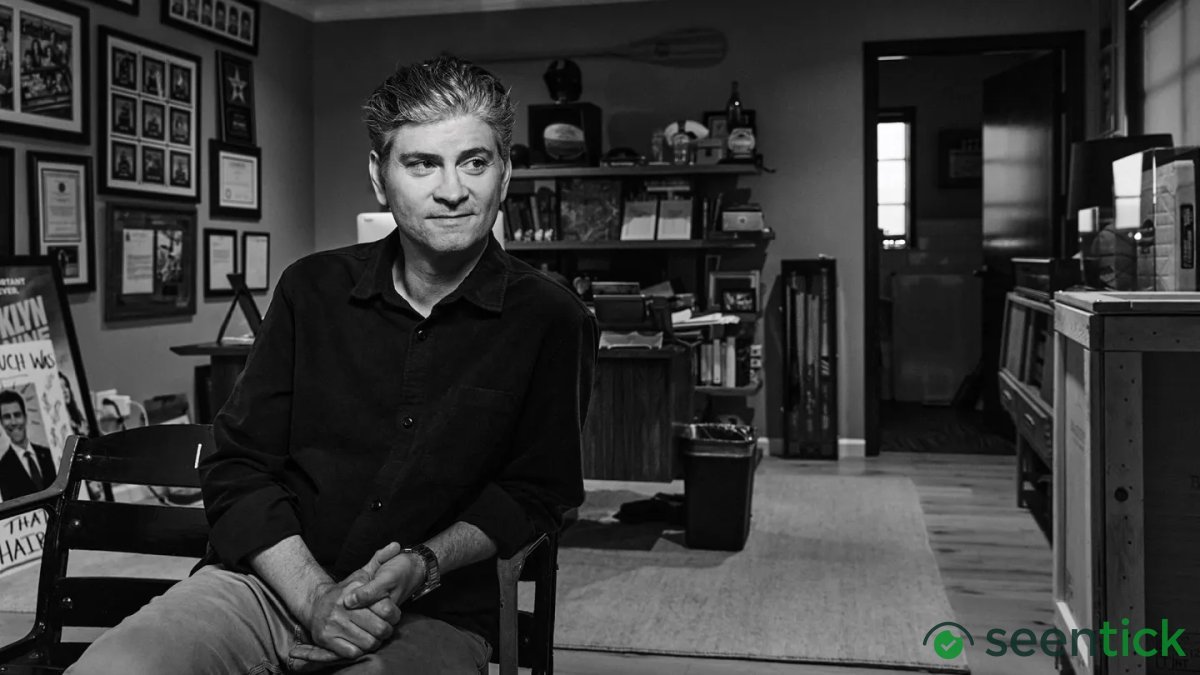
It’s up to us to bolster those arguments, and to fight tooth and nail to sustain what is left of our struggling — but still breathing — creative industry. Mike Schur is a television writer, showrunner, and producer, currently on an overall deal with Universal Television.
His writing credits include Saturday Night Live , The Office, Parks & Recreation, Brooklyn 99, The Good Place , and The Comeback .
He has also performed executive producing services on many television projects including Hacks and Master of None .
Frequently Asked Questions
What's Your Reaction?
 Like
0
Like
0
 Dislike
0
Dislike
0
 Love
0
Love
0
 Funny
0
Funny
0
 Wow
0
Wow
0
 Sad
0
Sad
0
 Angry
0
Angry
0

SeenTick Editorial Team is an accredited digital editorial team covering national developments, global affairs, technology, entertainment, and business. Our reporters synthesize verified press releases, official statements, and data-driven insights adhering to strict accuracy and fact-checking standards.




![Why [SPOILER] Wasn't Killed In House Of The Dragon's Season 3 Finale](https://seentick.com/uploads/images/202608/why-spoiler-wasnt-killed-in-house-of-the-dragons-season-3-finale_1787583610_460-450x280.jpg)







Comments (0)