
India's First 1.3-km Double-Stack Container Train Boosts Freight
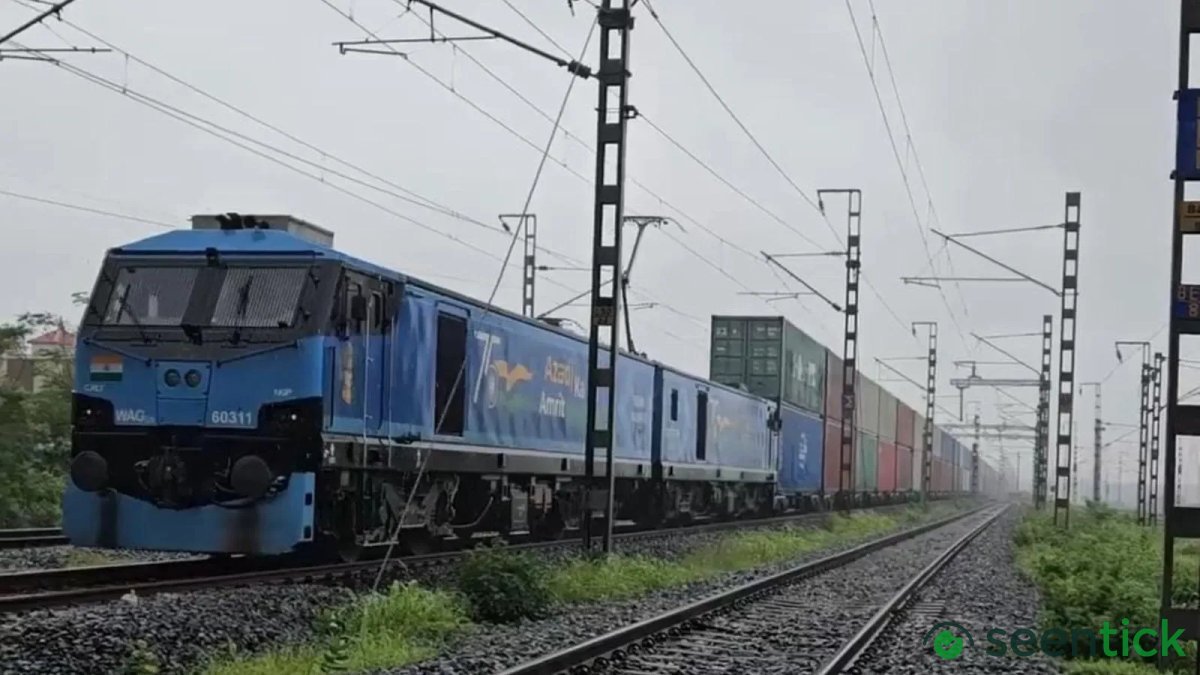
- Indian Railways has taken a significant step towards modernizing its freight operations with the successful operation of its
- The train, which was launched on August 21, 2026, ran from Jawaharlal Nehru Port near Mumbai to Varnama in Vadodara Division
- The double-stack train, which carried 360 TEUs (containers), increased freight capacity and improved logistics efficiency
Indian Railways has taken a significant step towards modernizing its freight operations with the successful operation of its first 1.3-km-long double-stack container train.
The train, which was launched on August 21, 2026, ran from Jawaharlal Nehru Port near Mumbai to Varnama in Vadodara Division on the Western Dedicated Freight Corridor (WDFC).


Key Analysis and Detailed Timeline
The double-stack train, which carried 360 TEUs (containers), increased freight capacity and improved logistics efficiency
This innovative approach enables the transportation of a larger volume of cargo in a single movement, potentially reducing overall transit time and increasing the efficiency of the supply chain.
The operation also helped reduce congestion at terminals
Broader Impact and Sector Outlook
This can lead to faster freight movement and improved efficiency, as well as reduced dependence on diesel-powered road transport.
The successful operation of the double-stack container train is expected to have a broader impact on the industry, with potential benefits including reduced road traffic, diesel consumption, and transport-related emissions.
Read More: Amid protests over NRC, Manipur shuts schools and colleges
In a statement, the national transporter stated that a single long-haul double-stack container train can carry cargo that would otherwise require a large number of trucks.
This can help reduce road congestion, diesel consumption and transport-related emissions.
Indian Railways has operated its first 1.3-km-long double-stack container train, aimed at increasing freight capacity and improving logistics efficiency. The train was operated from Jawaharlal Nehru Port (JNPT) near Mumbai to Varnama in Vadodara Division on the Western Dedicated Freight Corridor (WDFC).
According to the national transporter, the train departed from JNPT at 7 pm on August 21, 2026, carrying 360 TEUs (containers). It covered around 422 km to reach CONCOR’s GCT terminal at Varnama. The operation involved two double-stack rakes joined together to form a single long-haul train.
Each rake carried 180 TEUs, taking the total capacity of the train to 360 TEUs. First 1.3-km double-stack long-haul container train run The leading rake from JNPT to Vadodara had a load of 45+1, was hauled The trailing rake, also operating between JNPT and Vadodara, had a load of 45+1, was hauled Watch Video 📢 First Long Haul (1.3 km) Double Stack container train on Western Dedicated Freight Corridor JNPT, Mumbai -> Vadodara, Gujarat pic.twitter.com/CY9kWabvrM — Ashwini Vaishnaw (@AshwiniVaishnaw) August 22, 2026 How double-stack long-haul trains can boost freight movement Less congestion at terminals Moving more containers in a single train can help speed up the evacuation of containers from ports and reduce congestion at terminals.
More freight in one train Double-stack train operations allow containers to be carried one above another, increasing the amount of cargo transported in a single movement. Faster freight movement Long-haul train operations can help move and evacuate containers more efficiently, potentially reducing overall transit time.
How rail freight can reduce road traffic As the train was electrically hauled, it can help reduce dependence on diesel-powered road transport. In a statement, the national transporter stated that a single long-haul double-stack container train can carry cargo that would otherwise require a large number of trucks. This can help reduce road congestion, diesel consumption and transport-related emissions.
What's Your Reaction?
 Like
0
Like
0
 Dislike
0
Dislike
0
 Love
0
Love
0
 Funny
0
Funny
0
 Wow
0
Wow
0
 Sad
0
Sad
0
 Angry
0
Angry
0

SeenTick is a digital news platform bringing you the latest and most important stories from India and around the world. Explore news and updates across politics, business, technology, AI, gaming, health, sports, entertainment, science and more.











Comments (0)