
All 10 Quentin Tarantino Movies, Ranked by a Diehard Fan
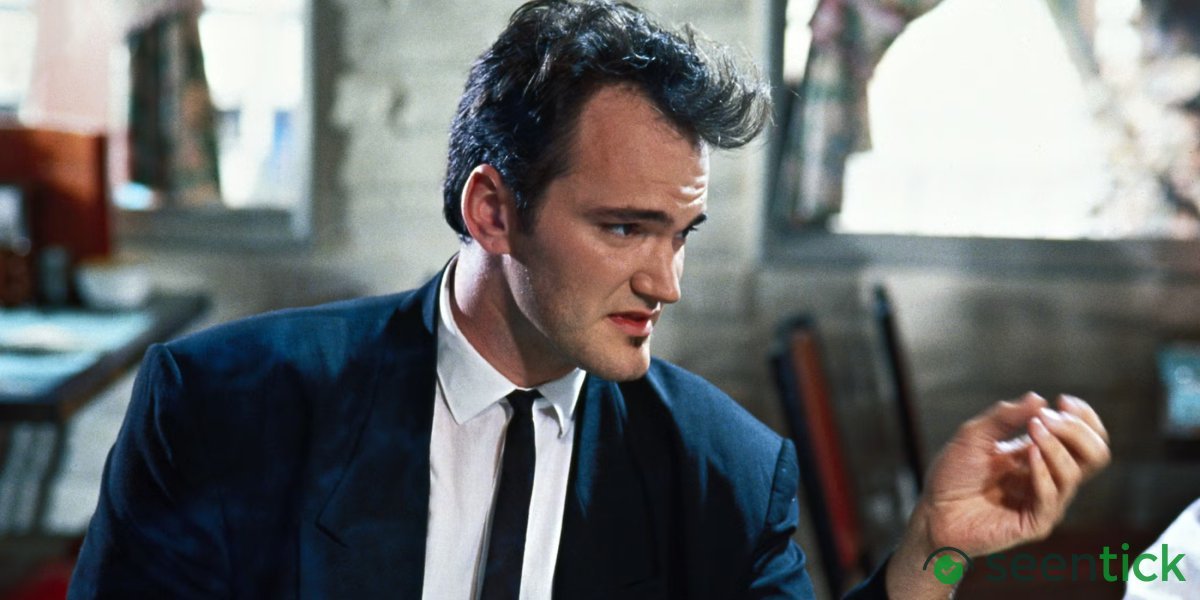
- Quentin Tarantino is one of the greatest filmmakers in Hollywood today, having made a name for himself with modern classics s
- Over the years, the writer and director has become a defining figure in modern cinema and continues to captivate audiences wi
- Kurt Russell stars in the 2007 slasher movie, Death Proof, as a stuntman, Mike, who cruises around picking up young women onl
Quentin Tarantino is one of the greatest filmmakers in Hollywood today, having made a name for himself with modern classics such as Jackie Brown, Kill Bill: Vol. 1, and Django Unchained, and is universally known for his unique style of storytelling, intense action, and intriguing characters.
Born in Knoxville, Tennessee, Tarantino grew up in Los Angeles and spent most of his time at a near In 1992, Tarantino made his feature-length directorial debut with his crime thriller, Reservoir Dogs, but two years later, the young filmmaker's career officially took off with his 1994 Oscar-winning classic, Pulp Fiction.


Over the years, the writer and director has become a defining figure in modern cinema and continues to captivate audiences with his artistic ambition and unpredictability. Tarantino has delivered a collection of notable flicks, including Inglourious Basterds and Once Upon a Time...in Hollywood, with many of them being credited as some of the finest films to grace the silver screen in years.
Key Analysis and Detailed Timeline
Kurt Russell stars in the 2007 slasher movie, Death Proof, as a stuntman, Mike, who cruises around picking up young women only to murder them with modified cars that he believes to be "death-proof." The movie was originally released as part of Robert Rodriguez's Grindhouse, which flopped at the box office, leading Tarantino to release Death Proof as a standalone movie.
The film's combination of sharp dialogue, memorable characters, dark humor, and brutal suspense showcases Tarantino's distinctive filmmaking style, while Russell gives one of his most entertaining performances as a charismatic madman that varies from his traditional good-guy roles. While Tarantino has cited Death Proof as the worst film he's ever made, the movie still has several strengths, notably the contrast between its relaxed, conversational first half and its increasingly intense second half, which culminates in a thrilling car chase and a satisfying reversal of power.
Tarantino also fills the film with references to 1970s exploitation movies, complete with deliberately rough visual touches that give it an authentic grindhouse feel, effectively immersing audiences in a nostalgic movie-going experience. Jackie Brown is a thrilling homage to blaxploitation films based on the 1992 novel Rum Punch, Jackson), decides to play both sides against each other and take off with the money herself.
Broader Impact and Sector Outlook
The movie was both a critical and commercial success and earned praise from critics, notably Roger Ebert, who gave the movie four out of four stars, citing it as one of his favorite movies of the year. Unlike some of Tarantino's more explosive movies, Jackie Brown is a hangout movie that takes its time, allowing the characters and shifting alliances to develop naturally, which essentially sets it apart from other crime films of its time.
The movie earned several award nominations, including an Oscar nomination for Best Supporting Actor for Robert Forster and two Golden Globe Award nominations for Grier and Jackson. Its stylish 1970s atmosphere, excellent soundtrack, intricate plot, and emphasis on character over spectacle are just a few qualities that make Jackie Brown one of Tarantino's most rewarding and underrated films.
Tarantino's The Hateful Eight combines his trademark dialogue, dark humor, brutal violence, and morally complex characters with the traditional tropes of the Western genre, delivering a tense mystery that would impress Agatha Christie herself. Set in Wyoming after the Civil War, the movie follows several strangers who all seek shelter from a blizzard in a remote cabin and are forced to confront one another while suspicion and paranoia steadily build around them.
The movie features an ensemble cast including Kurt Russell, Samuel L. Jackson, Walton Goggins, and Tim Roth, as well as a haunting musical score composed The gorgeous 70mm cinematography, razor-sharp dialogue, and unpredictable twists give The Hateful Eight the feel of a classic Western mixed with a locked-room murder mystery, making it one of Tarantino's most ambitious and memorable films.
The Hateful Eight received three Oscar nominations, including Best Cinematography and Best Supporting Actress for Jennifer Jason Leigh, and went on to win Best Original Musical Score for Morricone. Leonardo DiCaprio stars in Once Upon a Time...in Hollywood as a former Western TV star, Rick Dalton, who, along with his stunt double and best friend, Cliff Booth (Brad Pitt), tries to find their place in the rapidly changing film industry while the chaos and increasing violence of society begin to creep towards the doorstep of Hollywood's rising star, Sharon Tate (Margot Robbie).
DiCaprio and Pitt give outstanding performances, with their chemistry providing much of the film's heart and humor, while Robbie shines as the lovely and bubbly Tate. Tarantino creates an incredibly detailed recreation of late-1960s Hollywood that makes the backdrop and its culture feel like characters themselves, while the alternate-history approach to the Manson murders turns real-world tragedy into a violent, darkly comic fantasy.
Once Upon a Time...in Hollywood earned ten Oscar nominations, including Best Picture and Best Director, and ended up winning for Best Production Design and Best Supporting Actor for Pitt. With its fantastic performances, authentic atmosphere, and unforgettable finale, Once Upon a Time... in Hollywood is easily one of Tarantino's most entertaining and emotionally satisfying films to date.
Your answers have pointed to one Oscar Best Picture winner above all others. This is the film that was made for the way your mind works. You are drawn to films that operate on multiple levels simultaneously — that begin in one genre and quietly, brilliantly migrate into another.
Bong Joon-ho's Parasite is a film about class, desire, and the architecture of inequality that manages to be darkly funny, deeply suspenseful, and genuinely shocking across a single extraordinary running time. Your instinct is for cinema that hides its true intentions until the moment it's ready to reveal them.
Parasite is exactly that — a film that rewards close attention and punishes assumptions, right up to its devastating final image.
You want it all — and this film gives you all of it. The Daniels' Everything Everywhere All at Once is one of the most maximalist films ever made: action comedy, multiverse sci-fi, family drama, existential crisis, and a genuinely earned emotional core that sneaks up on you amid the chaos.
You are someone who responds to ambition, who doesn't want cinema to choose between being entertaining and being meaningful.
This film refuses that choice entirely. It is overwhelming You are drawn to cinema on a grand scale — films that understand history not as a backdrop but as a force, and that place their characters inside that force and watch what happens.
Christopher Nolan's Oppenheimer is a film about the terrifying gap between what we can do and what we should do, informed with the full weight of one of the most consequential moments in human history behind it.
You want your films to feel important without feeling self-important — to earn their ambition through sheer craft and the gravity of their subject. Oppenheimer does exactly that. It is enormous, complicated, and refuses easy comfort.
You are drawn to films that foreground their own building work — that make the how of the filmmaking part of the what it's about. Alejandro González Iñárritu's Birdman, shot to appear as a single continuous take, is cinema examining itself through the cracked mirror of a fading actor's ego.
You respond to formal daring, to the feeling that a film is doing something that probably shouldn't be possible.
Read More: Streaming Service Delivers a Dose of Reality and Thrills in Latest Crime Series
Michael Keaton's performance and Emmanuel Lubezki's restless camera create something genuinely unlike anything else — a film that is simultaneously about creativity, relevance, self-destruction, and the impossibility of ever truly knowing if your work means anything at all. You are drawn to cinema that trusts silence, that refuses to explain itself, and that treats dread as a form of meaning.
The Coen Brothers' No Country for Old Men is a film about the arrival of a new kind of evil — implacable, arbitrary, and utterly indifferent to the moral frameworks we use to make sense of the world. It is one of the most formally controlled films ever made, and its controlled restraint is what makes it so terrifying.
You want your films to haunt you, not comfort you. You are not interested in resolution if resolution would be dishonest. No Country for Old Men is honest in a way that most cinema never dares to be.
Uma Thurman returns in Kill Bill: Vol. 2 as the fierce assassin, Beatrix, A.K.A. the Bride, who, after leaving a slew of bodies behind her, continues to cross off the names on a list she compiled of those who tried to kill her four years ago before her wedding, including her former boss and boyfriend, Bill (David Carradine).
While Kill Bill: Vol. 1 focuses heavily on action and revenge, Vol. 2 slows down to explore Beatrix's relationships, her past, and her complicated connection with Bill, exposing a more humanizing side to the vengeful heroine without downplaying her physicality and purpose.
The dialogue is sharp and memorable, especially during the long conversations between Beatrix and Bill, while the action sequences feel meaningful because they reflect Beatrix's growth and determination. The movie also blends martial arts, Western, romance, and drama in a way that only a filmmaker of Tarantino's caliber could pull off with such precision and originality.
The emotional depth, combined with Tarantino's incredible dialogue, fascinating characters, cinematography, and vivid storytelling, makes Kill Bill: Vol. 2 one of his finest films of all time.
Brad Pitt stars in Inglourious Basterds as an Allied officer, Lieutenant Aldo Raine, who, along with a group of American soldiers, join forces with a German actress (Diane Kruger) to take down the leaders of the Third Reich at the premiere of their latest propaganda film, while the owner of the theater, Shosanna Dreyfus (Mélanie Laurent), has a plan of her own hidden up her sleeve.
As Raine and everyone else prepare for their plan, they are unaware that the fearsome SS colonel, Hans Landa (Christoph Waltz), has caught on to their elaborate plot, raising the already high stakes to unforeseen heights for everyone involved. Inglourious Basterds keeps audiences engaged through long, tense conversations, with the opening scene immediately establishing Tarantino's ability to build suspense with little to no dialogue, cementing it as one of his most distinctive and impressive movies.
While the overall cast delivers exceptional performances, Waltz undoubtedly steals the show, conveying his character with charm and intimidation in a way that is both alluring and unsettling. Inglourious Basterds received eight Academy Award nominations, including Best Picture, Best Director, and Best Original Screenplay, and went on to win for Best Supporting Actor for Waltz's tremendous performance.
Tarantino's revisionist Western, Django Unchained, is a gripping tribute to the spaghetti Western starring Jamie Foxx as a slave, Django, who, with the help of a German bounty hunter, Dr. King Shutlz (Christoph Waltz), sets out to rescue his wife (Kerry Washington) from a ruthless plantation owner, Calvin Candie (Leonardo DiCaprio).
The title refers to the 1966 spaghetti Western, Django, starring Franco Nero, who also has a brief cameo in Django Unchained, which provides a bit of comic relief to the extreme intensity of the scene.
The film's greatest strength is Tarantino's ability to rawly explore the brutality of slavery while also creating an entertaining and unpredictable revenge story, making it one of the best Westerns in movie history. Foxx gives a tour de force performance as Django, and effectively uses his character's quiet and reserved demeanor to conceal his wrath until the perfect moment.
With its stylish visuals, edgy dialogue, emotional moments, and satisfying action sequences, Django Unchained shows how Tarantino can take a serious subject and turn it into an innovative and unforgettable film. Out of its five Oscar nominations, including Best Picture, Django Unchained won for Best Original Screenplay for Tarantino and Best Supporting Actor for Waltz.
Tarantino's action-packed hit, Kill Bill: Vol. 1, is a love letter to the Kung Fu and Western genres, celebrated for its vibrant visuals, catchy soundtrack, and creative camerawork. Uma Thurman stars as a former assassin, Beatrix, who hunts down her former boss and boyfriend, Bill (David Carradine), and the people responsible for nearly killing her four years ago.
Tarantino had originally planned on releasing both volumes together, but with a runtime of over four hours, he was forced to split the project into two separate films while also cutting several vital scenes. While both movies are genuine masterpieces, Tarantino's full vision came to fruition with Kill Bill: The Whole Bloody Affair, which is simply a sight to behold and a must-see for any diehard Tarantino fan.
What makes Kill Bill: Vol 1 stand out is how Tarantino brilliantly combines elements of martial arts films, samurai movies, and classic revenge stories to create something that feels both familiar and original. Between its brutal action, Thurman's powerhouse performance, and distinctive style, Kill Bill: Vol.
1 shows Tarantino at his most energetic and visually creative and is hands down one of his all-time best contributions to contemporary cinema.
Reservoir Dogs is a vital Tarantino movie that not only led to the director making his first major mark on the big screen but also embodies many of the elements that would go on to define the director's signature style of filmmaking. The movie follows six criminals, all with pseudonyms, who are hired to carry out a robbery, but when things go horribly wrong, the surviving culprits realize that they were set up Reservoir Dogs is a simple but ingenious crime thriller that stands out for its quick-witted dialogue, non-linear storytelling, menacing humor, and intense violence.
The characters, played While the movie takes off running and quickly comes to a slow pace, the tension constantly rising between the criminals manages to maintain and even build up the intensity, showcasing Tarantino's uncanny ability to create suspense through conversations and character interactions rather than relying only on action. Tarantino's legendary neo-noir thriller, Pulp Fiction, is an iconic throwback to hardboiled crime fiction and is often considered to be Tarantino's best movie, mainly because it perfectly captures everything that makes his filmmaking so unique and distinct.
The movie follows a non-linear narrative about several different characters whose storylines eventually become intertwined, making the plot unpredictable and engaging from beginning to end. The movie was a massive success, earning praise for its original story and string of compelling performances Tarantino's rich dialogue turns ordinary conversations into some of the most memorable scenes in the movie, while moments of over-the-top action and unexpected plot twists effectively keep audiences on their toes at all times.
Pulp Fiction received seven Oscar nominations, including Best Picture, Best Director, and Best Actor, and went on to win Best Original Screenplay for Tarantino, marking his first of two wins in the prestigious category. While Tarantino has delivered an array of notable modern classics, the combination of strong characters, clever storytelling, and unforgettable scenes in Pulp Fiction is what ultimately makes it not only an influential masterpiece but also Tarantino's greatest cinematic achievement (so far).
What's Your Reaction?
 Like
0
Like
0
 Dislike
0
Dislike
0
 Love
0
Love
0
 Funny
0
Funny
0
 Wow
0
Wow
0
 Sad
0
Sad
0
 Angry
0
Angry
0

SeenTick is a digital news platform bringing you the latest and most important stories from India and around the world. Explore news and updates across politics, business, technology, AI, gaming, health, sports, entertainment, science and more.







Comments (0)