
Boeing’s Wisk Deal to Archer Highlights Strategic Focus
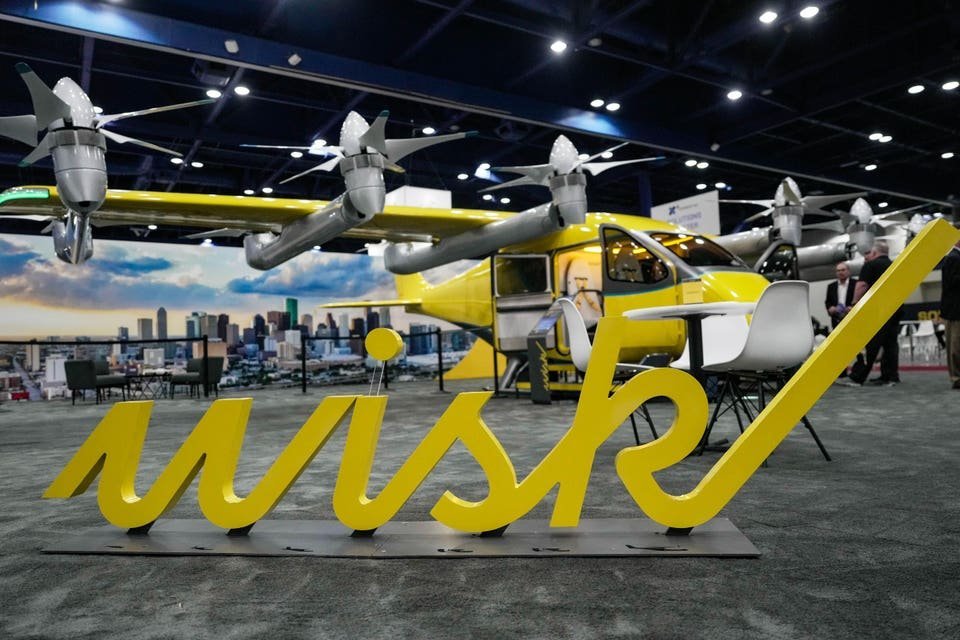
Boeing is transferring Wisk Aero, Insitu, and SkyGrid to Archer Aviation, a strategic move aimed at sharpening its focus on core commercial and defense aircraft production amidst a record $715 billion backlog. This divestment allows Boeing to offload operational burdens while retaining significant exposure to autonomous flight technology through a 19.75% stake in Archer, warrants, and tech access. The article emphasizes that "focus is an operational capability," highlighting the scarcity of management attention and engineering resources. For Archer, the acquisition brings established unmanned systems and advanced air mobility capabilities, but presents the challenge of integrating diverse businesses and industrializing cutting-edge technology. This transaction reflects Boeing's disciplined approach to prioritize execution and Archer's test in scaling innovation.
Boeing’s planned transfer of Wisk Aero, Insitu, and SkyGrid to Archer Aviation may look like conventional portfolio restructuring, but it demonstrates an important principle for every industrial company: Focus is an operational capability.
Under the agreement announced in August, Archer plans to acquire the three subsidiaries, while Boeing will receive shares equal to 19.75% of Archer’s Class A shares outstanding immediately before closing, subject to adjustments. Boeing will also receive warrants, retain access to Wisk’s autonomous flight technology, and hold the conditional right to designate a director to Archer’s board.
This structure allows Boeing to maintain exposure to autonomous aviation, electric vertical takeoff and landing aircraft, and unmanned systems without continuing to operate every business developing them. That matters because Boeing’s central challenge is converting unprecedented demand into safe, predictable production and consistent aircraft deliveries.
Industrial strategy is often discussed in financial terms, but money is only one constraint. Management attention, engineering capacity, manufacturing expertise, supplier development resources, and program leadership are also limited, which means every additional business competes for resources that could support core operations.
This competition is especially important in aerospace, where products must move through demanding development, certification, production, and sustainment cycles. An aircraft can have advanced technology, an attractive market, and talented engineers, yet still struggle if the organization cannot turn the concept into a reliable product at scale.
Wisk is developing an autonomous, all-electric air taxi, while Insitu brings established unmanned aircraft systems, more than 1.6 million operational flight hours, and customers across 35 countries. SkyGrid adds digital airspace integration and air traffic management capabilities. These businesses operate in promising markets, but their potential does not necessarily make Boeing their best long-term owner.
Boeing’s Immediate Priority Is Execution
Boeing entered the second half of 2026 with a record $715 billion backlog, including more than 6,200 commercial airplanes. Its 737 program began transitioning toward 47 aircraft per month, while low-rate initial production started on the new 737 North Line in Everett, Washington.
Boeing is also advancing certification of the 737-7, 737-10, and 777-9, stabilizing higher 787 production, and managing major defense programs. The company must improve quality, strengthen supplier performance, and increase output without placing excessive stress on its production system.
Against that backdrop, the relevant question is not whether autonomous aircraft or advanced air mobility have a future, but whether operating three specialized subsidiaries represents the best use of Boeing’s organizational bandwidth.
By transferring direct operating responsibility to Archer, Boeing could devote more attention and investment to its core commercial and defense programs while preserving access to technology that may shape future aircraft. Viewed in that context, the transaction reflects strategic discipline rather than a retreat from innovation.
What's Your Reaction?
 Like
0
Like
0
 Dislike
0
Dislike
0
 Love
0
Love
0
 Funny
0
Funny
0
 Wow
0
Wow
0
 Sad
0
Sad
0
 Angry
0
Angry
0

SeenTick is a digital news platform bringing you the latest and most important stories from India and around the world. Explore news and updates across politics, business, technology, AI, gaming, health, sports, entertainment, science and more.










Comments (0)